Guide · For the people around it
How to support someone who is struggling
The single most useful thing is to stay present without trying to solve it. Specific offers beat open ones, "I am bringing dinner Thursday" works where "let me know if you need anything" does not. Ask directly about suicide if you are worried; it does not plant the idea. And accept that you cannot make someone get help, only make it easier when they decide to.
Most people get this wrong in the same direction: they try to fix it, because watching is unbearable.
7 min read · Updated
Why the instinct to fix it backfires
Watching someone you love struggle is genuinely painful, and the urge to solve it is an attempt to relieve your own distress as much as theirs. That is not a criticism. It is worth knowing, because it explains why advice arrives so fast and lands so badly.
From the receiving end, unsolicited solutions carry an implicit message: this is straightforward and you have failed to do the obvious thing. Someone who is depressed has already thought of exercise. Someone with anxiety knows the fear is disproportionate. Being told confirms that they are not being understood, and the usual result is that they stop saying anything.
What helps more is dull and difficult: staying in the room without fixing. "That sounds hard" does more work than any suggestion, largely because it is the only response that does not require them to defend their position.
Things that actually help
- Specific offers, not open ones, "Let me know if you need anything" transfers the work to someone with no capacity. "I am dropping off food Thursday, leaving it at the door" requires nothing from them.
- Keep inviting after they decline, Withdrawal is a symptom, not a preference. Being invited to things you cannot attend is far better than being dropped from the list, and people remember which happened.
- Practical help over emotional labour, A ride to an appointment, a load of laundry, an hour of childcare. When capacity is gone, the tasks are what is drowning someone.
- Ask what they want from the conversation, "Do you want to think this through, or do you just want to be heard?" is one of the most useful questions available, and almost nobody asks it.
- Normalise without minimising, "A lot of people go through this and it is treatable" helps. "Everyone feels like that sometimes" does not. It sounds like a dismissal even when it is not meant as one.
- Be consistent rather than intense, A short message every week for six months is worth more than one enormous conversation. Recovery is long and most support fades at about week three.
Raising professional help without it becoming a fight
Suggesting therapy is easily heard as "you are too much for me". Framing matters more than content. "I think you deserve support from someone who does this properly, and I would like to help you find it" lands differently from "you need help."
Lower the practical barriers rather than pushing the decision. Offer to look up options, to sit with them while they send the email, to drive them, or to take the kids for the hour. A great deal of the resistance to starting is logistical rather than philosophical.
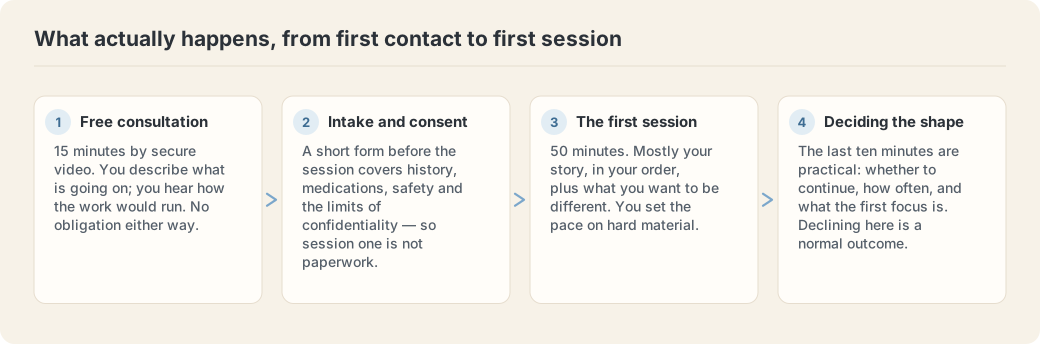
It also helps to normalise what happens next. Most people delay for months over an imagined process that is far more intimidating than the real one, what actually happens in a first session and signs it might be time for therapy are both written to be forwarded.
And then accept the limit. You cannot make an adult get help. What you can do is make it easier the day they decide, which is a real contribution rather than a consolation prize.
If you are the one holding this up and nobody has asked how you are, a free 15-minute consultation is available to you too.
If you are worried they might be suicidal
Ask directly. The persistent fear that asking will plant the idea is not supported by the evidence, and the question is one of the more useful things you can do. Plain wording is better than delicate wording: "Are you having thoughts of ending your life?"
If the answer is yes, do not leave it there and do not promise secrecy. Ask whether they have a plan, whether they have the means, and whether they have taken any steps. Stay with them, and get help now rather than later: 9-8-8 by call or text anywhere in Canada, twenty-four hours a day, or 310-6789 for BC Mental Health Support. In immediate danger, 9-1-1 or the nearest emergency department.
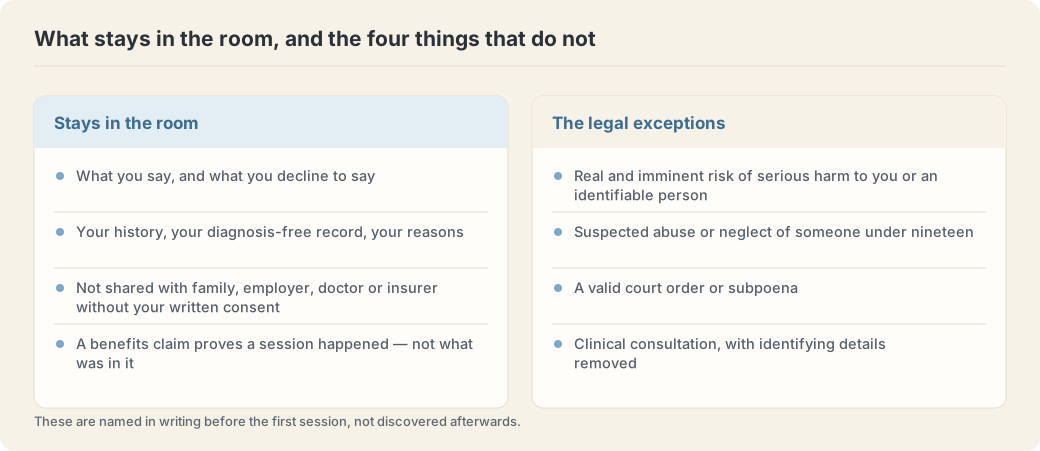
A promise to keep it secret is one you should not make. Being angry with you and alive is a considerably better outcome than the alternative, and most people, later, understand why.
Your own limit is real
Supporting someone through a long difficulty is depleting, and the people doing it are frequently running on nothing while telling themselves they have no right to be tired. Resentment in that position is not a character flaw; it is a signal that the load is unsustainable in its current shape.
You are allowed to have limits, to say what you can and cannot do, and to keep parts of your life that have nothing to do with this. Someone who has burned out is no longer able to help at all, which is the practical case as well as the humane one.
Support in your own right is available and legitimate. You do not need to be the person with the diagnosis to book a session. Counselling for family caregivers covers the version where this has become long-term, and setting boundaries with family the version where it has become one-sided.
What do you say when you do not know what to say?
- "That sounds hard.", Unglamorous and the most reliably useful sentence available. It requires nothing from them, offers no solution to defend against, and communicates that you heard it.
- "Do you want to think this through, or do you want to be heard?", Removes the guesswork entirely, and most people can answer it immediately even when they cannot articulate anything else.
- "I do not know what to say, and I am not going anywhere.", Honesty beats a rehearsed line. Presence is the thing being offered anyway.
- "What has today been like?", Better than "how are you", which has an automatic answer. Narrowing to today makes it answerable.
- "Would it help if I came with you?", For appointments, first sessions, difficult calls. Practical, specific, and easy to decline.
- Avoid: "everything happens for a reason", Meant kindly, received as a dismissal. The same goes for "at least...", "have you tried...", and any comparison to someone worse off.
- Avoid: "you seem so much better", Intended as encouragement, frequently heard as pressure to stay better, and it makes admitting a bad week considerably harder.
Supporting someone over the long term
Most support is intense for three weeks and then quietly stops, which is the opposite of what is needed. The acute phase attracts help, and the long middle is where people are actually alone.
Sustainable support is small and scheduled rather than large and spontaneous. A recurring message beats an open offer. The same day each week, brief, requiring no reply. Its value is not the content; it is the demonstration that you are still there after everyone else has moved on.
Keep inviting, and make declining free. "No pressure at all, just so you know it is happening" removes the social cost of saying no and keeps the invitation coming. Being dropped from a list is remembered for a long time.
Notice anniversaries and hard dates. A message on the day of a bereavement, a diagnosis, or a separation is one of the highest-value things anyone does, precisely because almost nobody remembers.
Do not require progress reports. "How are you doing?" every week can become an examination. "Thinking of you" asks for nothing.
And protect your own life. Long-term support fails most often because the supporter burns out, and a supporter who has burnt out is no longer available at all. Keeping parts of your life that have nothing to do with this is not a betrayal. It is what makes staying possible.
Common questions
Will asking about suicide make it more likely?
No. This is one of the most persistent myths in mental health, and asking directly is associated with better outcomes rather than worse. Ask plainly.
What if they refuse to get help?
You cannot compel an adult, short of an immediate safety risk where emergency services become the route. What you can do is stay in contact, keep the offer open, and remove practical obstacles.
Should I tell someone else that they are struggling?
Generally ask them first, going behind someone's back damages the trust you need. The exception is genuine safety risk, where getting help matters more than their agreement.
Can I book a session about someone else?
You can book a session about your own experience of supporting them, which is a legitimate reason in itself. A counsellor cannot treat a person who is not in the room.
Sources
- 9-8-8 Suicide Crisis Helpline (Canada)
- Canadian Mental Health Association, BC Division
- HealthLink BC, mental health and substance use
This guide is general information, not clinical advice, and it cannot diagnose anything or replace an assessment. If you are in crisis, call or text 9-8-8 (Canada, 24/7) or BC Mental Health Support at 310-6789.
Individual sessions are $140 for 50 minutes, after a free 15-minute consultation; card at booking.
Many extended health plans reimburse a Registered Clinical Counsellor, depending on the plan, so check yours; MSP does not cover private counselling. All fees.
There is no wrong way to start.
A free 15-minute consultation over secure video, whenever you are ready for one. Nothing is committed by having it, and no card is needed to book it.
Book Free ConsultationNot ready to book? Send a line about what is going on. A reply comes within one business day.
Or a smaller step: Which kind of counselling fits? · What sessions cost · What the free 15 minutes is like
Looking on behalf of someone else? What to send them, and what not to, including the funded routes most people do not know they qualify for.
Where you are
Online counselling across British Columbia
Every session is by secure video, so the counsellor you see does not depend on where you live. Each city page covers coverage, local public services and who is taking new clients there.