Family Counselling
Family Counselling: When the difficulty lives between people, not inside one of them.
Family counselling at Westpeak Wellness is relationship work involving more than one family member, delivered by secure video across British Columbia by a Registered Clinical Counsellor, in English or Tagalog. It treats the pattern between people rather than one person's behaviour, and is used for recurring conflict, communication that has broken down, adult children and parents who cannot talk, blended-family adjustment, and the distance that opens between generations in immigrant families. Not everyone needs to attend every session.
- 50 minutes per session
- Secure video sessions
- Free 15-min consult
- Registered Clinical Counsellor · BCACC registered
Families rarely arrive because one person is unwell. They arrive because something between them keeps happening. The same argument, the same silence, the same subject nobody can raise. Family counselling works on that pattern, with the people who are part of it in the room.
Updated
How do we approach it?
Sessions are structured rather than open-ended, and nobody is put on trial. The first job is usually to establish what each person thinks is happening, because families frequently discover they have been solving different problems. Who attends can change session to session, sometimes the useful work is with two people, not five.
It is not couples therapy with more chairs
Couples work has two people and a shared decision to make about the relationship. Family work often has an uneven set: someone who wanted to come, someone who agreed to, and someone who is there because the others asked. That difference shapes everything about how a session runs.
It also means the goal is rarely agreement. It is far more often a way of disagreeing that does not cost anyone the relationship, which is a lower bar than families expect and a much more durable one.
Where the pattern is older than the people in the room, intergenerational trauma covers what that looks like and why it repeats.
Who you would see for family counselling
Taking new clients and seeing people across BC by secure video. Each is a Registered Clinical Counsellor; the registration is on the profile and can be checked on the BCACC register.

Camille Granda, RCC, CCC
English and Tagalog · Family counselling, Trauma, Anxiety and chronic stress
In her words: “I want sitting with me to feel like the biggest belly breath you have ever taken.”
Might be a fit if
What people tend to arrive with
The same argument, different night
The subject changes and the shape does not. That is a pattern, and patterns are workable.
Nobody can raise the actual thing
Everyone knows what it is. It has been unsayable for long enough that saying it now feels dangerous.
Parents and adult children have gone quiet
Contact continues; conversation does not. Often the language of the relationship changed and nobody named it.
One person's difficulty has become everyone's
Illness, addiction or crisis in one member reorganises the whole family, usually without anyone agreeing to it.
Recognise several of these? A free 15-minute consultation is the least committal way to find out whether this is the right approach, including if the answer turns out to be something else.
Questions
Before you book
How do I book a session for my family?
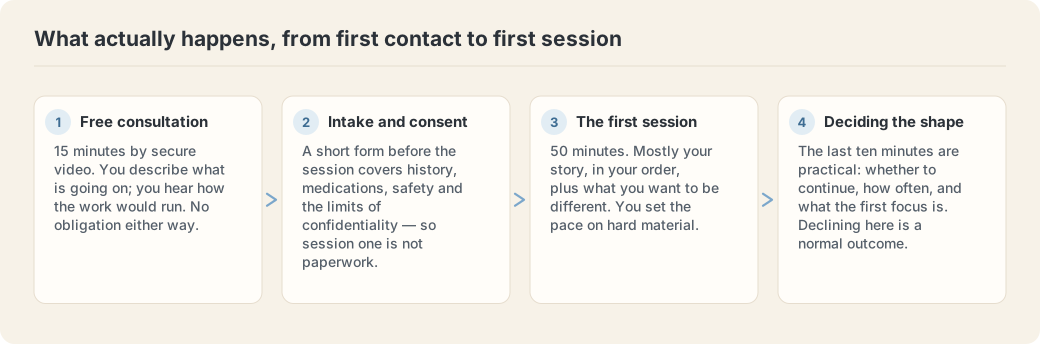
Book the free 15-minute consultation as one person and say it is for the family; the counsellor will ask who is involved and what you are hoping changes, and then set up the first full session. Family members can join from the same room or from separate homes on the same video call, which is how most families here do it when someone has moved out or is away.
Does everyone have to come?
No. Useful family work regularly happens with two or three people rather than everyone, and who attends can change between sessions. It is worth raising on the free consultation, because the answer depends on what is actually going on.
Can sessions run in Punjabi?
Not at present: family sessions run in English or Tagalog. A family member who would rather work in Punjabi can have individual sessions in Punjabi with Savneet Singh, RCC, alongside the family work or before it.
What if someone refuses to attend?
That is common and it is not a dead end. Work can start with whoever is willing, and a family pattern often shifts when one person changes how they respond to it. Nobody is required to be there.
Is this for teenagers?
This practice works with adults. Where a child or teenager is the focus, you would be pointed toward a service set up for that rather than booked in, see our standards and scope.
More in the full FAQ, or see fees and extended health coverage.
Explore more
Other ways we can work together
Individual Therapy
1:1 for anxiety, depression, life transitions, identity, family dynamics.
Individual Therapy in BCKeep going
Other counselling services
Family Counselling, starting with a conversation.
Book a free 15-minute consultation over secure video. No pressure, just a chance to see if we’re a good fit.
Book Free ConsultationNot ready to book? Send a line about what is going on. A reply comes within one business day, or read the guides first and come back when you want to.
Looking on behalf of someone else? What to send them, and what not to, including the funded routes most people do not know they qualify for.