Approaches
The methods, and when each one fits.
The service pages are organised by what you are bringing. These are organised by how the work is done, because people arrive having been recommended a specific method, or having tried one that did not suit them, and that is a different question.
The therapeutic approaches used at Westpeak Wellness, explained one per page: cognitive behavioural therapy, acceptance and commitment therapy, EMDR, internal family systems, somatic therapy, DBT-informed skills and mindfulness-based approaches. Each page says what the method does, who it tends to suit, what the evidence supports, and how it is delivered over video.
Updated
Not sure which of these applies to you? Working that out is part of the job rather than a prerequisite, ask in a free 15-minute consultation.
Two approaches with their own pages
EMDR and the Gottman Method are covered in full elsewhere rather than duplicated here, EMDR because it is one of the practice’s main offerings, and Gottman because it belongs with couples therapy rather than in a general list of methods.
How the choice is actually made
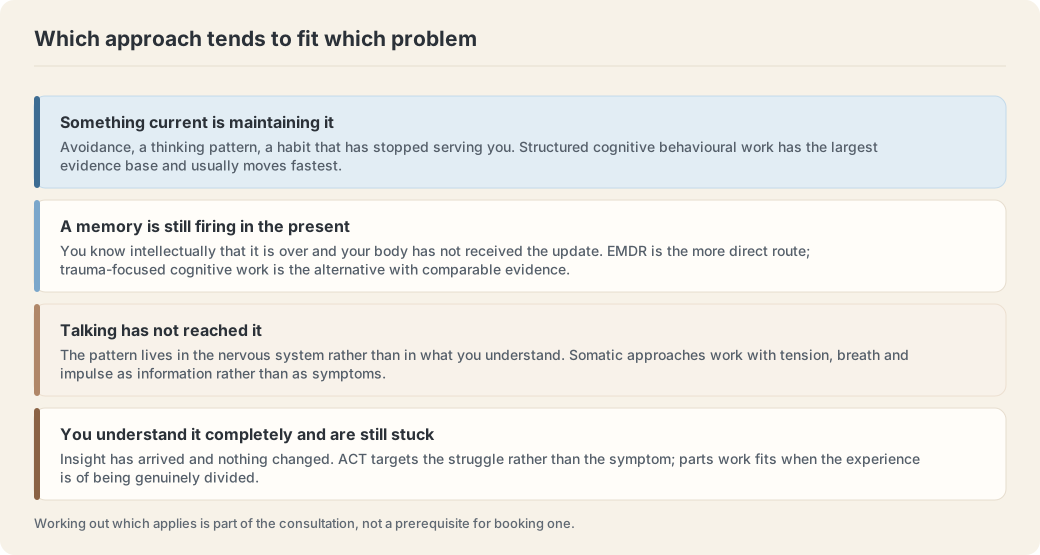
Being trained in several methods is only useful if the choice between them can be explained. Broadly: where something specific and current is maintaining a difficulty: avoidance, a thinking pattern, a habit, CBT tends to move fastest and has the largest evidence base. Where a memory is still firing in the present regardless of what you understand, EMDR is the more direct route. Where the nervous system holds a pattern that talking has not reached, somatic work addresses what insight does not.
Where you already understand the pattern completely and remain stuck, ACT targets the struggle rather than the symptom. Where the experience is of being genuinely divided against yourself, parts work fits that experience better than models that assume a single voice. Where emotion arrives faster than thought, DBT-informed skills are the most immediately practical, with an honest account of what full DBT involves and when you need it instead.
And where the goal is preventing a depressive episode from recurring rather than treating one, mindfulness-based programmes have specific evidence for exactly that, which is a narrower and stronger claim than the general enthusiasm around the word suggests.
Why every one of these pages says where it works poorly
A method page that lists only strengths is an advertisement. Each of these states the situations in which the approach is the wrong choice, because that is the information that actually helps you choose, and because a practitioner who cannot say when their method does not apply is someone to be careful of. The same principle governs the rest of the site; see how these pages are written.
Not sure which method you need?
That is an entirely normal position, and working it out is part of the consultation rather than something to settle beforehand.
Book Free ConsultationNot ready to book? Send a line about what is going on. A reply comes within one business day, or read the guides first and come back when you want to.
Looking on behalf of someone else? What to send them, and what not to, including the funded routes most people do not know they qualify for.