Resource · Crisis support
BC crisis and mental health support directory
In immediate danger, call 911. For suicide crisis anywhere in Canada, call or text 9-8-8, free and 24/7. For emotional support and information in BC, call 310-6789. No area code needed. Westpeak Wellness is not a crisis service and cannot respond to emergencies.
Keep this one somewhere findable. The time to look it up is not the time you need it.
4 min read · Updated
If someone is in immediate danger
Call 911. That includes a suicide attempt in progress, a serious overdose, or immediate risk of harm to someone.
If you are supporting someone else and it is safe to do so, stay with them until help arrives, and remove access to means where you can do it without putting yourself at risk.
Crisis lines
| Service | Contact | What it is for |
|---|---|---|
| 9-8-8 Suicide Crisis Helpline | Call or text 9-8-8 | Suicide crisis and emotional distress, Canada-wide, 24/7, free |
| 310 Mental Health Support | 310-6789 (no area code) | BC emotional support, information, and resources, 24/7 |
| BC Crisis Centre | 1-800-SUICIDE (1-800-784-2433) | 24/7 support for anyone considering suicide, or concerned about someone |
| KUU-US Crisis Line | 1-800-588-8717 | 24/7 Indigenous-specific crisis support across BC |
| Kids Help Phone | Call 1-800-668-6868 or text CONNECT to 686868 | 24/7 support for children and youth |
| VictimLinkBC | 1-800-563-0808 | 24/7 support for victims of family and sexual violence and other crime |
| Alcohol & Drug Information and Referral | 1-800-663-1441 | 24/7 substance use information and referral in BC |
| HealthLink BC | 8-1-1 | 24/7 registered nurse health advice and service navigation |
Ongoing support, not crisis
- Your health authority, Fraser Health, Vancouver Coastal, Island Health, Interior Health, and Northern Health each run free mental-health and substance-use services, usually accessible by self-referral.
- Foundry BC, Free counselling and support for ages 12–24, in centres and virtually through the Foundry app.
- Here2Talk, Free 24/7 counselling for students registered at a BC post-secondary institution.
- Pacific Post Partum Support Society, Free peer support for perinatal mental health across BC, for parents with a baby under eighteen months.
- CMHA BC, Branch programs across the province, varying by community.
- Your GP, Covered by MSP, and a legitimate first stop for assessment, medication questions, and referral.
What this practice is and is not
Westpeak Wellness is not a crisis service. Sessions are scheduled, messages are not monitored around the clock, and there is no capacity to respond to an emergency. If you are in crisis, the numbers above are staffed for exactly that and are free.
What a counselling practice is for is the work that comes before and after crisis, and for the large majority of people who are not in crisis at all, just carrying something that has become heavy. If you are not sure which of those describes you, the guide on finding a therapist in BC may help you place yourself.
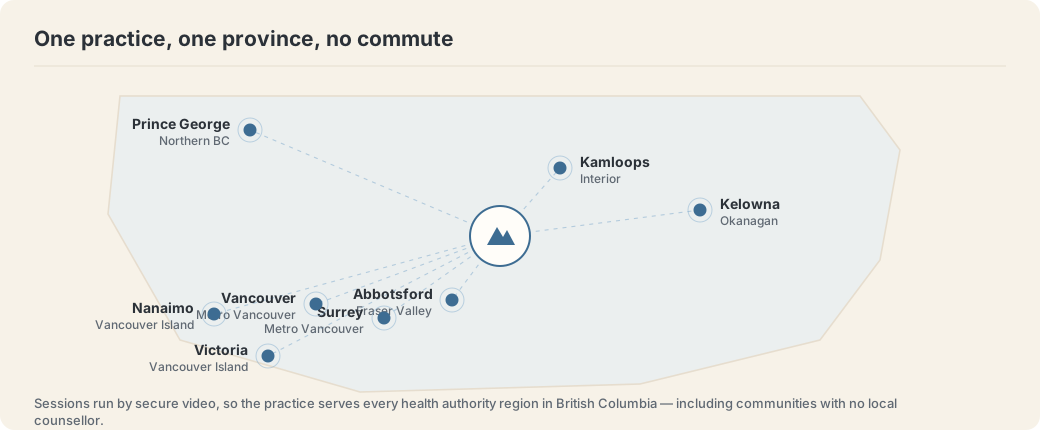
What actually happens when you call
A large number of people who would benefit from a crisis line never call, and the most common reason is not knowing what happens next. Fear of being sent to hospital against your will keeps more people off the phone than anything else.
What happens is a conversation. Someone trained answers, asks what is going on, and listens. You do not have to be at the point of acting on anything to call, and you do not have to give your name. The great majority of calls end with the call, not with an ambulance, not with police, not with an admission.
Involuntary intervention is rare and reserved for immediate danger to life. If you are not in that position, saying so plainly is enough. And if you are, that is precisely the situation the service exists for.
You can also call about someone else. Support lines routinely take calls from people worried about a family member, and they will help you think through what to do, which is often more useful than trying to work it out alone at midnight.
Two practical notes. Text is available on 9-8-8, which matters if speaking out loud is not possible or if you are somewhere you can be overheard. And you can hang up. A call that stops after ninety seconds is not a failure and nobody will pursue you about it.
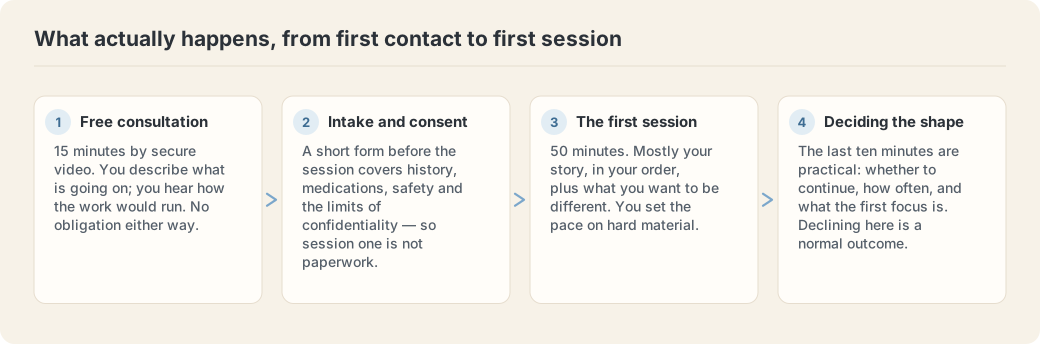
Making a plan before you need one
The worst time to work out what to do in a crisis is during one. A written plan, made while you have capacity, is one of the higher-value things available and it takes about twenty minutes.
A usable plan has five parts. Your own early warning signs. The specific things that show up before it gets bad, which are usually recognisable in retrospect and easy to miss in the moment. Not sleeping, cancelling things, a particular thought returning.
What has helped before. Concretely. Not "self-care", the actual things: a specific person, a specific walk, leaving the house, a phone call.
Who to contact, in order. Names and numbers written down, because at 2 a.m. nobody looks anything up. Include the crisis lines: 9-8-8 by call or text, and 310-6789 in BC.
What makes it worse. Alcohol, certain people, being alone past a certain hour, scrolling. Knowing these in advance means removing them is a decision already made.
And one person who has a copy. A plan nobody else knows about cannot be activated by anyone else, and the point at which it is most needed is frequently the point at which you are least able to reach for it.
Keep it somewhere reachable. A note on a phone, a card in a wallet. This is standard practice in mental health care and it is unusual for anyone to suggest it outside a clinical setting.
Common questions
What happens when I call 9-8-8?
You reach a trained responder who talks with you about what is happening. It is not automatically an emergency dispatch. Most calls are conversations, and the goal is support rather than intervention.
Can I text instead of calling?
Yes. 9-8-8 accepts texts, and Kids Help Phone takes texts to 686868. For a lot of people texting is far more manageable than speaking.
Is it free?
Yes. All the crisis lines listed here are free, including from a mobile.
What if I am calling about someone else?
All these lines take calls from people worried about someone else. You do not need to be the person in crisis to use them.
Using this page
- Free to link to, from any website, intranet, handout or resource list. No need to ask.
- May be reproduced, in print or online, with attribution to Westpeak Wellness and a link to this page.
- Last updated September 2, 2026.
- Spotted something out of date? Email info@westpeakwellness.com.
Suggested citation
Sources
General information, not clinical, financial, or legal advice. Coverage and service details change, verify anything decision-critical directly with the provider or insurer. If you are in crisis, call or text 9-8-8 (Canada, 24/7) or 310-6789 for BC Mental Health Support.