
Fees & insurance
Counselling fees: $140 a session, and the first 15 minutes are free
Sessions are with Camille Granda (English and Tagalog) or Savneet Singh (English and Punjabi), Registered Clinical Counsellors who see people by secure video anywhere in BC. No hidden fees, no packages.
Individual sessions, couples sessions and EMDR intensives are each priced per session, and the card is taken at booking. Cancelling or moving a paid session with at least 24 hours’ notice gets a full refund. With less than 24 hours’ notice, or for a no-show, 50% of the fee is kept. The first 15-minute consultation is free. Many extended health plans reimburse a Registered Clinical Counsellor, depending on the plan, so check yours; MSP does not cover private counselling.
- Individual
- $140 · 50 min
- Couples
- $175 · 50 min
- Couples extended
- $340 · 110 min
- EMDR intensive
- $190 · 90 min
- First consultation
- Free · 15 min
Next step: a free 15-minute video call. No card is taken for it; you pay only if you book a session afterwards.
Session fees
| Session | Length | Fee (CAD) |
|---|---|---|
| Free initial consult | 15 min | Free |
| Individual | 50 min | $140 |
| Couples | 50 min | $175 |
| Couples extended | 110 min | $340 |
| EMDR intensive | 90 min | $190 |
GST does not apply to RCC counselling in BC.
If your plan runs on the calendar year, a session held on or before 31 December counts against this year’s maximum; whether yours does is in your plan booklet; how the plan year affects a claim.
How much does a counsellor cost in BC?
The BC Association of Clinical Counsellors' 2026 fee guide recommends $140 to $175 per 50 minutes for individual counselling with a Registered Clinical Counsellor, depending on experience, with a higher range for specialised services, and $155 to $205 per 50 minutes for couples and family counselling. At Westpeak Wellness an individual session is $140 for 50 minutes and a couples session is $175 for 50 minutes. The first 15-minute consultation is free. MSP does not cover counselling with an RCC; many extended health plans reimburse it, depending on the plan.
Source: BCACC Fee Guide 2026, read 1 October 2026. The ranges are the association’s recommendations, not this practice’s prices.
What a 50-minute session costs in BC, by who you see (read 1 October 2026)
| Who you see | Typical fee | Whose figure |
|---|---|---|
| Registered Clinical Counsellor, individual | $140 to $175 per 50-minute session Depending on experience. | BCACC Fee Guide 2026 |
| Couples and family counselling (RCC) | $155 to $205 per 50-minute session | BCACC Fee Guide 2026 |
| Registered psychologist | $245 an hour Effective 12 May 2025. A guideline, not a fee schedule; psychologists set their own fees. | BC Psychological Association recommended rate 2025–2026 |
| Registered social worker | No published guideline Set by each practitioner; ask for the fee before booking. | No BC association publishes a recommended rate |
| Free routes: EFAP, health authority services, Foundry, Here2Talk | $0 Eligibility and waits vary; the low-cost counselling page sets them out. | Free at the point of use |
| This practice (Registered Clinical Counsellors) | $140 individual, $175 couples, per 50-minute session | This practice’s fee table, above |
The association figures are recommendations, read on 1 October 2026; practitioners set their own fees. A psychologist’s rate is published per hour rather than per 50 minutes. What you pay after reimbursement depends on the plan.
What you are actually paying for
A 50-minute session is not 50 minutes of work. It includes preparation before, notes and planning after, ongoing continuing education, professional liability insurance, and the supervision and registration requirements that come with holding the Registered Clinical Counsellor designation. These fees sit within the range the BC Association of Clinical Counsellors publishes as guidance, and they are in line with what most RCCs across the province charge.
For comparison, the BC Psychological Association’s recommended rate for a registered psychologist is $245 an hour (effective 12 May 2025), reflecting a longer training path and a broader scope that includes formal assessment. An individual session here is $140, so the same annual maximum buys about 1.8 times as many sessions, which matters most if your benefit cap is limited.
Source: BCPA Recommended Rate 2025–2026, read 1 October 2026. A guideline, not a fee schedule; psychologists set their own fees.
If the fee is a barrier
Private therapy is not the only route, and it is not always the right first one. BC has a substantial amount of free and low-cost support that people frequently do not know about: health authority mental-health services, Foundry for anyone under 25, Here2Talk for post-secondary students, employee assistance programs through work, and university training clinics offering supervised sessions at reduced rates.
All of that is set out on the free and low-cost counselling page, and for a lot of people one of those options is genuinely the better place to start. Saying so on a free 15-minute consultation is a perfectly good outcome of that call.
Where to read next
If you are weighing whether this is affordable at all, low-cost counselling in BC and EFAP vs private counselling are the two worth reading first, because a great many people already hold a free entitlement they have never used. If you are on a public waitlist, what to do while you wait covers the interval.
On what the money buys: about the practice sets out the training behind a session, standards and accountability states the scope limits and the complaints route, and how to verify a registration takes about four minutes and is worth doing before paying anyone, here included.
On frequency and length. The two things that actually determine total cost, weekly vs biweekly sessions and how long therapy takes are more useful than the per-session number on its own. And if what you need is a formal assessment rather than counselling, psychiatry and assessment in BC explains why that is priced completely differently.
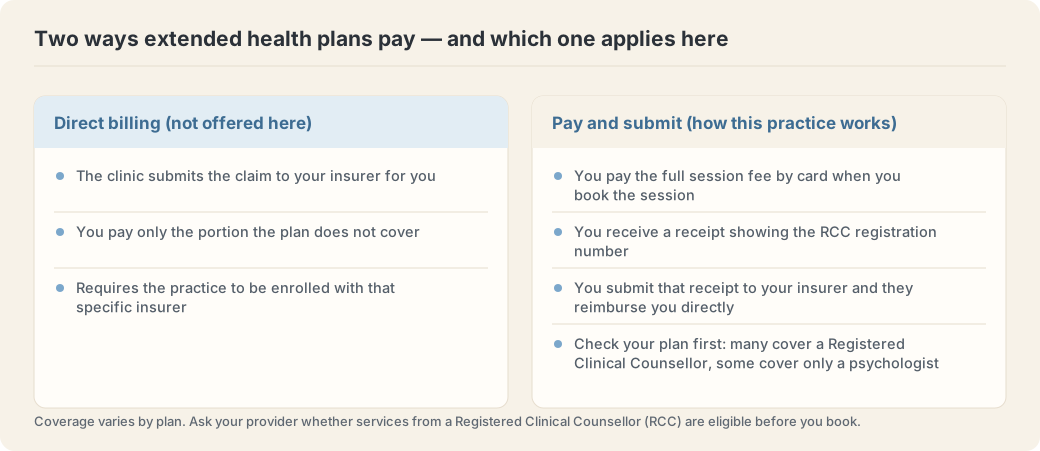
Some of this is covered without you paying the fee at all. ICBC pre-approves twelve counselling sessions after a crash with no doctor’s note. This practice is not currently registered with ICBC and does not direct-bill; the entitlement can be used with a registered vendor. Pacific Blue Cross accepts direct claims from Registered Clinical Counsellors, but this practice is pay-and-submit: you pay, and claim the receipt back. How referrals to this practice work covers the funded routes and who can start one. WorkSafeBC can fund counselling for a psychological injury at work, on an accepted claim; that page sets out how a claim is made and what the counsellor can and cannot certify.
How coverage works
BC’s Medical Services Plan does not cover private counselling, whatever the practitioner’s designation. The reasons are explained in the comparison of MSP and extended health. What most people use instead is an extended health plan through work, and the cost estimator works out what that leaves you paying.
The critical detail: plans list professions, not services. Some cover “Registered Clinical Counsellor” and some list only psychologists and social workers, in which case sessions here are not reimbursable no matter how clearly they are counselling. Check that wording before your first session. It is the single most common source of unpleasant surprises, and the extended health coverage page sets out exactly what to look for and what a claimable receipt must contain.
Near the end of a plan year, the session date and the claim deadline are two different things; using counselling benefits before the plan year ends explains both.
How private is the video?
Bookings and client records are held in Cliniko, the practice’s booking and records system, in an account on Cliniko’s Canadian region. Records are encrypted and access-controlled. Sessions are by secure video: the link arrives by email and opens in your browser, with nothing to install. Sessions are never recorded, not for notes, not for supervision, not for training. The privacy policy sets out the rest.
Free consultation
Every working relationship starts with a free 15-minute call. No charge, and no obligation to book a session afterward.
Extended health
Many extended health plans reimburse an RCC, depending on the plan, so check yours. Insurers whose plans can include RCCs:
- Pacific Blue Cross
- Manulife
- Sun Life
- Canada Life
- Green Shield
Pay by card when you book and submit your receipt for reimbursement. Coverage depends on your plan.
Payment
- Credit card (Visa, MC, Amex), taken when you book
Cancellation
Cancelling or moving a paid session with at least 24 hours’ notice gets a full refund. With less than 24 hours’ notice, or for a no-show, 50% of the fee is kept. Exceptions for genuine emergencies.
To cancel or move a session, reply to your confirmation or reminder email, or write to info@westpeakwellness.com. No phone call and no reason are needed. The free consultation carries no fee, so moving it costs nothing.
How payment works
Paying, and then claiming it back
This practice does not direct-bill. You pay the practice directly and receive a receipt showing the RCC registration number, which is what an insurer needs to reimburse you. Whether your plan covers a Registered Clinical Counsellor is worth confirming before you book — see extended health coverage in BC.
The receipt you submit shows that a session took place, the fee and the counsellor’s RCC designation, not what was said, and nothing goes to an employer from this practice without your written consent.
Sessions are paid by credit card when you book rather than at the end of the hour. Cancelling or moving a paid session with at least 24 hours’ notice gets a full refund. With less than 24 hours’ notice, or for a no-show, 50% of the fee is kept. The client portal covers how that works and where your receipts appear.
Want the arithmetic on your own plan? The cost and coverage estimator works out what you would actually pay after reimbursement, and names the two questions to ask your insurer before booking.
Questions about fees?
Ask during your free 15-minute consultation.
Book Free ConsultationNot ready to book? Send a line about what is going on. A reply comes within one business day, or read the guides first and come back when you want to.
Looking on behalf of someone else? What to send them, and what not to, including the funded routes most people do not know they qualify for.