Guide · Anxiety
Panic attacks at work: what to do in the moment and after
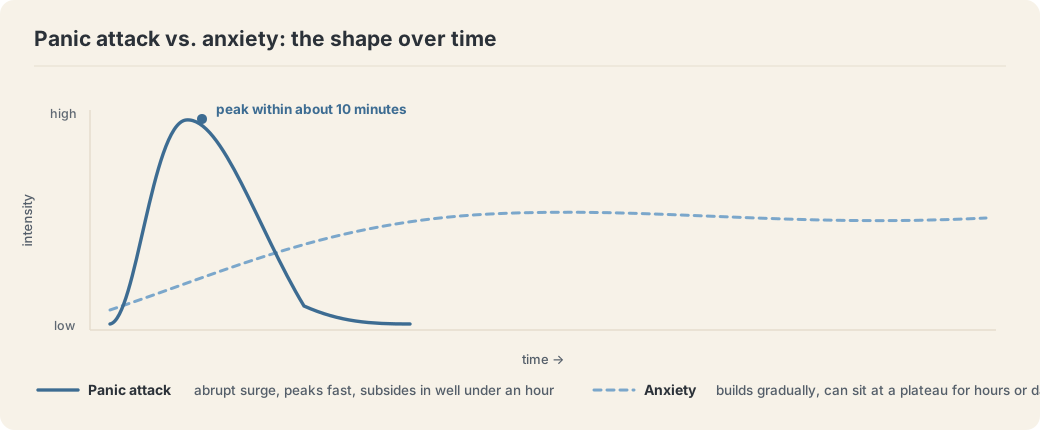
A panic attack peaks within about ten minutes and subsides; it is intensely unpleasant and not dangerous in itself. In the moment, the aim is to get through it rather than to stop it, slowing the out-breath and orienting to the room both help. The larger problem is usually what comes after: avoiding the meeting, the floor or the building, which is what turns one bad episode into a pattern.
The attack itself lasts minutes. The dread of having another one at the same desk can last months.
7 min read · Updated
What is happening in the body
A panic attack is a full false-alarm activation of the body's threat response: adrenaline, heart rate, breathing rate, blood redirected to the large muscles. Every symptom that makes it frightening is a symptom of a system doing its job in the absence of anything to do it about.
The chest tightness is muscular and respiratory. The dizziness and tingling generally come from over-breathing, which shifts carbon dioxide levels. The sense of unreality is a recognised feature of high arousal. The conviction that something catastrophic is happening is produced by the same surge that produces everything else.
Panic attacks peak within about ten minutes and then subside, because the body cannot sustain that level of activation. That fact is worth knowing in advance, because in the middle of one, "this will pass shortly" is difficult to generate from scratch.
In the moment, at your desk
- Lengthen the out-breath, In for four, out for six or longer. The extended exhale is what engages the calming branch of the nervous system. Trying to take deep breaths in usually makes over-breathing worse.
- Orient to the room, Name what is actually around you: four objects, their colours, the temperature, your feet on the floor. This recruits the part of the brain that is currently offline.
- Do not try to stop it, Fighting a panic attack adds a second layer of alarm about the first. The more workable stance is "this is a panic attack, it peaks in about ten minutes, I am going to sit through it".
- Cold on the face or hands, Cold water, or holding something cold, produces a measurable physiological shift and is available in most offices without explanation.
- Move if you can, but not far, A walk to the end of the corridor and back metabolises adrenaline. Leaving the building entirely is the version that causes the trouble later.
- You do not have to explain, "I need five minutes" is a complete sentence at work. Nobody is owed a reason.
The part that matters more: what happens next
One panic attack is unpleasant. What turns it into a pattern is the perfectly sensible response to it, never being in that situation again. Not chairing the meeting. Taking the stairs so the lift is never involved. Working from home on presentation days. Sitting near the door, then near the door on the ground floor, then not going in.
Each of those brings immediate relief, and the relief is exactly the problem. Escaping teaches the brain that escape was necessary, which means the situation is more frightening next time and the range of avoided situations quietly expands. This is the avoidance cycle, and it is the mechanism that converts a single episode into a condition.
The counter-move is not heroics. It is graded, planned re-entry, deliberately staying in situations at a level you can tolerate until the fear comes down on its own, which it reliably does given time. That is the core of the best-evidenced treatment for panic, and it works considerably better with someone structuring it than alone.
Whether to tell anyone at work
You are under no obligation to disclose anything. Where disclosure genuinely helps is when you want a specific accommodation: being able to step out of a long meeting without it being an event, a change to a presentation format, some flexibility about the commute.
If you do say something, keep it functional rather than diagnostic. "I sometimes need to step out for a few minutes; it is nothing to do with the meeting and I will come back" gives a manager what they need to act on without handing over medical information. Your employer is entitled to know your limitations, not your diagnosis, see mental health and work in BC.
One person who knows is often worth more than a formal process. A colleague who understands that you occasionally leave the room and come back is enough to remove most of the social dread, which is frequently the heaviest part of the load. Where being seen is the fear in its own right, panic or not, social anxiety in adults covers that.
If you have started structuring your week around avoiding another one, a free 15-minute consultation is a sensible next step.
When to involve a doctor
The first time chest pain, breathlessness or a racing heart occurs, it warrants medical assessment. Panic attacks and cardiac events share symptoms, and a physician ruling out a physical cause is not an overreaction. It is the correct sequence, and being reassured has genuine therapeutic value.
Thyroid problems, certain arrhythmias, some medications and stimulant use can all produce panic-like episodes. If the pattern changes, or the attacks arrive out of nowhere in a new way, that is a reason to check again rather than to assume.
Once a physical cause has been ruled out, panic is highly treatable, and treated versions of it typically resolve in a matter of months rather than years. Anxiety attack vs panic attack sets out the distinction between the two, which matters because the treatments differ.
Rebuilding the situations you have started avoiding
Once avoidance has begun, the useful work is graded re-entry, and it is a planned procedure rather than a matter of nerve.
List what has shrunk, and rate it. Every situation you now handle differently, scored zero to ten for how difficult it would be to do normally. Chairing the meeting, taking the lift, sitting in the middle of the row, the commute at rush hour. People are frequently surprised how long the list is once written down.
Start at four or five, not at nine. The aim is not to prove courage; it is to accumulate experiences of staying until the fear falls on its own. Starting at the top produces a bad experience that reinforces the avoidance, which is the standard way self-directed exposure fails.
Stay until it drops, not until it stops. The mechanism is remaining in the situation long enough for arousal to come down while you are still in it. Leaving at peak is the move that teaches escape was necessary. Fifteen or twenty minutes past the urge to leave is usually where the learning happens.
Drop the safety behaviours too. Sitting by the door, holding a water bottle, keeping medication visible, having an exit line ready. These feel like coping and they preserve the belief that you only survived because of them, which prevents the fear from updating.
Repeat before you escalate. The same step several times, until it is genuinely dull, then the next one. Progress in exposure comes from repetition rather than intensity.
Done alone this is difficult to sustain, mostly because the tempting shortcuts are exactly the ones that hollow it out. Done with someone structuring it, it is among the more reliable pieces of work in the whole field.
The commute, the lift, and the meeting room
Panic attaches itself to specific places, and at work those places are usually the same three. Each has a slightly different fix.
The commute. Crowded transit combines heat, confinement and an inability to leave, which is close to a laboratory setup for panic. The workable approach is graded rather than heroic: a shorter leg, an off-peak train, standing near the door and then deliberately not near the door, a stop earlier and a walk. Driving instead solves it in the short run and reliably narrows the list further.
The lift. The classic avoided situation, and the one where safety behaviours multiply fastest: waiting for an empty car, taking the stairs on high floors, only travelling with a colleague. Re-entry works best with repetition of a small step: one floor, alone, several times, until it is boring.
The meeting room. Here the fear is usually social rather than physical, being seen to panic. The most effective single move is frequently telling one person, because the dread of concealment is often heavier than the episode. After that, graded participation: attending, then speaking once, then chairing.
The general rule across all three: do not solve it by rearranging your life around it. Every accommodation you build yourself. The earlier train, the stairs, the seat by the door, is a small deposit into the belief that you could not have coped otherwise. That belief is the thing being treated.
Common questions
Can a panic attack actually hurt me?
The attack itself is not dangerous, however convincingly it feels otherwise. That said, a first episode of chest pain or breathlessness should always be assessed medically.
Why do they happen when nothing is wrong?
Panic frequently arrives after the stressful period rather than during it, when the body finally has room to react. It is a false alarm, not a signal about the present moment.
Will I have to do exposure work?
Graded re-entry is the core of the best-evidenced treatment for panic, and it is planned with you rather than imposed. Nothing is a surprise, and you set the level.
How long does treatment usually take?
Panic responds relatively well to structured treatment, and courses are often measured in a few months. The strongest predictor is how much avoidance has already built up around it.
Sources
- HealthLink BC, mental health and substance use
- Canadian Mental Health Association, BC Division
- Anxiety Canada
This guide is general information, not clinical advice, and it cannot diagnose anything or replace an assessment. If you are in crisis, call or text 9-8-8 (Canada, 24/7) or BC Mental Health Support at 310-6789.
Who you would talk to
Taking new clients and seeing people across BC by secure video. Each is a Registered Clinical Counsellor; the registration is on the profile and can be checked on the BCACC register.

Camille Granda, RCC, CCC
English and Tagalog · Trauma, Anxiety and chronic stress, Grief, loss and life transitions
In her words: “I want sitting with me to feel like the biggest belly breath you have ever taken.”

Savneet Singh, RCC
English and Punjabi · Anxiety, Depression, Trauma and attachment
In her words: “Comforting, safe and supportive, is what I aim for.”
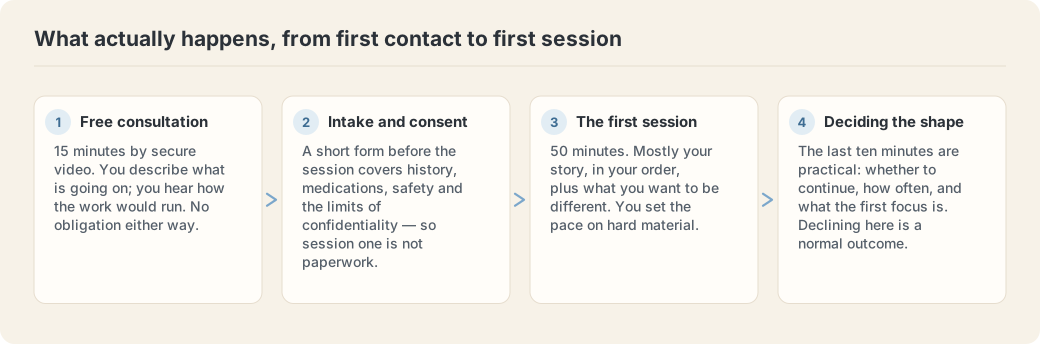
Individual sessions are $140 for 50 minutes, after a free 15-minute consultation; card at booking.
Many extended health plans reimburse a Registered Clinical Counsellor, depending on the plan, so check yours; MSP does not cover private counselling. All fees.
Still deciding?
A free 15-minute consultation is the least committal way to find out whether this is a fit. No pressure, and no obligation to book a session afterward.
Book Free ConsultationNot ready to book? Send a line about what is going on. A reply comes within one business day.
Or a smaller step: Burnout, or depression? A reflection · What sessions cost · What the free 15 minutes is like
Looking on behalf of someone else? What to send them, and what not to, including the funded routes most people do not know they qualify for.
Where this leads
Online anxiety counselling and therapy across BC
The practice is virtual, so the same counsellors see people in every one of these cities. Each page says what the service involves there and who is taking new clients.
Where you are
Online counselling across British Columbia
Every session is by secure video, so the counsellor you see does not depend on where you live. Each city page covers coverage, local public services and who is taking new clients there.