Guide · Anxiety
Anxiety attack vs panic attack: what is the difference?
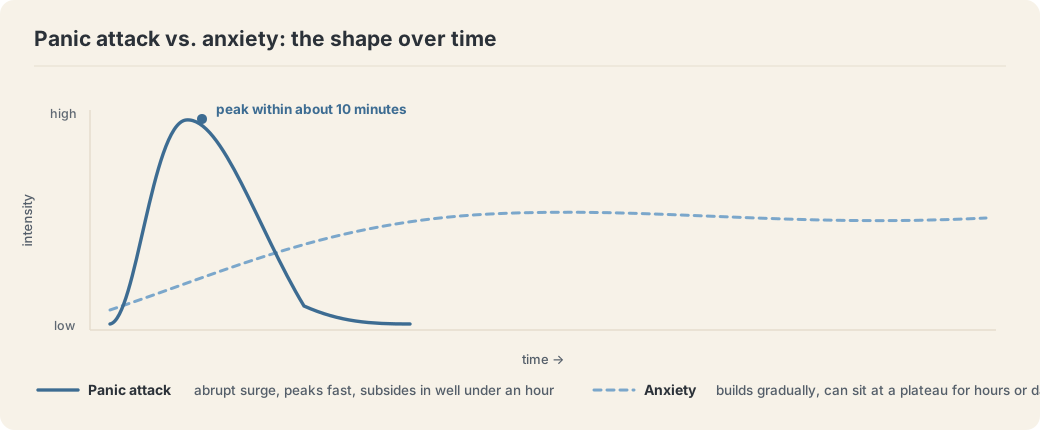
A panic attack is a defined clinical event: a sudden surge of intense fear that peaks within about ten minutes, with strong physical symptoms. "Anxiety attack" is not a clinical term. It is what most people call a period of escalating anxiety that builds more slowly, sits at lower intensity, and lasts longer. Both are real. They respond to different things in the moment.
People use the two phrases interchangeably. Only one of them is a clinical term, and the difference changes what helps.
6 min read · Updated
Why only one of them is a diagnosis
A panic attack is defined in the diagnostic manual clinicians use. It is an abrupt surge of intense fear or discomfort that reaches a peak within minutes, accompanied by at least four physical or cognitive symptoms: racing heart, sweating, trembling, shortness of breath, chest pain, nausea, dizziness, chills or heat, numbness or tingling, a sense of unreality, fear of losing control, fear of dying.
"Anxiety attack" appears nowhere in that manual. It is a plain-language phrase people reached for because they needed one. That does not make the experience less real. It means clinicians cannot assume they know what you mean when you use it, which is why they will ask you to describe what happened rather than take the label at face value.
How they actually differ
- Onset, Panic arrives abruptly, often with no identifiable trigger, and can wake people from sleep. Escalating anxiety builds: over an hour, a morning, sometimes days ahead of something.
- Peak, Panic peaks within roughly ten minutes and then declines, which is useful to know while it is happening. Anxiety can stay elevated for hours or days without a peak.
- Intensity, Panic is overwhelming and frequently mistaken for a heart attack. Anxiety is usually less acute and more sustained, bad enough to ruin a day rather than to send you to emergency.
- Trigger, Anxiety usually attaches to something identifiable. Panic often attaches to nothing at all, which is part of what makes it frightening.
- The fear content, Panic often carries the fear that you are dying, having a heart attack, or losing your mind. Anxiety is more often about a specific outcome you can name.
- Afterwards, Panic frequently leaves a fear of the next attack, which is how avoidance starts, and how panic disorder develops out of panic attacks.
What helps in the moment
The two need different responses, which is the practical reason the distinction matters.
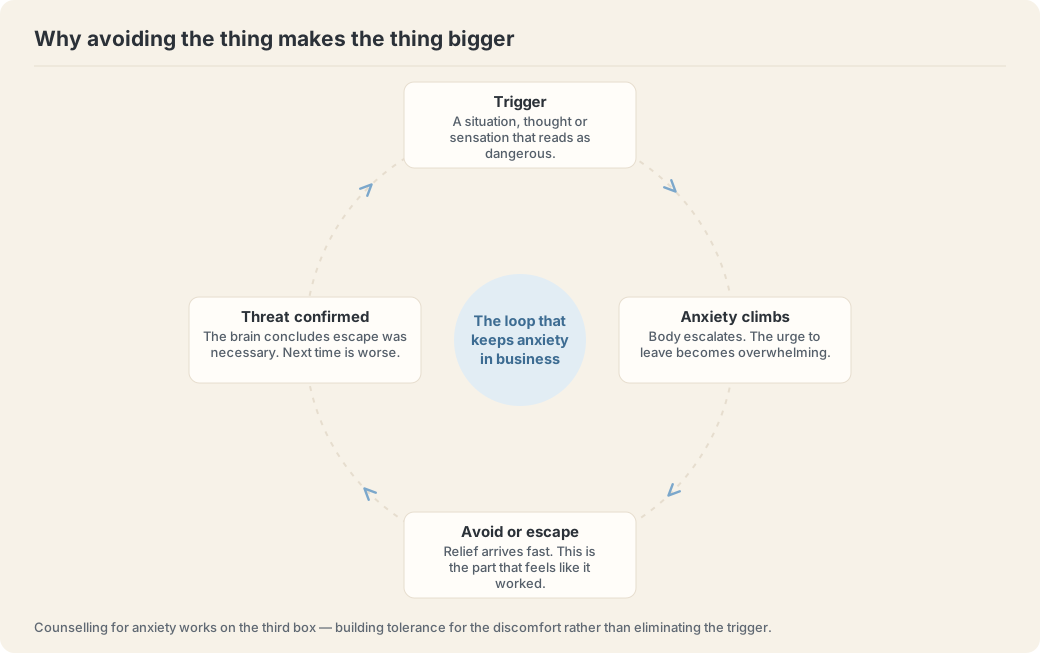
For panic: the goal is to ride it out, not to fight it. Fighting it adds fear, and fear is the fuel. It peaks and passes, usually inside ten minutes, always eventually. Slow the exhale rather than the inhale (breathe out for longer than you breathe in). Put your feet on the floor and name five things you can see. Resist the urge to leave the situation if you safely can, because leaving teaches the brain that leaving is what saved you, and that is the mechanism by which your world gets smaller.
For escalating anxiety: there is more time and more to work with. Naming the specific fear out loud usually shrinks it. Physical discharge helps. A walk, stairs, anything that uses the mobilisation your body has already prepared. Writing the worry down and separating what is actionable from what is not is more effective than trying to think your way clear.
For both: the first time, get it medically checked. Chest pain and breathlessness deserve a real assessment. Being told your heart is fine is also therapeutically useful. It removes a possibility your brain will otherwise keep proposing.
When it is worth getting support
One panic attack in a stressful period is common and not necessarily a sign of anything ongoing. The pattern worth acting on is when the fear of the next one starts shaping your decisions: avoiding the highway, the supermarket, the meeting, being alone. That avoidance is what converts an unpleasant experience into a condition that narrows your life. When the attacks cluster around the job, panic attacks at work covers the moment itself and what to tell a manager; when the fear is of being watched and judged rather than of the body’s alarm, social anxiety in adults is the closer description.
Panic responds well to structured treatment, particularly CBT-based approaches that work directly on the catastrophic interpretation of body sensations. That is the core of anxiety counselling. If the anxiety instead runs quietly underneath a life that looks entirely functional from outside, the guide on high-functioning anxiety is the more relevant one.
If avoidance has started to shape your week, that is the point at which support tends to be worth it. Book a free consultation.
Why the distinction changes the treatment
This is not a vocabulary exercise. The two patterns respond to different work, and treating one as though it were the other is a common reason people conclude that therapy did not help.
Panic responds primarily to interoceptive and situational exposure: deliberately, gradually re-encountering both the feared situations and the physical sensations themselves, so the body learns that a racing heart is not a catastrophe in progress. The target is the fear of the sensations, not the sensations.
Generalised anxiety responds to something different: working on the process of worry rather than its content. Because the subject moves, resolving any individual worry produces no lasting relief. The same machinery attaches to the next thing. The work is on the relationship to uncertainty, on the belief that worrying is protective, and on tolerating unresolved questions.
Applying panic techniques to generalised anxiety produces someone who can manage a spike but still worries constantly. Applying worry-focused work to panic produces someone with excellent insight who still cannot get on a bus.
The physical symptoms, explained one at a time
- Racing or pounding heart, Adrenaline raising cardiac output to prepare for physical exertion that is not coming. Unpleasant and, in a healthy heart, not dangerous, though a first episode always warrants medical assessment.
- Chest tightness, Chest-wall muscles contracting alongside altered breathing. Reliably frightening, because it maps onto what everyone assumes a cardiac event feels like.
- Tingling in hands, feet or face, Almost always over-breathing. Blowing off carbon dioxide faster than you produce it changes blood chemistry and produces exactly this. It resolves as breathing normalises, which is why lengthening the out-breath helps.
- Dizziness or feeling faint, Same mechanism. Notably, people rarely faint during panic, blood pressure typically rises rather than falls, which is the opposite of what causes fainting.
- A sense of unreality, Derealisation or depersonalisation, a recognised feature of high arousal. Deeply unsettling and not a sign of losing your mind, which is what most people privately conclude.
- The urge to escape, The behavioural output of the whole system. Acting on it delivers immediate relief and teaches the brain the threat was real, which is the mechanism that turns one episode into a pattern.
The first time it happens: what to do about the medical question
A first episode of chest pain, breathlessness or a racing heart should be assessed medically. That is not excessive caution; it is the correct sequence, and it is useful therapeutically as well.
Panic attacks and cardiac events share symptoms, and no amount of reading distinguishes them reliably from the inside. Getting it checked rules out what needs ruling out and produces a clear statement that the heart is fine, which becomes something you can return to later, when the next episode arrives and your body is insisting otherwise.
A number of physical conditions also produce panic-like episodes and are worth excluding: thyroid problems, certain arrhythmias, low blood sugar, and the effects of some medications, stimulants and withdrawal states. If the pattern changes character, or episodes begin arriving in a new way, that warrants another look rather than an assumption.
What is worth avoiding is the loop where reassurance becomes the safety behaviour: repeated visits, repeated tests, brief relief, and a fear that has quietly become dependent on being checked. One thorough assessment is useful. The eighth is feeding the thing it is meant to settle.
Once a physical cause has been excluded, panic is among the more treatable presentations there is, and treatment is typically measured in months rather than years. The strongest predictor of how long it takes is not severity. It is how much avoidance has accumulated around it.
Common questions
Can a panic attack actually hurt me?
A panic attack is extremely unpleasant and not physically dangerous in itself. The symptoms are an intense version of a normal stress response. That said, get chest pain and breathlessness properly assessed the first time, ruling out a physical cause matters both medically and psychologically.
Why do panic attacks happen at night?
Nocturnal panic attacks are well documented and wake people from sleep. They are not nightmares, and they are not a sign that something worse is happening. The same mechanism can fire without any conscious trigger.
Do I need medication?
That is a question for a physician, not a counsellor, counsellors in BC cannot prescribe or advise on medication. Many people manage panic with therapy alone; some do better with both. Your GP is the right person to ask.
How long does treatment for panic take?
Panic is one of the more treatable presentations. Structured CBT-based work often produces meaningful change within a few months, though this varies with how long avoidance has been in place.
Sources
- Anxiety Canada, panic attacks and panic disorder
- CAMH, anxiety disorders
- HereToHelp BC, anxiety disorders info sheet
This guide is general information, not clinical advice, and it cannot diagnose anything or replace an assessment. If you are in crisis, call or text 9-8-8 (Canada, 24/7) or BC Mental Health Support at 310-6789.
Who you would talk to
Taking new clients and seeing people across BC by secure video. Each is a Registered Clinical Counsellor; the registration is on the profile and can be checked on the BCACC register.

Camille Granda, RCC, CCC
English and Tagalog · Trauma, Anxiety and chronic stress, Grief, loss and life transitions
In her words: “I want sitting with me to feel like the biggest belly breath you have ever taken.”

Savneet Singh, RCC
English and Punjabi · Anxiety, Depression, Trauma and attachment
In her words: “Comforting, safe and supportive, is what I aim for.”
Individual sessions are $140 for 50 minutes, after a free 15-minute consultation; card at booking.
Many extended health plans reimburse a Registered Clinical Counsellor, depending on the plan, so check yours; MSP does not cover private counselling. All fees.
Still deciding?
A free 15-minute consultation is the least committal way to find out whether this is a fit. No pressure, and no obligation to book a session afterward.
Book Free ConsultationNot ready to book? Send a line about what is going on. A reply comes within one business day.
Or a smaller step: A reflection on how things have been · What sessions cost · What the free 15 minutes is like
Looking on behalf of someone else? What to send them, and what not to, including the funded routes most people do not know they qualify for.
Where this leads
Online anxiety counselling and therapy across BC
The practice is virtual, so the same counsellors see people in every one of these cities. Each page says what the service involves there and who is taking new clients.
Where you are
Online counselling across British Columbia
Every session is by secure video, so the counsellor you see does not depend on where you live. Each city page covers coverage, local public services and who is taking new clients there.