Guide · Anxiety
Anxiety and sleep: why the nights are worst
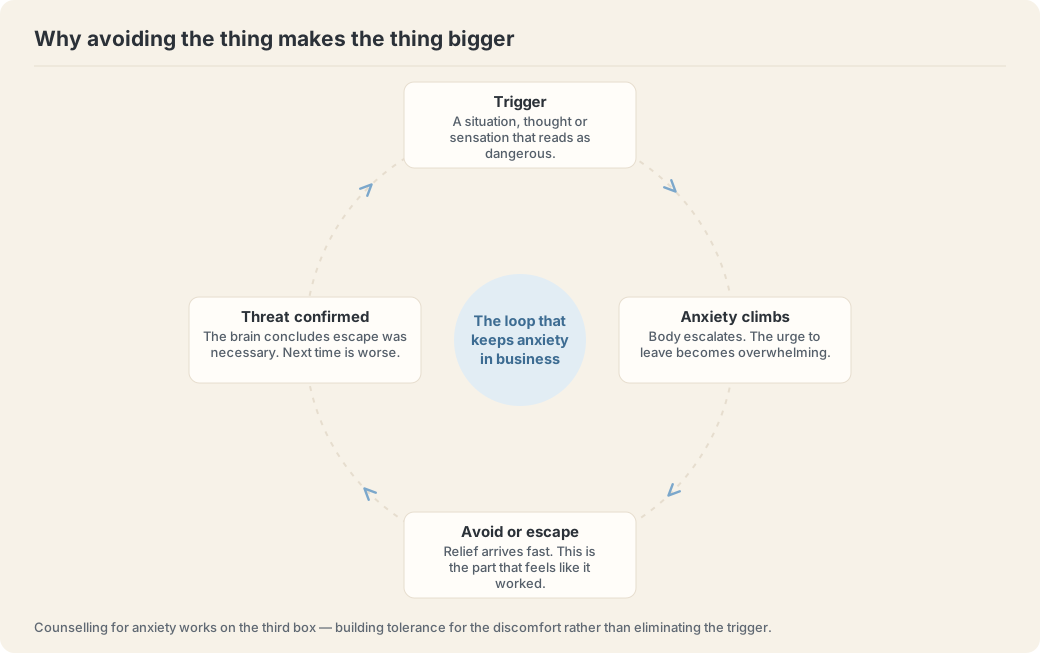
Anxiety and poor sleep drive each other: anxiety delays and fragments sleep, and sleep loss reduces the brain's capacity to regulate emotion, which raises anxiety the next day. Because it is a loop rather than a chain, it can be interrupted at either end, and treating the anxiety and the sleep as one problem works considerably better than treating them separately.
The worry that was manageable at 4 p.m. becomes unanswerable at 2 a.m. That is not a failure of willpower. It is what a tired brain does.
7 min read · Updated
Why night is different
Three things happen at once when the day ends. The distractions stop, so material that has been queued all day finally gets processing time. The context that made problems tractable: colleagues, daylight, the ability to act: is gone, so every problem becomes hypothetical and therefore unbounded. And you are tired, which measurably reduces the brain's capacity to regulate emotional responses.
That combination produces the familiar experience of a worry that felt proportionate in the afternoon becoming catastrophic at 2 a.m. The content has not changed. The equipment assessing it has.
It also explains why solutions found at night rarely survive morning. Nocturnal problem-solving is not problem-solving; it is rumination with the lights off. Recognising it as a state rather than as insight is, on its own, a useful intervention.
The loop, in both directions
Anxiety affects sleep in specific ways: it delays sleep onset because the body is in a state incompatible with the transition; it fragments sleep with early-hours waking; and it degrades sleep quality even where duration looks normal, which is why some people sleep eight hours and wake unrestored.
Sleep loss then affects anxiety in equally specific ways. Emotional reactivity increases, attention narrows toward threat, and the capacity to hold a difficult feeling without acting on it drops. In practice this means a poor night makes the next day's anxiety both more frequent and harder to manage, which then makes the following night worse.
Because it is a loop, entry is possible at either point. That is good news: you do not have to resolve the anxiety before the sleep can improve, and improving the sleep will usually reduce the anxiety even if nothing else changes.
What tends to help, in rough order of leverage
- A consistent wake time, Far more powerful than a consistent bedtime, and the single most useful change most people can make. Waking at the same hour anchors the body clock even when the night was poor; sleeping in to compensate keeps the clock unstable and pushes the next night later.
- Getting out of bed when you are not sleeping, Counter-intuitive, and it is the core of the best-evidenced treatment for insomnia. Lying awake for an hour teaches the brain that bed is a place for thinking. Getting up, doing something dull in low light, and returning when sleepy re-associates the bed with sleep.
- A deliberate worry slot earlier in the day, Fifteen minutes, same time each day, written down, sitting up. It sounds artificial and it works better than trying to suppress worry at night, largely because it gives the mind a credible answer to "we need to think about this now": we already did.
- Treating the anxiety itself, Where the sleep problem is downstream of an anxiety problem, sleep hygiene alone tends to plateau. Working on the anxiety usually improves both. See anxiety counselling.
- Light in the morning, less at night, Daylight early in the day is the strongest signal your body clock receives. In a BC winter this is a genuine constraint and worth compensating for deliberately.
- Naming the 2 a.m. state as a state, Not a technique so much as a stance: at 2 a.m. your judgement is unreliable and you know it in advance. Deciding nothing at that hour is a rule worth setting in daylight.
CBT for insomnia. The part most people have not heard of
There is a structured, well-evidenced treatment for chronic insomnia, cognitive behavioural therapy for insomnia, usually shortened to CBT-I, and it is recommended as a first-line treatment ahead of sleep medication in most major clinical guidelines. It is not the same thing as sleep hygiene advice, which is the part everyone has already read.
CBT-I works on two mechanisms rather than on habits: restricting time in bed to rebuild sleep pressure, and breaking the learned association between bed and wakefulness. It typically runs for a handful of weeks and it is genuinely uncomfortable for the first two, because the first move is usually less time in bed rather than more.
If your sleep problem has been running for months and has stopped tracking any particular stressor, it is worth asking specifically about CBT-I rather than accepting a general recommendation to relax before bed. It can be delivered by video as effectively as in person.
If the nights have been like this for months rather than weeks, a free 15-minute consultation is a reasonable next step.
When to involve a doctor
Counselling is not the right first stop for everything that presents as poor sleep. Loud snoring with witnessed pauses in breathing, waking gasping, or overwhelming daytime sleepiness despite adequate hours all warrant a medical assessment for sleep apnoea, which is common, under-diagnosed, and treatable.
Restless legs, sleep that has changed abruptly without an obvious cause, sleep problems alongside significant unexplained weight change or profound fatigue, and any new sleep disturbance on a new medication are also medical questions first. Several physical conditions present convincingly as anxiety.
And if the nights involve thoughts of not wanting to be here, that needs support now rather than a booking for next week: call or text 9-8-8 anywhere in Canada, or 310-6789 for BC Mental Health Support, both twenty-four hours a day.
The first week of doing this properly
Advice about sleep is useless without a sequence, because attempting everything at once reliably fails. If the pattern has been running for months, this is the order that tends to work.
Days one to three: fix the wake time only. One alarm, the same hour every day including weekends, out of bed within ten minutes. Change nothing else, not bedtime, not caffeine, not screens. This is deliberately the smallest possible intervention, and it is the one with the largest effect on the body clock.
Days four to seven: add morning light and stop compensating. Twenty minutes outdoors within an hour of waking, overcast or not. And no naps, no lie-ins, no going to bed at nine because last night was terrible. Compensating feels rational and it directly undermines the sleep pressure that a fixed schedule is building.
Second week: introduce the rule about being awake in bed. If you are lying awake for more than about twenty minutes, get up, go somewhere dimly lit, do something dull, and return when you are sleepy. This is the hardest instruction on the list and the one that does the most work, because it breaks the learned association between bed and vigilance.
Also in the second week: a fixed worry slot, earlier in the day, fifteen minutes, sitting up, written down. It sounds artificial and it works better than suppression at 2 a.m.
Expect the first ten days to be worse rather than better. That is the normal course, and it is why most people abandon this at day four. If you are still nowhere after three or four weeks of doing it properly, that is the point to bring it to a clinician rather than to keep grinding.
Things that seem helpful and are not
- Going to bed earlier after a bad night, The most common and most counterproductive response. It reduces sleep pressure, extends time awake in bed, and strengthens exactly the association keeping you awake. Hold the schedule.
- Lying in to catch up, Destabilises the body clock and makes the following night worse. A fixed wake time is the anchor; moving it removes the only stable signal your system has.
- Checking the clock, Converts wakefulness into arithmetic about how little sleep remains, which is reliably activating. Turn it away.
- Alcohol as a sleep aid, Shortens sleep onset and degrades the second half of the night substantially. The reliable result is waking at three, which is frequently the pattern people are trying to fix.
- Trying harder to sleep, The one thing guaranteed not to work, because effort is arousing. Paradoxically, permission to be awake reduces the arousal that is preventing sleep.
- Sleep-tracking devices, for some people, Useful for some and actively harmful for anxious sleepers, who convert the data into another performance metric to fail at. If you check the score before you check how you feel, the device has become part of the problem.
Common questions
Should I fix the sleep or the anxiety first?
Usually both together, because they maintain each other. Where the sleep problem has become self-sustaining, running on its own long after the original stressor resolved, targeting the sleep directly often produces faster change.
Does lying in bed resting still count for something?
Rest has some value, but extended time awake in bed strengthens the association between bed and wakefulness, which is the mechanism that keeps chronic insomnia running. Getting up when you are not sleeping is the better move.
Is it normal to wake at the same time every night?
It is extremely common in anxiety-related sleep disruption, and it does not mean anything is medically wrong on its own. What matters is what happens next, returning to sleep, or beginning to think.
Can counselling help if I am already on sleep medication?
Yes, and the two are frequently used together. Any change to medication is a conversation with your prescriber; a counsellor does not advise on it.
Sources
- HealthLink BC, mental health and substance use
- Canadian Mental Health Association, BC Division
- Canadian Sleep Society
This guide is general information, not clinical advice, and it cannot diagnose anything or replace an assessment. If you are in crisis, call or text 9-8-8 (Canada, 24/7) or BC Mental Health Support at 310-6789.
Who you would talk to
Taking new clients and seeing people across BC by secure video. Each is a Registered Clinical Counsellor; the registration is on the profile and can be checked on the BCACC register.

Camille Granda, RCC, CCC
English and Tagalog · Trauma, Anxiety and chronic stress, Grief, loss and life transitions
In her words: “I want sitting with me to feel like the biggest belly breath you have ever taken.”

Savneet Singh, RCC
English and Punjabi · Anxiety, Depression, Trauma and attachment
In her words: “Comforting, safe and supportive, is what I aim for.”
Individual sessions are $140 for 50 minutes, after a free 15-minute consultation; card at booking.
Many extended health plans reimburse a Registered Clinical Counsellor, depending on the plan, so check yours; MSP does not cover private counselling. All fees.
Still deciding?
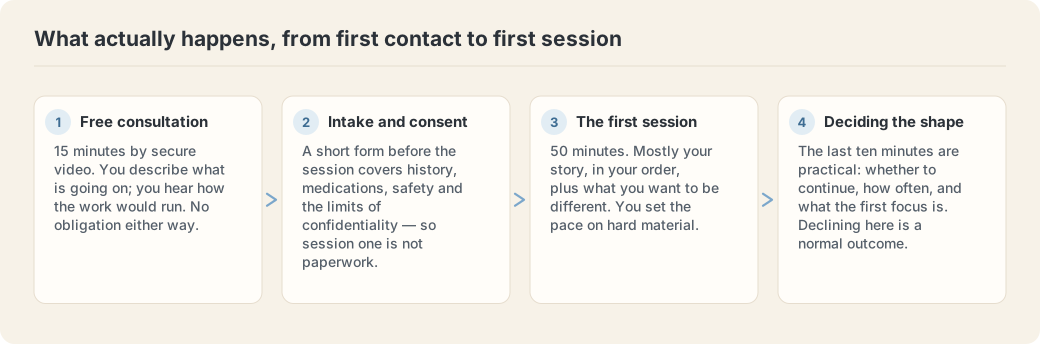
A free 15-minute consultation is the least committal way to find out whether this is a fit. No pressure, and no obligation to book a session afterward.
Book Free ConsultationNot ready to book? Send a line about what is going on. A reply comes within one business day.
Or a smaller step: A reflection on how things have been · What sessions cost · What the free 15 minutes is like
Looking on behalf of someone else? What to send them, and what not to, including the funded routes most people do not know they qualify for.
Where this leads
Online anxiety counselling and therapy across BC
The practice is virtual, so the same counsellors see people in every one of these cities. Each page says what the service involves there and who is taking new clients.
Where you are
Online counselling across British Columbia
Every session is by secure video, so the counsellor you see does not depend on where you live. Each city page covers coverage, local public services and who is taking new clients there.