Free tool · about 3 minutes
Burnout, or depression?
They produce almost identical days from the inside: flat, tired, short-tempered, nothing landing. They respond to very different things, which is why the distinction is worth making early rather than after a year of treating one as the other.
Updated
If you would rather talk it through than answer questions, a free 15-minute consultation is a conversation, not a commitment.
Question 1 of 7
Nothing here is stored or sent anywhere. Closing the page erases it. Privacy
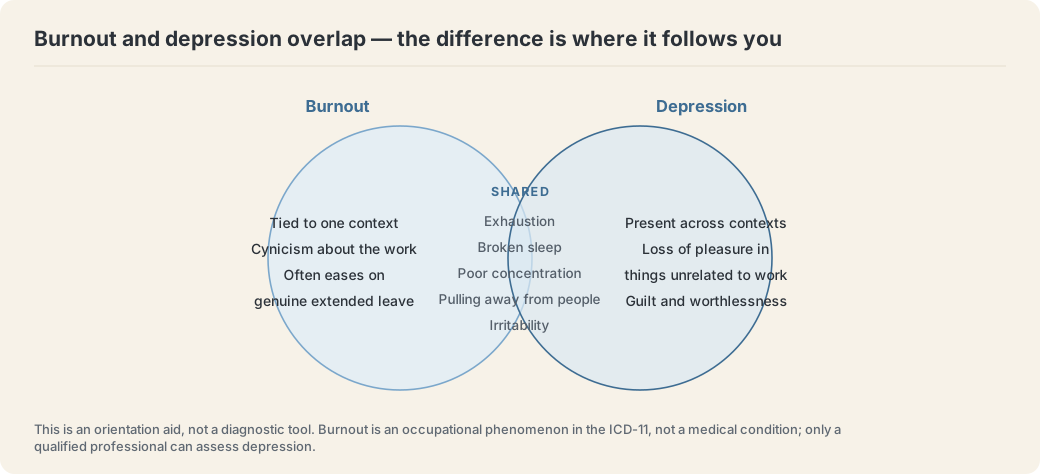
The one question that separates them
Does it travel with you? Burnout is bound to a context. Take somebody genuinely away from the source for long enough and it eases measurably, and the parts of life that have nothing to do with the pressure are usually still intact. Depression comes along. The week away lifts one of these noticeably and leaves the other roughly where it was.
That is not a perfect test and it is not offered as one. Plenty of people cannot remember their last genuine break, which makes the question unanswerable rather than answered, and that is its own finding. Burnout left running long enough also tends to become depression, so the two coexist more often than either is described alone.
Why getting it wrong costs time
Burnout responds to changing the conditions producing it. Treating it as an individual pathology, as a failure to cope with something that is genuinely unreasonable, tends to make people feel worse rather than better, because it locates the fault in the person rather than in the load.
Depression does not resolve by fixing the job. Waiting for the workload to change is one of the most common ways people lose a year, because the thing they are waiting on was never the cause. The longer read is burnout vs depression; if work is the source, stress leave in BC covers what is actually available, and high-functioning anxiety covers the version nobody around you can see.
What this is not
Not a screening instrument, not validated, and not a diagnosis. It has no score, and a tool that produced one would be read as a verdict however it were captioned. A Registered Clinical Counsellor does not diagnose in any case. Where a formal diagnosis is what you need, that is a physician, psychiatrist or registered psychologist, and the assessment routes in BC page sets out how to get one. Nothing you enter here is stored or sent anywhere.
Common questions
Does this tell me which one I have?
No, and anything that claimed to would be lying to you. It has no score and reaches no verdict. What it does is show you which pattern your own answers lean toward and explain what separates the two, so that if you do speak to someone you are starting from a clearer description rather than from "I am exhausted".
What actually separates burnout from depression?
Mostly whether it travels. Burnout is bound to a context. It eases measurably when you are genuinely away from the source, and the enjoyment of things outside that context is usually intact. Depression comes with you. A fortnight away lifts one of them noticeably and leaves the other largely where it was, which is the cleanest distinguishing test most people already have data on.
Why does the difference matter if both feel the same?
Because what helps differs. Burnout responds to changing the load and the conditions producing it, and treating it as an individual pathology tends to make people feel worse for failing to cope with something unreasonable. Depression does not resolve by fixing the job, and treating it as a workload problem delays help. Getting the frame right early saves months.
Is anything stored?
No. It runs entirely in your browser, nothing is sent anywhere, and closing the tab discards it. There is no sign-up and no email box at the end.
This is one of six free counselling tools, from which kind of counselling fits to what it costs after extended health and what a stress leave pays. Each runs in your browser and none asks for an email address.
If you want to talk it through with someone
Nothing needs deciding today. These are the counsellors taking new clients, by secure video across BC; the first conversation is a free 15 minutes and carries no obligation.

Camille Granda, RCC, CCC
English and Tagalog · Trauma, Anxiety and chronic stress, Grief, loss and life transitions
In her words: “I want sitting with me to feel like the biggest belly breath you have ever taken.”

Savneet Singh, RCC
English and Punjabi · Anxiety, Depression, Trauma and attachment
In her words: “Comforting, safe and supportive, is what I aim for.”
Individual sessions are $140 for 50 minutes, after a free 15-minute consultation; card at booking. All fees · How to check a counsellor’s registration
Keep reading
If you want the longer version
Therapy starts with one conversation.
Book a free 15-minute consultation over secure video. No pressure, just a chance to see if we’re a good fit.
Book Free ConsultationNot ready to book? Send a line about what is going on. A reply comes within one business day, or read the guides first and come back when you want to.
Looking on behalf of someone else? What to send them, and what not to, including the funded routes most people do not know they qualify for.