Guide · Work & money
How much medical EI pays in BC, and how the 26 weeks work
Medical EI pays 55% of your average insurable weekly earnings, to a maximum of $729 a week in 2026, for up to 26 weeks, and a mental-health leave qualifies exactly as a physical illness does. You need 600 insurable hours in the qualifying period, a medical certificate saying you are unable to work, and a claim filed promptly, because late claims risk losing weeks, and the usual one-week unpaid waiting period is waived for new claims that start by 9 October 2027. The benefit is taxable, it is far less than a paycheque, and knowing both before the leave starts is half of surviving it.
Medical EI is the everyday name for EI sickness benefits: the federal benefit that pays part of your earnings while a medical condition, mental health included, stops you working. For a longer leave it is what most people actually live on.
7 min read · Updated
Does a mental-health leave qualify for EI sickness benefits?
Yes, unambiguously. EI sickness benefits do not distinguish between a broken leg and a depressive episode. The test is that a medical practitioner certifies you are unable to work for medical reasons, and mental-health conditions meet it the same way anything else does. Burnout is not itself a diagnosis (burnout vs depression sets out the difference), but the conditions that travel under it: depression, anxiety disorders, adjustment disorder, are exactly what these claims are made of.
The eligibility mechanics: 600 insurable hours in the last 52 weeks (roughly 15 hours a week over a year of insurable employment), regular earnings reduced by more than 40%, and the medical certificate. Self-employed people are outside the program unless they opted into EI special benefits at least a year earlier, a gap that surprises a lot of contractors at the worst possible moment.
What it pays: 55% of average insurable weekly earnings, capped at $729 a week in 2026, taxable; the usual one-week unpaid waiting period is waived for new claims that start by 9 October 2027. For most full-time earners that is a serious income cut, and the honest planning question is not "am I eligible" but "can the household run on 55%, and for how long".
A worked example: insurable earnings averaging $1,000 a week give $550 a week before tax. Anyone averaging more than about $1,325 a week (the 2026 maximum insurable earnings of $68,900, over 52 weeks) gets the maximum, $729, however much more they earn. The benefit is taxable income, so what lands in your account is less again.
To run your own figure, the stress leave pay calculator shows what medical EI would pay you each week after your BC sick days, and where an employer disability plan would take over instead.
How to apply, in the order that avoids losing weeks
First, get the medical certificate at the appointment where the leave is decided. A family doctor or nurse practitioner completes it, and it needs to state that you cannot work and roughly for how long, not your diagnosis. Second, get your Record of Employment. Your employer files it electronically when your pay stops, and claims stall more on missing ROEs than on anything else. Third, apply online at Canada.ca immediately, even if the ROE has not landed yet; you can submit the application and the paperwork can follow.
The timing rule that costs people real money: apply within four weeks of your last day worked. Wait longer and you can permanently lose benefit weeks, because claims are not backdated indefinitely. Applying is free, decisions usually arrive within a few weeks, and payments continue only while you file your biweekly reports, set a reminder, because a missed report pauses everything.
If your employer has a short-term disability plan, it usually replaces EI for the early weeks (often at a better rate), check which applies to you before filing, because the sequencing differs plan to plan. Stress leave in BC sets EI beside the sick days, disability plans and WorkSafeBC in one table, and covers how the job-protection side runs alongside all of this.
If the leave is happening either way, using part of it for the actual work is the point. A free 15-minute consultation fits inside any week of the 26. Book a free consultation.
Where therapy fits inside the 26 weeks
An EI sickness claim needs a medical certificate and your biweekly reports; it does not require you to be in treatment. Counselling earns its place for other reasons: it is a normal, recognisable part of recovering, alongside whatever your doctor prescribes, and it matters later, when you plan the return to work and if the leave ever becomes a long-term disability claim. Practically, the leave is also the first time many people have the reduced load that makes weekly therapy feasible at all. Using some of the 26 weeks to actually treat the thing that caused them is the difference between a leave that resets you and one that merely postpones the same collapse.
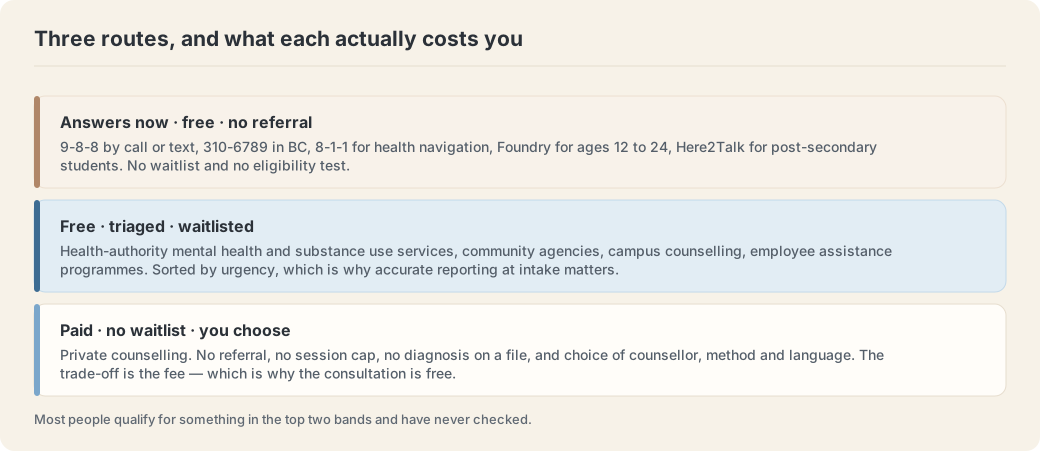
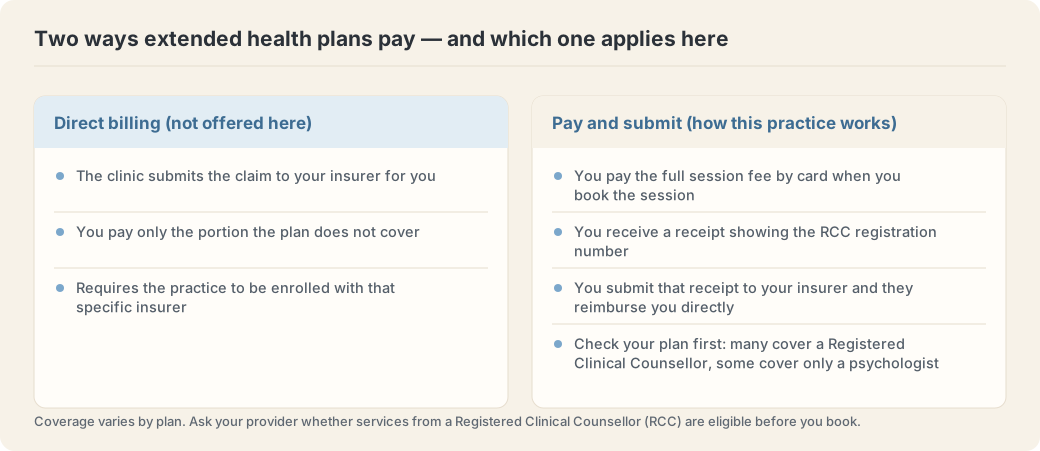
The money question: MSP does not cover private counselling. Whether your extended health benefits stay active during an EI sickness leave depends on your employer and the plan, so ask HR or the plan administrator rather than assuming. Where they do, the coverage you already have can still reimburse Registered Clinical Counsellor sessions while your income is at 55%. The low-cost options exist for when it does not, and what you can access, and how soon sorts every route, free ones included, in five questions.
An individual session here is $140 for 50 minutes, by video from anywhere in BC, paid at booking with a receipt for your plan. Whether your plan keeps paying during a leave is a question for HR or the plan administrator, and the fees page has the rest.
And a sequencing point from the other side of the desk: do not wait until week 20 to start. Return-to-work conversations begin before the benefits end, and arriving at them with three months of therapy behind you is a different negotiation than arriving with none. The guide on going back to work after a mental health leave covers that stretch.
The gaps people fall into
- Going back before the certificate says so, Money pressure at 55% income pushes some people back before the certificate says so. Talk to your doctor about a gradual return instead, EI has working-while-on-claim rules that let partial earnings and partial benefits coexist, which beats a cold-turkey return that fails.
- Assuming the employer plan and EI stack, They generally do not, short-term disability usually displaces EI rather than topping it up. One phone call to your plan administrator settles which regime you are in.
- The 26 weeks ending before you are well, If you are still unable to work when sickness benefits exhaust, the routes are your employer’s long-term disability plan, CPP disability for prolonged conditions, and provincial supports. That transition is exactly when a paper trail of treatment, including counselling, matters most.
- Nobody tells your benefits they exist, EI does not notify your extended health plan, your STD insurer, or anyone else. Every program in this picture only knows what you file with it.
Common questions
How much does EI sickness pay in 2026?
55% of your average insurable weekly earnings, to a maximum of $729 a week, taxable, for up to 26 weeks, and the usual one-week unpaid waiting period is waived for new claims that start by 9 October 2027. For most full-time earners that is a substantial cut, and budgeting for it before the leave starts is part of the leave.
Can I get EI for a mental health leave, burnout or anxiety?
Yes. The program does not distinguish mental from physical health. What matters is a medical practitioner certifying you are unable to work. "Burnout" itself is not the certified condition; the depression, anxiety disorder or adjustment disorder underneath it typically is.
How do I apply for EI on a mental health leave?
Online at canada.ca, as soon as you stop working: Service Canada says applying more than four weeks after your last day of work can cost you benefits. You need 600 insured hours in the 52 weeks before the claim, weekly earnings down by more than 40%, and a medical certificate from one of the practitioners Service Canada lists, which includes a physician, a nurse practitioner and a psychologist. Your employer issues the Record of Employment; apply without waiting for it.
Do I need to be seeing a therapist to keep my claim?
No. EI sickness benefits need a medical certificate and your biweekly reports; there is no rule that you be in treatment, and no requirement to see a therapist to keep the claim. Counselling matters later, and practically: return-to-work and any long-term disability transition go very differently with a treatment record than without one.
Does my extended health coverage continue while I am on EI sickness?
It depends on your employer and the plan. Many plans stay active while you remain employed and on an approved leave, and where yours does, it can still reimburse RCC counselling while your income is reduced. Confirm with HR or your plan administrator rather than assuming, and check whether premiums need to be kept up during the leave.
Where do I log in to check my EI sickness claim?
My Service Canada Account on canada.ca, signing in with a GCKey, an Interac Sign-In Partner (your bank login) or the BC Services Card provincial sign-in, whichever you registered with. It shows the claim status and messages, your benefit rate and weeks paid, your payments, your Record of Employment and, from February, your T4E. The biweekly reports are filed through Service Canada’s Internet Reporting Service, which the account links to.
What happens if 26 weeks is not enough?
The routes beyond EI are your employer’s long-term disability plan if one exists, CPP disability for severe and prolonged conditions, and provincial assistance. Each has its own test and its own paperwork, and each is easier to satisfy with a documented history of treatment during the EI period.
Sources
- Government of Canada, EI sickness benefits
- Province of BC, leaves of absence under the Employment Standards Act
- Government of Canada, My Service Canada Account: EI
- Canadian Mental Health Association, BC Division
This guide is general information, not clinical advice, and it cannot diagnose anything or replace an assessment. If you are in crisis, call or text 9-8-8 (Canada, 24/7) or BC Mental Health Support at 310-6789.
If you want to talk it through with someone
Nothing needs deciding today. These are the counsellors taking new clients, by secure video across BC; the first conversation is a free 15 minutes and carries no obligation.

Camille Granda, RCC, CCC
English and Tagalog · Trauma, Anxiety and chronic stress, Grief, loss and life transitions
In her words: “I want sitting with me to feel like the biggest belly breath you have ever taken.”

Savneet Singh, RCC
English and Punjabi · Anxiety, Depression, Trauma and attachment
In her words: “Comforting, safe and supportive, is what I aim for.”
Individual sessions are $140 for 50 minutes, after a free 15-minute consultation; card at booking.
Many extended health plans reimburse a Registered Clinical Counsellor, depending on the plan, so check yours; MSP does not cover private counselling. All fees.
There is no wrong way to start.
A free 15-minute consultation over secure video, whenever you are ready for one. Nothing is committed by having it, and no card is needed to book it.
Book Free ConsultationNot ready to book? Send a line about what is going on. A reply comes within one business day.
Or a smaller step: What counselling costs in BC · What sessions cost · What the free 15 minutes is like
Looking on behalf of someone else? What to send them, and what not to, including the funded routes most people do not know they qualify for.
Keep reading
Related pages
Keep going
More counselling guides
Where you are
Online counselling across British Columbia
Every session is by secure video, so the counsellor you see does not depend on where you live. Each city page covers coverage, local public services and who is taking new clients there.