Resource · Access
Free and low-cost counselling in BC
BC has more free and low-cost mental health support than most people realise: health authority services, Foundry for under-25s, Here2Talk for post-secondary students, CMHA programs, employee assistance programs, community agencies, and university training clinics. This page lists what exists and who each option is for.
Private therapy is one option among many, and for a lot of people it should not be the first one tried.
6 min read · Updated
Free, province-wide
- 9-8-8 Suicide Crisis Helpline, Call or text 9-8-8, 24/7, anywhere in Canada. For crisis, not ongoing therapy, but it is staffed around the clock and it is free.
- 310 Mental Health Support, 310-6789, BC's 24/7 emotional support and information line. No area code needed, free from anywhere in the province.
- HealthLink BC, 8-1-1, Free 24/7 health information from a registered nurse, who can direct you to services in your area. Translation available in many languages.
- Health authority mental-health services, Fraser Health, Vancouver Coastal, Island Health, Interior Health, and Northern Health each run free mental-health and substance-use services. Access by self-referral or through a GP; wait times vary by region and urgency.
- Foundry BC, Free counselling and support for anyone aged 12–24, in centres across the province and virtually through the Foundry app. No referral needed.
- Here2Talk, Free, confidential counselling for students registered at a BC post-secondary institution. Available 24/7 by app, phone, or online.
Free or low-cost, depending on your situation
- Employee assistance programs (EAP), If you work for a mid-size or larger employer you likely have one, typically covering a set number of free sessions. A surprising number of people never check.
- Post-secondary counselling services, Included in your student fees if you are enrolled. Session caps and waitlists apply, but the cost is already paid.
- CMHA branch programs, Canadian Mental Health Association branches run free and low-cost groups and counselling that vary considerably by community, worth checking your local branch specifically.
- University training clinics, Counselling psychology programs run clinics staffed by supervised student clinicians at substantially reduced rates. Supervision is close, and quality is often high.
- Community and immigrant-serving agencies, Many settlement organisations offer free counselling, frequently in languages other than English, funded for newcomers to Canada.
- Crime Victim Assistance Program, May fund counselling for victims of crime in BC. Applying is worth doing if it applies to you.
- Reduced-fee spots in private practice, Fee policies vary between practices, so asking what a practitioner charges and whether they have any reduced-fee availability is an ordinary question worth putting to anyone you are considering.
How to pick where to start
If you are in crisis right now, use 9-8-8 or 310-6789. That is what they are for, and using them is not an overreaction.
If you are under 25, start with Foundry. It is free, it is designed for your age group, and there is no referral to arrange.
If you are a post-secondary student, use Here2Talk and your campus service. Both are already paid for.
If you are employed, check whether you have an EAP before paying for anything.
If cost is the binding constraint and you can wait, your health authority's service is free and the referral process is straightforward.
If you need to start soon, or need a specific language or specialisation, private practice is usually the faster route, and fee policies vary between practitioners. No waitlist counselling or therapy in BC? sets out how long each route really takes. There is more on how to compare them in the guide to finding a therapist in BC.
How to approach a free service so you actually get seen
- Describe the worst of it, not the average, Intake triage works from what you report, and understating is reflexive for many people. Accuracy is not exaggeration, and stoicism at intake places you lower on a list that is sorted by urgency.
- Ask what the wait actually is, A specific question to a specific service produces a specific answer. General figures are useless for planning.
- Ask about the cancellation list, Most services hold one. Being available at short notice can move you forward by months, and it is almost never offered unprompted.
- Be on several lists at once, A health-authority service, a community agency, and a campus or employer programme are not mutually exclusive. Take whichever arrives first.
- Stay in contact, Lists get cleaned, and an unanswered call can remove you without your knowing. Confirm periodically, and report any deterioration. It can re-triage you.
- Ask what they offer while you wait, Many services run groups, workshops or structured self-help programmes with far shorter waits than individual counselling, and they are frequently not mentioned unless you ask.
Training clinics, the most under-used option
Graduate programmes in counselling and clinical psychology run training clinics where students see clients at substantially reduced rates under supervision. They are consistently the least-known low-cost route and frequently the best.
The obvious concern is competence, and it deserves a straight answer. Student clinicians are less experienced, and they are also in the most closely supervised phase of their entire careers: sessions are reviewed, sometimes recorded with consent, and discussed with an experienced clinician weekly. In practice that produces a level of oversight no private practitioner receives.
They tend also to be enthusiastic, current on the evidence, and unhurried, because they are not managing a full caseload. Several of the outcome studies comparing supervised trainees with experienced clinicians find smaller differences than people expect.
The real limitations are practical rather than about quality. Availability follows the academic calendar, which means a course of work can be interrupted by a term ending or a placement finishing. Waits can be long. And the fit between what they are training in and what you need is not always available.
Where it works well is for a bounded, non-crisis difficulty over a defined period. Where it works less well is for complex trauma or anything requiring long-term continuity with one person. Ask about the placement length before starting. It is the single most useful question.
Is therapy free in BC?
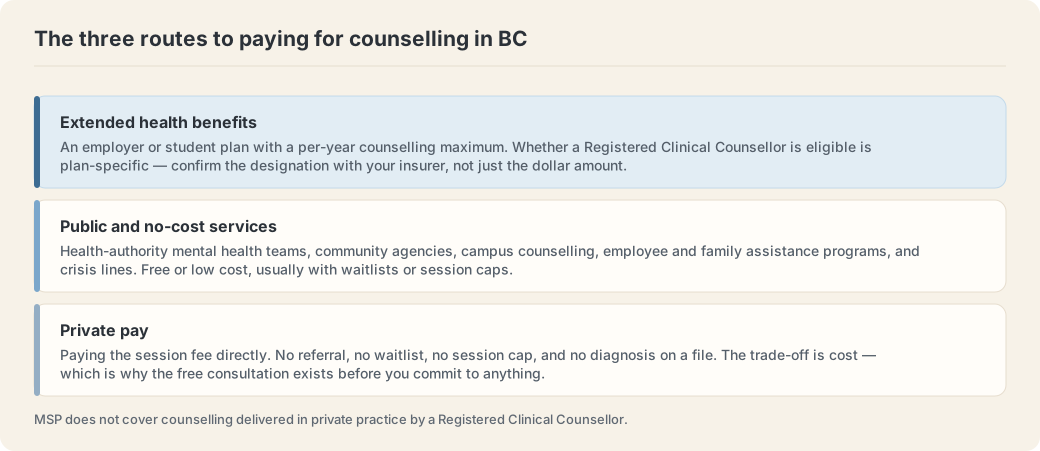
Some of it, genuinely, and the honest map has three territories. Free: health-authority mental-health services, Foundry centres for ages 12–24, Here2Talk for post-secondary students, crisis lines, and community agencies with grant-funded programs. These are real services with real clinicians; their cost is usually time, intake processes and waitlists. Effectively free: counselling your extended-health plan reimburses, employee assistance sessions, ICBC- or claim-funded treatment where an entitlement exists. Paid: private practice, where the fee buys you choice of counsellor and no waitlist.
What MSP itself covers is narrower than people hope: physician care, including psychiatrists, with a referral, but not counselling in private practice. The MSP vs extended health explainer draws that boundary precisely, and everything below on this page is the free-and-low-cost territory itemised.
Common questions
Is free counselling lower quality?
Not inherently. Publicly funded and non-profit services employ qualified clinicians. The usual trade-offs are waiting time, session caps, and not choosing your practitioner, rather than competence.
How long are health authority waitlists?
They vary widely by region and by urgency, and access is generally thinnest in northern and rural communities. Urgent cases are prioritised; non-urgent referrals can take considerably longer.
Do I need a doctor's referral?
Usually not. Most health authority mental-health services accept self-referral, as do Foundry and Here2Talk. A GP referral is required for a psychiatrist.
How do I ask a practitioner about cost without it being awkward?
Ask directly, "what are your fees, and do you have any reduced-fee spots available?" It is an ordinary question that practitioners field constantly, and policies vary widely between practices.
Using this page
- Free to link to, from any website, intranet, handout or resource list. No need to ask.
- May be reproduced, in print or online, with attribution to Westpeak Wellness and a link to this page.
- Last updated August 23, 2026.
- Spotted something out of date? Email info@westpeakwellness.com.
Suggested citation
Sources
- Foundry BC, free services for ages 12–24
- Here2Talk, free counselling for BC post-secondary students
- 9-8-8 Suicide Crisis Helpline
- HealthLink BC, 8-1-1
- CMHA BC, programs and services
General information, not clinical, financial, or legal advice. Coverage and service details change, verify anything decision-critical directly with the provider or insurer. If you are in crisis, call or text 9-8-8 (Canada, 24/7) or 310-6789 for BC Mental Health Support.