Resource · Coverage
Extended health coverage for counselling in BC
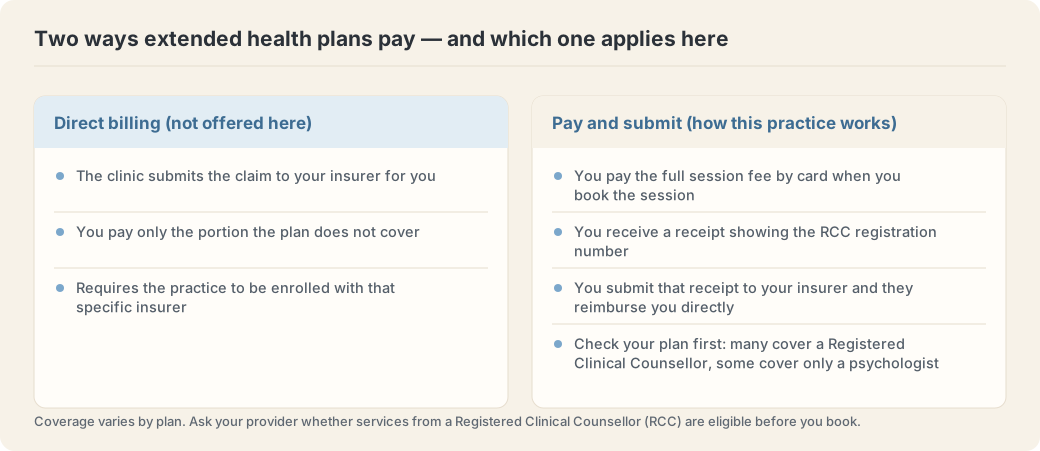
Many BC extended health plans cover counselling by a Registered Clinical Counsellor, depending on the plan, and not all of them do. Some list only psychologists and social workers. Coverage is typically a dollar cap per calendar year, sometimes with a per-session limit. Some insurers accept direct claims from RCCs (Pacific Blue Cross has since July 2025); this practice is pay-and-submit, so you pay and submit a receipt. Check the exact wording of your plan before your first session.
The single most common unpleasant surprise in private therapy is discovering afterwards that your plan does not list your counsellor's designation.
6 min read · Updated
The one thing to check before anything else
Open your benefits booklet or member portal and find the paramedical services section. You are looking for which designations are named, not whether "counselling" or "mental health" appears.
This matters because plans list professions, not services. A plan may cover "Psychologist" and "Registered Social Worker" and say nothing about Registered Clinical Counsellors, in which case sessions with an RCC are not reimbursable no matter how clearly they are counselling. If "Registered Clinical Counsellor" or "RCC" appears in that list, you are covered up to whatever limit applies.
If the wording is ambiguous, call the number on your benefits card and ask directly: "Does my plan reimburse services from a Registered Clinical Counsellor, RCC, in British Columbia?" Get the answer before you book, and note who told you.
Insurers commonly seen in BC
The following are the insurers most often encountered by BC counselling clients. Coverage is determined by your specific plan, not by the insurer, two people with the same insurer can have entirely different benefits, because coverage is negotiated by the employer or plan sponsor.
| Insurer | Typically covers RCCs? | Notes |
|---|---|---|
| Pacific Blue Cross | Commonly | Very widely held in BC, including many public-sector plans |
| Manulife | Commonly | Coverage and caps vary considerably by plan sponsor |
| Sun Life | Commonly | Check whether the plan specifies a per-session maximum |
| Canada Life | Commonly | Absorbed Great-West Life plans; older wording sometimes differs |
| Green Shield Canada | Commonly | Often has a combined mental-health practitioner limit |
| Desjardins | Commonly | Verify designation wording specifically |
| Empire Life / Equitable / others | Varies | Smaller plan sponsors vary most, always verify |
How the money actually works
- Annual maximum, Most plans set a dollar cap per calendar year for mental-health practitioners, commonly somewhere between a few hundred and a few thousand dollars. Many plans reset on 1 January; some run on an anniversary year. The booklet says which.
- Per-session limit, Some plans reimburse a set amount per session (say $80) rather than the full fee, so a $140 session leaves $60 out of pocket even while you have annual room left.
- Percentage coverage, Some plans pay a percentage, 80% is common, rather than the full amount up to the cap.
- Combined pools, Watch for a shared limit across practitioner types. If psychology, social work and counselling draw on one pool, seeing two practitioners halves your effective coverage.
- Pay and submit, Pacific Blue Cross accepts direct claims from RCCs, and some practices use it; this practice is pay-and-submit, so you pay the practice directly and submit the receipt. Most insurers now accept submission through an app, and reimbursement typically lands within days.
- Health and wellness spending accounts, An HSA pays only expenses the CRA accepts as medical expenses, and the CRA does not yet list counsellors in BC as authorized practitioners, so ask the administrator before relying on one for RCC sessions. A wellness or lifestyle spending account is broader and can usually fund counselling, as a taxable benefit.
What a receipt needs to contain
For reimbursement, a receipt generally needs to show the practitioner's full name and designation, their registration number, the practice name and contact details, the date of service, the amount paid, and the service description. A receipt missing the registration number is the most common reason a claim gets bounced back.
If your claim is refused, ask the insurer specifically why. "Practitioner type not covered" is a definitive no. "Insufficient information" usually means the receipt was missing a field and can be resubmitted. It is worth the phone call, refusals are not always correct.
Not sure what your plan covers? Bring the question to a free 15-minute call. The receipt details can be confirmed before you commit to anything. Book a free consultation.
If you have no coverage
No extended health plan is a common situation, and it does not mean support is out of reach. Some BC practices keep a limited number of reduced-fee spots, so it is a reasonable question to ask any practitioner you are considering, policies vary, and you will not know without asking.
There is also a substantial free and low-cost landscape in BC that people frequently do not know about, from health authority services to Foundry to post-secondary counselling. That is set out on the free and low-cost counselling page.
The exact questions to ask your insurer
- "Is a Registered Clinical Counsellor an eligible provider under my plan?", Ask about the designation by name, not about "counselling". This is the single question that most often produces a surprise, because many plans cover a psychologist and not an RCC, or vice versa.
- "What is my annual maximum, and when does the year reset?", Many plans reset on 1 January; some run on an anniversary year. The booklet says which. Knowing the reset date can be worth a full year of unused benefit.
- "Is there a per-session cap as well as an annual one?", Some plans reimburse a fixed amount per session below the practitioner's fee, which changes your real cost substantially.
- "Do I need a physician referral for reimbursement?", A minority of plans require one even where the profession does not. Finding out afterwards means the claim is denied.
- "Is a receipt sufficient, or do you require a specific claim form?", Some insurers want their own form completed. Establishing this before the first session avoids a scramble later.
- "Does my spouse's plan coordinate with mine?", Where both partners have coverage, coordination of benefits can meaningfully increase the total available, and it is almost never volunteered.
Making a claim, and what to do if it is refused
The mechanics are straightforward and the failure points are consistent, so they are worth knowing before the first claim rather than after.
Submit promptly. Deadlines are set by each plan and vary widely, from weeks after the service to the end of the following year; the booklet or member portal states yours. Receipts sitting in a drawer are the most common reason benefits go unused.
Check what the receipt must show. Typically the practitioner's name and designation, their registration number, the date, the amount and the service. A receipt missing the registration number is the most common cause of a refusal, and it is trivially fixable by asking.
Keep the originals. Insurers can request supporting documentation after paying, sometimes months later.
If a claim is refused, the reason is usually one of four: the designation is not eligible under your plan, the annual maximum is exhausted, the receipt is incomplete, or a referral was required. Ask which, in writing, rather than assuming. Three of those four are fixable.
If it is the first, that is worth knowing immediately rather than after several sessions, because it changes what you are paying and possibly who you should be seeing. And if you believe the refusal is wrong, plans have an appeal process with a deadline attached; missing the deadline is the most avoidable way a valid claim fails.
Common questions
Does MSP cover counselling?
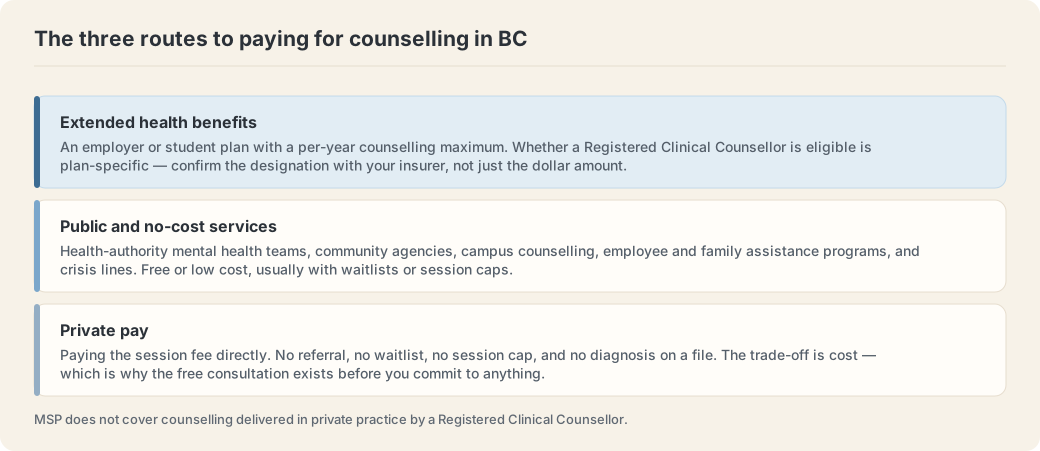
No. BC's Medical Services Plan does not cover private counselling with any designation. Publicly funded mental-health services through health authorities are free at point of use, but they are a separate system from private practice. The difference is explained on the MSP and extended health page.
Is there GST on counselling?
Counselling services provided by qualifying practitioners in Canada are generally exempt from GST/HST. Your receipt should reflect that.
Can I use my spouse's plan too?
Often yes. Coordination of benefits lets you claim the remainder from a second plan after the first pays its share, which can effectively double your annual coverage. Many couples never realise this is available.
Do virtual sessions get covered the same as in-person?
Plans that list an RCC usually reimburse a video session on the same terms as in person, but this depends on the plan. Ask: are virtual sessions with an RCC eligible, and on the same maximum?
Sources
- BC Association of Clinical Counsellors, about RCCs
- Province of BC, Medical Services Plan coverage
- HereToHelp BC, paying for mental health care
General information, not clinical, financial, or legal advice. Coverage and service details change, verify anything decision-critical directly with the provider or insurer. If you are in crisis, call or text 9-8-8 (Canada, 24/7) or 310-6789 for BC Mental Health Support.
Who you would talk to
Taking new clients and seeing people across BC by secure video. Each is a Registered Clinical Counsellor; the registration is on the profile and can be checked on the BCACC register.

Camille Granda, RCC, CCC
English and Tagalog · Trauma, Anxiety and chronic stress, Grief, loss and life transitions
In her words: “I want sitting with me to feel like the biggest belly breath you have ever taken.”

Savneet Singh, RCC
English and Punjabi · Anxiety, Depression, Trauma and attachment
In her words: “Comforting, safe and supportive, is what I aim for.”
Individual sessions are $140 for 50 minutes, after a free 15-minute consultation; card at booking.
Many extended health plans reimburse a Registered Clinical Counsellor, depending on the plan, so check yours; MSP does not cover private counselling. All fees.
Questions about cost or coverage?
A free 15-minute consultation is a good place to ask them, before committing to anything.
Book Free ConsultationNot ready to book? Send a line about what is going on. A reply comes within one business day.
Or a smaller step: What counselling costs in BC · What sessions cost · What the free 15 minutes is like
Looking on behalf of someone else? What to send them, and what not to, including the funded routes most people do not know they qualify for.
Keep going
More BC resources
Where you are
Online counselling across British Columbia
Every session is by secure video, so the counsellor you see does not depend on where you live. Each city page covers coverage, local public services and who is taking new clients there.