Guide · Work & money
Getting a doctor’s note for a mental-health leave in BC
A mental-health leave in BC runs on a medical certificate from a doctor or nurse practitioner stating that you are unable to work and for roughly how long. It does not need to name your diagnosis, and your employer is not entitled to one. They may ask for reasonably sufficient proof of illness, which the note itself is. The honest preparation for the appointment is a plain account of symptoms and function: sleep, concentration, mood, what work currently does to you. Understatement is the main failure mode; doctors certify what they are shown.
A doctor’s note for a mental-health leave is a medical certificate from a physician or nurse practitioner saying you are unable to work and until when. The whole leave hinges on that one short appointment, which most people walk into unprepared.
6 min read · Updated
What does the note need to say, and what must it not say?
A workable certificate is short: the practitioner confirms you have a medical condition that makes you unable to work, states an expected duration or review date, and, where relevant, any functional limitations. That is the whole document. It does not need your diagnosis, and the better ones deliberately omit it. This page is about that one appointment; for the whole route, from the first call to the money to the return, start with how stress leave works in BC.
The privacy line matters and is worth knowing cold: in BC, an employer may require "reasonably sufficient proof" that you are entitled to sick leave, and for longer absences may ask about prognosis and functional limitations: when you might return, what you can and cannot do. They are not entitled to your diagnosis, your therapy notes, or your file. A note that says "medical condition, unable to work, reassess in four weeks" answers everything an employer may properly ask.
If HR pushes for more detail than that, the response is polite and firm: further medical information goes through the doctor, addressed to functional questions. For accommodation processes the employer can request more specific functional information, still function, still not diagnosis. The guide on going back to work after a mental health leave covers that stage.
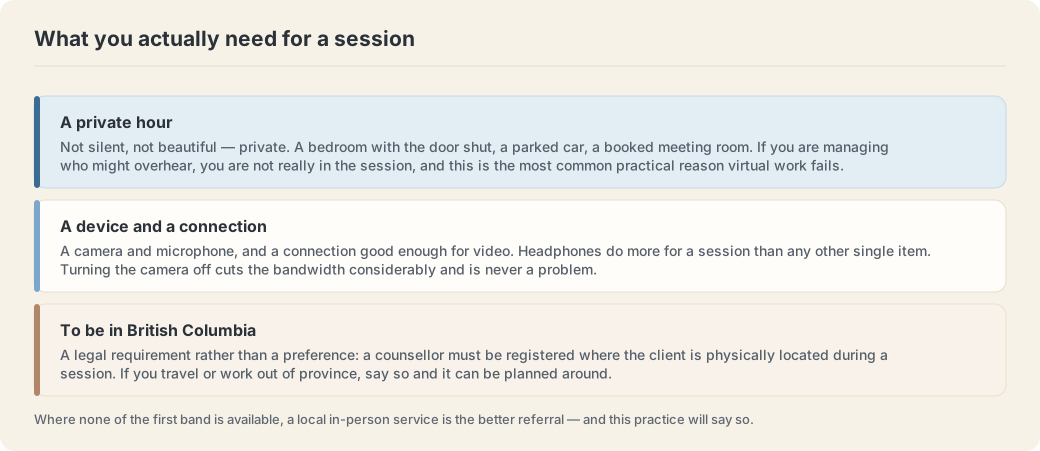
The appointment: say the ugly version
The predictable failure in this appointment is composure. People spend years performing "fine" and then perform it at the exact moment a clinician needs the truth. A doctor cannot certify what they are not shown, and "I’m a bit stressed" reads as a bad month, not a leave.
What helps is arriving with the plain account written down: how you are sleeping, whether you can concentrate, what your appetite and mood are doing, the Sunday-night dread, the crying in the car, the mistakes at work you are covering for, how long it has been going on. Concrete, functional, unminimised. If mornings are the worst and the appointment is at 2 pm, say what mornings are like rather than reporting from the temporary plateau.
It is also allowed, and often useful, to name the ask directly: "I think I need time off work, and I want your honest read." Doctors handle this conversation constantly, and you are not presenting anything unusual. If the doctor recommends treatment alongside the leave (medication, counselling, or both), that recommendation is part of what makes the leave do its job, not a hoop. If it would help to hand something over rather than explain it, there is a one-page summary written for that appointment.
If part of what you need to show your doctor is that treatment is in place, a free 15-minute consultation is a concrete first entry in that record. Book a free consultation.
No family doctor? The BC routes that still work
- A nurse practitioner, NPs can complete medical certificates including EI medical certificates. If you are attached to an NP-led clinic, that is a full solution, not a workaround.
- Urgent and Primary Care Centres, BC’s UPCCs see unattached patients, and a mental-health presentation that is affecting your ability to work is a legitimate visit. Bring the same written account; continuity matters less than the assessment.
- Walk-in and virtual clinics, A telehealth or walk-in physician can certify a leave, though some prefer a shorter initial duration with review. For a longer leave, one consistent clinician re-certifying beats a chain of one-off notes.
- The Health Connect Registry, The waitlist for attachment is long: join it anyway, because a longer leave, EI paperwork, and any disability transition all get materially easier with one ongoing practitioner.
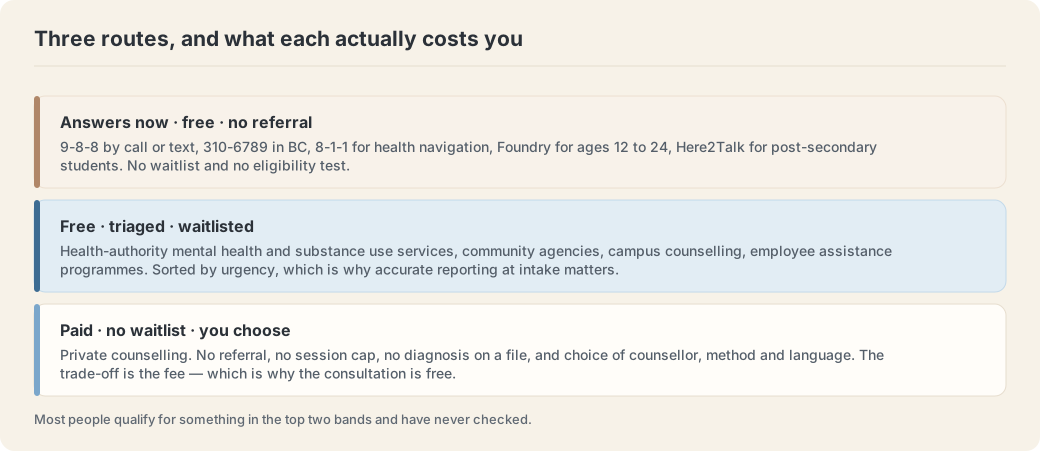
After the note
Tell your employer in writing that you are on a medical leave and attach or offer the certificate; how to ask for a mental health leave has a short letter to copy. You do not owe an explanation beyond it, and most people say too much in this message rather than too little. Then the machinery starts: the first five days in a calendar year are paid under the Employment Standards Act once you have 90 days’ service, and beyond that you are into your employer’s short-term disability plan or EI sickness benefits, which have their own clock and their own paperwork.
Keep copies of everything and diarise the review date. Then the step this site would say, but which is also the step the leave exists for: use some of the time for treatment rather than only for distance from the inbox. Distance treats the symptom; the stress-leave guide is blunt about the return being the part nobody plans.
An individual session here is $140 for 50 minutes, by video from anywhere in BC, paid at booking with a receipt for your plan. Whether your plan keeps paying during a leave is a question for HR or the plan administrator, and the fees page has the rest.
Common questions
Can a counsellor or psychologist write a sick note?
A counsellor cannot; a psychologist can, for EI. A Registered Clinical Counsellor cannot certify that you are unable to work. For EI sickness benefits, Service Canada accepts the medical certificate from a physician, a nurse practitioner or a psychologist; for an employer’s leave, ask HR whose note the policy accepts. A counsellor can write a letter confirming you are in treatment, which insurers often ask for alongside the medical note, and that is a different document.
How long will a doctor sign you off for stress?
Usually in blocks of two to six weeks, with a review before each extension, rather than one long certificate. A doctor is certifying a current inability to work and will want to see you again before extending it. A note that says "indefinitely" is rare and tends to cause problems with insurers, so a defined period with a review date is the normal shape.
Does my employer have to accept a doctor’s note for stress leave?
BC employers may require reasonably sufficient proof of entitlement to sick leave, and a medical certificate is exactly that proof. They are not entitled to your diagnosis, and the ESA’s job-protected illness leave plus the Human Rights Code’s duty to accommodate sit behind a certified medical absence.
Can my doctor sign me off work for mental health?
Yes. A physician or nurse practitioner can certify that you are unable to work for a mental-health reason exactly as for a physical one, usually for a set period with a review date. Describe what is happening to your sleep, concentration, mood and work in plain terms; a doctor certifies what they are shown.
What is a mental health note for work?
A medical certificate saying you have a medical condition, are unable to work (or can work only with stated limits), and when that will be reviewed. It does not name a diagnosis and does not need to. Your employer may ask for reasonably sufficient proof of illness, and this is it.
Will the note say I have a mental illness?
It should not, and you can ask the doctor to keep it functional: medical condition, unable to work, expected duration. Diagnosis stays between you and your clinicians; employers deal in function and timelines.
Can a walk-in doctor or telehealth appointment give me a leave note?
Yes. Any physician or nurse practitioner can certify a medical absence, including virtually. For longer leaves, a consistent clinician who can re-certify at review dates works better than a series of unconnected notes. A UPCC or one virtual clinic used consistently gets you most of that.
What if the doctor says no?
Usually it is not a refusal of you but of what they were shown, the composed version. Go back with the written, functional account, or ask directly what they would need to see. A second opinion is always available, and so is starting with a shorter certified period plus a review date.
Do I need a separate note for EI?
EI sickness benefits require their own medical certificate confirming you are unable to work and for approximately how long. Get it at the same appointment, walking out with both documents saves a second visit and a lost week.
Sources
- Province of BC, paid and unpaid sick leave
- Government of Canada, EI sickness benefits: medical certificate
- BC Office of the Human Rights Commissioner
This guide is general information, not clinical advice, and it cannot diagnose anything or replace an assessment. If you are in crisis, call or text 9-8-8 (Canada, 24/7) or BC Mental Health Support at 310-6789.
If you want to talk it through with someone
Nothing needs deciding today. These are the counsellors taking new clients, by secure video across BC; the first conversation is a free 15 minutes and carries no obligation.

Camille Granda, RCC, CCC
English and Tagalog · Trauma, Anxiety and chronic stress, Grief, loss and life transitions
In her words: “I want sitting with me to feel like the biggest belly breath you have ever taken.”

Savneet Singh, RCC
English and Punjabi · Anxiety, Depression, Trauma and attachment
In her words: “Comforting, safe and supportive, is what I aim for.”
Individual sessions are $140 for 50 minutes, after a free 15-minute consultation; card at booking.
Many extended health plans reimburse a Registered Clinical Counsellor, depending on the plan, so check yours; MSP does not cover private counselling. All fees.
There is no wrong way to start.
A free 15-minute consultation over secure video, whenever you are ready for one. Nothing is committed by having it, and no card is needed to book it.
Book Free ConsultationNot ready to book? Send a line about what is going on. A reply comes within one business day.
Or a smaller step: Burnout, or depression? A reflection · What sessions cost · What the free 15 minutes is like
Looking on behalf of someone else? What to send them, and what not to, including the funded routes most people do not know they qualify for.
Keep reading
Related pages
Keep going
More counselling guides
Where you are
Online counselling across British Columbia
Every session is by secure video, so the counsellor you see does not depend on where you live. Each city page covers coverage, local public services and who is taking new clients there.