Guide · Getting the most from it
What to do when therapy is not working
First distinguish hard from stuck: feeling worse after opening difficult material is normal, while months with no movement on anything is not. Then raise it directly. A counsellor who cannot hear "this is not working" is demonstrating the problem. If the plan changes and nothing shifts after that, changing counsellor or approach is a reasonable decision rather than a failure.
Most people in this position quietly stop booking. Saying it out loud is more uncomfortable and considerably more useful.
7 min read · Updated
Hard is not the same as stuck
Therapy that is doing something frequently feels worse before it feels better. Opening material that has been sealed for years produces a period of raised distress, and a fortnight of feeling raw after a significant session is a normal part of the process rather than evidence against it.
Stuck looks different. Stuck is sessions that could be transcripts of each other. It is describing the week, receiving sympathy, and leaving unchanged. It is realising you have been going for five months and cannot name a single thing you now do differently.
The distinguishing question is direction, not comfort. Hard has movement in it, even when the movement is unpleasant. Stuck is a plateau that has stopped being a plateau and become the terrain.
Reasons therapy stalls that are fixable
- There was never an explicit goal, The most common cause by a distance. Without a named target, sessions default to reporting the week, which is pleasant and does not accumulate. Agreeing an explicit focus frequently unsticks things on its own.
- The approach does not match the problem, Insight-oriented work on a problem that needs behavioural change, or skills work on something that needs the relationship examined. A counsellor with more than one method should be able to change register.
- The frequency is wrong, Fortnightly sessions where too much of each is spent re-establishing where you were. For intensive work, weekly is often the difference between progress and maintenance.
- Something has not been said, A significant piece withheld: from shame, from protecting someone, from not trusting the room yet, will keep the work circling. This is not a criticism; it is extremely common and usually a matter of timing.
- The real obstacle is outside the room, An ongoing situation that has not changed. Therapy cannot resolve a stressor that is still happening, and where the situation is fixed for now, the goal has to change to match.
- Nothing is happening between sessions, For structured approaches, most of the change happens in the other 167 hours. If between-session practice has quietly stopped, that is worth naming rather than working around.
How to raise it
The conversation is less awkward than it looks, and it is genuinely part of the work rather than an interruption of it. A version that tends to land well: "I want to check in on how this is going. I am not sure I am seeing much change, and I would rather say that than drift."
Then get specific. What were we aiming at? What would count as progress? What would you change if I told you this was not moving? Those three questions do more than any amount of hinting, and they give the counsellor something concrete to work with.
Watch what happens next, because the response is diagnostic. A good counsellor treats this as useful information and comes back with an adjusted plan. A counsellor who becomes defensive, interprets the question as resistance, or implies you are not trying hard enough has shown you why it has not been working.
How can you tell the fit itself is wrong?
- You are managing the counsellor's feelings, Editing what you say to avoid upsetting them, or performing improvement so they feel effective. The relationship has inverted, and it will not recover by itself.
- You do not feel able to disagree, If contradicting an interpretation feels unsafe or futile, the working alliance is not there, and the alliance is one of the better predictors of whether therapy helps at all.
- Advice instead of exploration, A counsellor who mostly tells you what to do about your life is doing something other than therapy. Occasional directness is fine; a pattern of it is not.
- Your concerns are always reframed as resistance, An approach in which every objection is evidence for the theory is unfalsifiable, and unfalsifiable is not a good property for a treatment.
- Boundary problems of any kind, Chronic lateness, cancellations without notice, excessive self-disclosure, or contact that is not clinical. Anything that looks like a dual relationship is a reason to leave and, if warranted, to raise it with the BC Association of Clinical Counsellors.
- It has run its course, Sometimes a counsellor was right for one phase and is not right for the next. That is not a fault in either person and does not require a grievance to justify leaving.
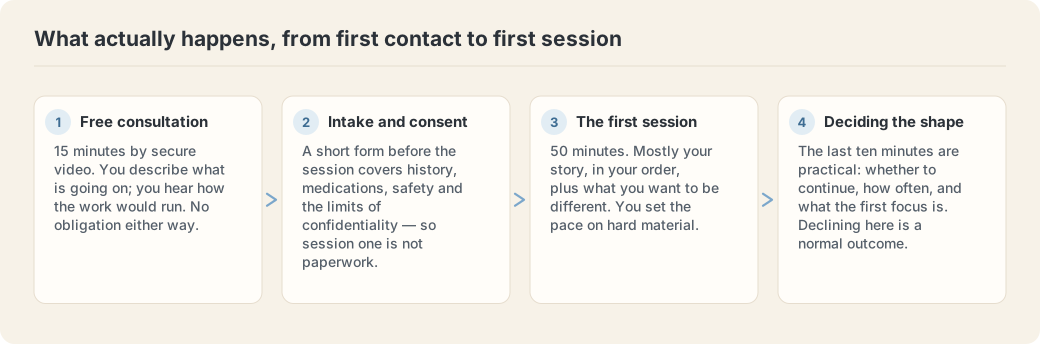
If you are weighing whether to start again with someone new, a free 15-minute consultation is a low-cost way to test the fit.
Changing counsellor without starting from zero
The dread of repeating the whole story is the main reason people stay in therapy that has stopped working. It is a real cost and a smaller one than it feels, because you are not the same narrator you were at the start. You can now say in ten minutes what took six sessions to assemble.
You can also ask your current counsellor for a summary or a referral, and a professional one will provide it without taking it personally. You are entitled to request your records, and a transfer summary is often more useful than the file itself.
When you begin with someone new, say what happened. "I worked with someone for eight months, we got as far as X, and it stalled around Y." That is enormously useful information and it shortens the runway considerably. Questions worth asking a therapist covers what to establish before committing this time.
When it is not the therapy
Occasionally therapy is not working because talk therapy is not the whole answer. Persistent, severe depression that has not responded to a well-conducted course of treatment is a reason for medical review rather than more of the same. Untreated sleep disorders, thyroid problems and several other physical conditions present convincingly as psychological ones.
Active addiction will keep overwhelming counselling until it is addressed directly, and that is a specialised service rather than a failure of effort. Undiagnosed neurodevelopmental differences can make standard approaches feel inexplicably ill-fitting, and assessment for those requires a registered psychologist rather than a counsellor.
A counsellor who raises any of this is not giving up on you. Naming the limit of what counselling can do is part of the scope this practice states openly, and a referral is a clinical act rather than a rejection.
The review conversation, in more detail
Raising this goes better with a structure, largely because it stops the conversation becoming a general expression of dissatisfaction that neither of you can act on.
Open by stating that you are reviewing rather than complaining. "I want to spend some of today checking how this is going." That single framing sentence changes the register, and it gives the counsellor a chance to engage rather than defend.
Then work through four questions in order. What were we aiming at?. You may discover you have different answers, which is itself the finding. What has changed since we started?, including small things, since the counsellor may have noticed movement you have discounted. What has not?, be specific; "I still cannot make the phone call" is actionable where "I still feel bad" is not. What would you change if I said this was not working?. The question that reveals most, because it shows whether there is a plan B.
Then agree something concrete with a review date attached. A different approach, a different frequency, a specific target for the next six sessions, and a date to check it. Vague agreement to try harder is what produced the drift.
What you are listening for throughout is not reassurance. It is whether the counsellor treats this as material. Curiosity is a good sign; so is being told plainly that they may not be the right person. Defensiveness, or an interpretation of your question as resistance, has answered the larger question for you.
Leaving well, if you decide to leave
Most people who end therapy do it by disappearing. A cancellation, a rescheduling, then silence. It is entirely understandable and it costs you something worth keeping.
A single ending session does three things a disappearance cannot. It gives you a summary of what did change, which is frequently more than you can see from inside, because progress is invisible when you are the one who moved. It produces a transfer summary if you are continuing elsewhere, which can save a new counsellor several sessions of history-taking. And it leaves the door genuinely open, which matters, because a substantial number of people return to a counsellor later and find it awkward if they vanished.
You do not have to justify the decision. "I have decided to stop" is complete. A counsellor may ask whether anything about the work contributed, and that is them doing their job rather than negotiating with you, answering honestly is useful and entirely optional.
If the reason for leaving is something about the counsellor, saying it is a genuine service to the next person even though you owe nobody that. And if the relationship has become one you cannot say that in, that is itself the answer and there is no obligation to have the conversation.
What is worth avoiding is leaving in the middle of something difficult that has just been opened. Where possible, either close it first or say explicitly that you are stopping with something unfinished, so it can be handled rather than left hanging.
Common questions
How long should I give it before deciding?
As a rough guide, eight to ten sessions is enough to expect something identifiable to have shifted, even if that is only understanding the pattern better. Raise it earlier if the fit feels wrong; that does not need a waiting period.
Is it rude to tell my counsellor it is not working?
No. It is one of the more useful things you can do, and a competent counsellor will treat it as material rather than as criticism.
Will changing counsellor mean starting over completely?
No. You carry the understanding you have built, and you can articulate your situation far better than you could at the beginning. You can also ask for a transfer summary.
What if I have felt worse since starting?
Temporary worsening after opening difficult material is common and usually passes within a couple of weeks. Sustained deterioration, or feeling unsafe, is different and should be raised immediately, with the counsellor, and with a crisis service if it reaches that point.
Sources
- BC Association of Clinical Counsellors, code of ethical conduct
- Canadian Mental Health Association, BC Division
- HealthLink BC, mental health and substance use
This guide is general information, not clinical advice, and it cannot diagnose anything or replace an assessment. If you are in crisis, call or text 9-8-8 (Canada, 24/7) or BC Mental Health Support at 310-6789.
Individual sessions are $140 for 50 minutes, after a free 15-minute consultation; card at booking.
Many extended health plans reimburse a Registered Clinical Counsellor, depending on the plan, so check yours; MSP does not cover private counselling. All fees.
There is no wrong way to start.
A free 15-minute consultation over secure video, whenever you are ready for one. Nothing is committed by having it, and no card is needed to book it.
Book Free ConsultationNot ready to book? Send a line about what is going on. A reply comes within one business day.
Or a smaller step: Burnout, or depression? A reflection · What sessions cost · What the free 15 minutes is like
Looking on behalf of someone else? What to send them, and what not to, including the funded routes most people do not know they qualify for.
Where you are
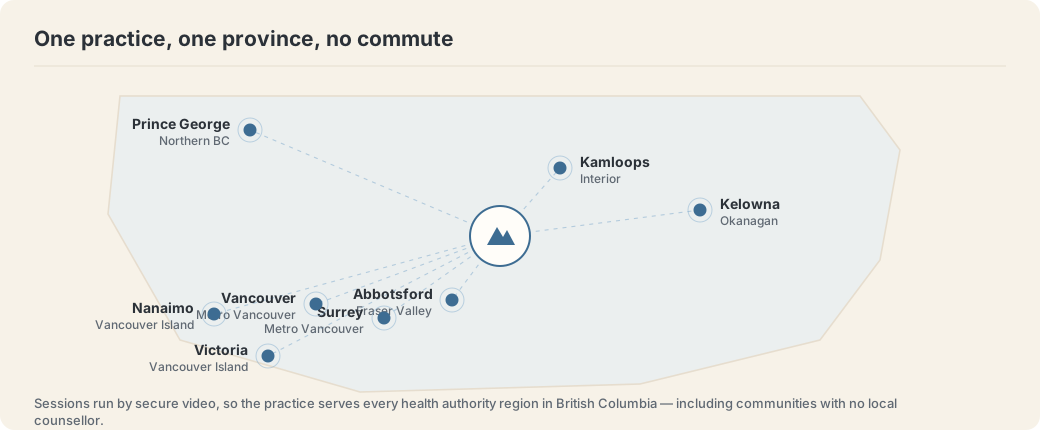
Online counselling across British Columbia
Every session is by secure video, so the counsellor you see does not depend on where you live. Each city page covers coverage, local public services and who is taking new clients there.