BC resource
Getting a psychiatrist or a formal assessment in BC
Psychiatry in BC is covered by MSP and requires a referral from a physician or nurse practitioner; waits are often long. Formal psychological assessment: ADHD, autism, psychoeducational, cognitive: requires a registered psychologist, is largely not covered by MSP in private practice, and can be expensive. Without a family doctor, walk-in clinics, the Health Connect Registry and virtual care are the practical routes to a referral.
Counselling cannot diagnose, cannot prescribe, and cannot assess. Here is what to do when one of those is what you actually need.
7 min read · Updated
Which professional does what
- Psychiatrist, A medical doctor specialising in mental health. Diagnoses, prescribes and manages medication, and handles complex presentations. Covered by MSP. Requires a referral from a physician or nurse practitioner. Psychologist vs psychiatrist in BC compares the two side by side.
- Family physician or nurse practitioner, Can diagnose and prescribe for many common presentations, and is the gateway to a psychiatric referral. For a substantial proportion of people, this is the appropriate medical route and psychiatry is not needed.
- Registered psychologist, The designation qualified to conduct formal psychological assessment: ADHD, autism, psychoeducational, cognitive. Does not prescribe. Largely not covered by MSP in private practice.
- Registered Clinical Counsellor, Provides counselling and psychotherapy. Does not diagnose, prescribe or conduct formal assessment. See the stated scope.
How a psychiatric referral works
You cannot self-refer to a psychiatrist in British Columbia. The route runs through a family physician or nurse practitioner, who assesses and, if appropriate, refers. Waits vary widely by region and by urgency, and can run to many months for a non-urgent referral.
Two things improve the outcome of that appointment. First, arrive with a written timeline rather than a summary, when it started, what has changed, what has been tried, what effect it had. Fifteen minutes of prepared notes is worth more than an hour of recollection under pressure. Second, ask directly what the referral is for: medication review, diagnostic clarification, or ongoing management. These lead to different services.
Urgent presentations move differently. Emergency departments have psychiatric assessment capacity, and health authorities operate urgent-response services in most regions. If risk is immediate, that is the route rather than a referral, 9-1-1, or 9-8-8 by call or text for crisis support.
If you do not have a family doctor
- The Health Connect Registry, BC's provincial registry for attaching people to a family physician or nurse practitioner. Register even if the wait is long. It is the main route to attachment.
- Walk-in clinics and urgent and primary care centres, Both can make referrals. Continuity is poorer, so bring your written history each time rather than assuming it carries over.
- Virtual care, Several MSP-covered virtual services operate in BC and can assess and refer. Verify that a service bills MSP rather than charging privately before booking.
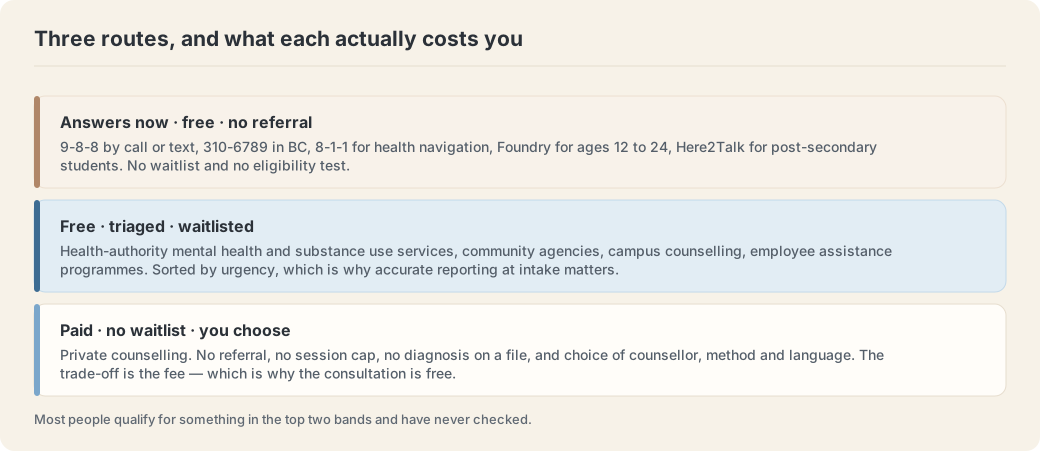
- HealthLink BC at 8-1-1, Free health information and navigation, 24 hours a day, including help identifying which service you actually need.
- Foundry, for ages 12 to 24, Many centres offer primary care alongside counselling, which can shorten the route considerably for young people.
Formal psychological assessment
Assessments for ADHD, autism, learning differences and cognitive functioning are conducted by registered psychologists. They involve structured testing across several hours plus a written report, and they are the documentation that academic accommodation, workplace accommodation and some disability processes require.
The cost is the obstacle. Private assessment in BC generally runs into the thousands of dollars, and MSP does not cover psychological assessment in private practice. Some extended health plans contribute, often with a per-year maximum well below the total, and some student plans cover part of a psychoeducational assessment.
There are lower-cost routes worth pursuing: training clinics at universities with graduate psychology programmes offer assessment at reduced rates under supervision; school districts conduct psychoeducational assessments for students, with waitlists; and some health-authority services assess within specific programmes. All involve waiting, and all are considerably cheaper.
A counsellor cannot conduct or substitute for any of this, and any practitioner suggesting otherwise is working outside their scope.
If you are not sure whether you need a counsellor, a doctor or an assessment, a free 15-minute consultation will tell you honestly.
When counselling is the right route anyway
A large proportion of people who think they need a psychiatrist need something else. Psychiatry is a medical specialty for diagnosis and medication management of more complex presentations. It is not, generally, where you go for weekly talking therapy, and most psychiatrists in BC do not provide ongoing psychotherapy.
If what you want is to work on patterns, relationships, trauma or skills, counselling is the direct route and needs no referral and no diagnosis, and in private practice the wait is usually much shorter. If what you want is a medication conversation, a family physician can often handle it without a psychiatric referral at all.
And the two coexist perfectly well. Plenty of people see a prescriber for medication and a counsellor for the work, and with written consent the two can coordinate directly. Therapy, medication, or both sets out how that decision is usually framed.
Making the most of a short psychiatric appointment
A first psychiatric appointment is frequently shorter than people expect and may be the only one for some time. Preparation changes what comes out of it more than anything else you control.
Bring a written timeline, not a summary. When it started, what changed and when, what has been tried, what effect each thing had, and how long each was tried for. One page. Hand it over rather than reciting it. It saves several minutes and it is more accurate than recall under pressure.
Bring a current medication list, including anything over the counter, supplements, and alcohol or other substance use. Interactions matter and omissions here are common.
Bring family history if you know it. Whether a relative responded well to a particular treatment is useful clinical information.
State your question explicitly. "I want to understand whether medication would help" or "I want a diagnostic opinion" or "I want to know whether this is treatable" all lead to different appointments. Waiting to be told is the least efficient use of the time.
Ask three things before you leave: what happens next and when, what would count as this not working, and who to contact in the meantime. Appointments end abruptly and these are the questions people realise afterwards they needed answered.
And bring someone if you can. A second person remembers different things, and for anyone whose concentration is affected that is not a small advantage.
Whether an assessment is worth the cost
Private psychological assessment in BC runs into the thousands, and it is worth being clear-eyed about when that is money well spent and when it is not.
It is worth it when something depends on the documentation. Academic accommodation, workplace accommodation, a disability claim, or access to a service with a diagnostic gate. In those cases the report is the point, and there is no substitute.
It is worth it when the diagnostic question genuinely changes the treatment. Some conditions have specific, well-evidenced treatments that differ from general counselling, and where the answer changes what you do, the assessment earns its cost.
It is often not worth it when the goal is self-understanding alone. That is a real and legitimate goal, and a great deal of it is available through counselling at a fraction of the price. A label can be clarifying and it does not, by itself, change anything.
And it is not worth it if it becomes a way of deferring the work. Waiting eighteen months and several thousand dollars for a diagnosis before addressing something that is causing distress now is a common and expensive form of avoidance.
Where documentation is genuinely needed and cost is the obstacle, the lower-cost routes: university training clinics, school district assessments, and health-authority programmes: all exist and all involve waiting. Starting that process early, in parallel with counselling rather than instead of it, is usually the better structure.
Common questions
Can a counsellor refer me to a psychiatrist?
Not directly. In BC a psychiatry referral comes from a physician or nurse practitioner, and MSP covers the consultation on that basis. What a counsellor can do is write to your doctor describing what they are seeing and why a psychiatric opinion would help, which makes the referral easier to get and more likely to be triaged well. If you have no family doctor, an urgent and primary care centre can refer.
How do I see a psychiatrist in BC?
Through a referral from a physician or nurse practitioner, which MSP covers; there is no self-referral and, with rare exceptions, no private psychiatry to pay for. Waits are commonly months. While waiting, a family doctor can start treatment, a psychiatric consultation service for primary care can advise your doctor quickly, and counselling can begin at once, since it does not need the referral.
Psychiatrist vs psychologist: what is the difference?
A psychiatrist is a medical doctor who specialises in mental illness, can prescribe medication, and is covered by MSP on referral from a physician or nurse practitioner. A registered psychologist holds a doctorate in psychology, can diagnose and conduct formal assessments, cannot prescribe, and in private practice is paid out of pocket or through extended health. Neither is the usual first step for talk therapy; that is a counsellor or psychologist, and the psychiatrist enters when medication or a complex diagnosis is in question.
What is a psychiatric consultation service for primary care?
In BC, family doctors and nurse practitioners can consult a psychiatrist about a patient without the patient being referred, through services such as the Rapid Access to Consultative Expertise (RACE) line. For you it means your own doctor may be able to get specialist advice on diagnosis or medication within days, when a full psychiatry referral could take months. Ask your doctor whether a consultation, rather than a referral, would answer the question.
Can I refer myself to a psychiatrist in BC?
No. A referral from a physician or nurse practitioner is required. Some urgent-response services can be accessed more directly in a crisis.
Does MSP cover a psychologist?
Psychological services in private practice are generally not covered by MSP. Psychologists working within some public health-authority programmes are, but access is limited and usually programme-specific.
Where do I get a psychological assessment in BC?
From a registered psychologist, booked directly and privately; no referral is needed. The BC Psychological Association’s Find a Psychologist search at psychologists.bc.ca lists its member psychologists by city, area of concern and language, and the College of Health and Care Professionals of BC’s public directory confirms that someone is registered. Lower-cost routes are university training clinics, school-district assessments for students, and some health-authority programmes, all with waits. If medication or a medical diagnosis is the question, start with a family doctor or nurse practitioner instead.
Can a counsellor diagnose ADHD?
No. Formal assessment requires a registered psychologist, and diagnosis may also come from a physician or psychiatrist depending on the condition and the purpose.
How long do psychiatry waits actually run?
It varies substantially by region and urgency and can extend to many months for non-urgent referrals. Ask the referring clinician for the current local picture rather than relying on general figures.
Sources
- HealthLink BC, call 8-1-1
- BC Provincial Attachment System, Health Connect Registry
- College of Health and Care Professionals of BC
- BC Psychological Association, Find a Psychologist (read 3 Oct 2026)
General information, not clinical, financial, or legal advice. Coverage and service details change, verify anything decision-critical directly with the provider or insurer. If you are in crisis, call or text 9-8-8 (Canada, 24/7) or 310-6789 for BC Mental Health Support.
Who you would talk to
Taking new clients and seeing people across BC by secure video. Each is a Registered Clinical Counsellor; the registration is on the profile and can be checked on the BCACC register.

Camille Granda, RCC, CCC
English and Tagalog · Trauma, Anxiety and chronic stress, Grief, loss and life transitions
In her words: “I want sitting with me to feel like the biggest belly breath you have ever taken.”

Savneet Singh, RCC
English and Punjabi · Anxiety, Depression, Trauma and attachment
In her words: “Comforting, safe and supportive, is what I aim for.”
Individual sessions are $140 for 50 minutes, after a free 15-minute consultation; card at booking.
Many extended health plans reimburse a Registered Clinical Counsellor, depending on the plan, so check yours; MSP does not cover private counselling. All fees.
Questions about cost or coverage?
A free 15-minute consultation is a good place to ask them, before committing to anything.
Book Free ConsultationNot ready to book? Send a line about what is going on. A reply comes within one business day.
Or a smaller step: What sessions cost · What the free 15 minutes is like
Looking on behalf of someone else? What to send them, and what not to, including the funded routes most people do not know they qualify for.
Where you are
Online counselling across British Columbia
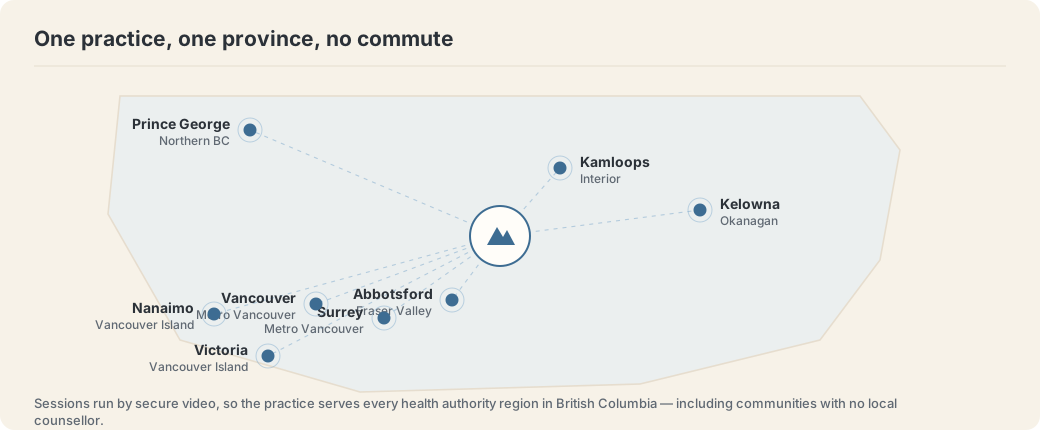
Every session is by secure video, so the counsellor you see does not depend on where you live. Each city page covers coverage, local public services and who is taking new clients there.