For · Newcomers to Canada
Counselling for newcomers to Canada, in BC
You did the hard thing. Then the hard thing turned out to be the first of several, and the people who would understand are eleven time zones away.
6 min read · Updated September 25, 2026
Counselling for people who have recently moved to Canada and live in BC, online by secure video, in English, Punjabi or Tagalog, with counsellors who work in those languages rather than through an interpreter. Covers settlement stress, the credential and status limbo, isolation, family obligations across time zones, and grief for a life that was left. Also explains coverage plainly: MSP does not pay for private counselling at any point, extended health from a job usually does, and some free routes exist for the first months.
Nearly a third of people living in British Columbia were born outside Canada. Surrey, Abbotsford, Richmond and Burnaby are among the most immigrant-dense cities in the country. Being new here is not unusual. Feeling, in the second year, that it is going worse than anyone at home knows, is not unusual either, and it is the thing almost nobody says out loud.
The strain has a shape. The first months run on adrenaline and logistics. Then the credential that does not transfer, the job below the one you trained for, the winter, the cost of everything, the calls home where you say it is fine, and the slow realisation that the people you left have carried on without you. Counsellors call this settlement stress and migration grief. People living it call it being tired in a way sleep does not touch.
The counsellors at this practice work in Punjabi and Tagalog as well as English, in the language itself rather than through an interpreter. A session can be in the language you think in, about the things you cannot say to family, with someone who does not need the background explained first.
What comes up
The things people actually say
The job below the one you trained for
A doctor driving, an engineer in a warehouse. The loss of a professional self is a real grief, and it is one Canada rarely acknowledges.
Status limbo
Work permits, PR applications, a sponsorship that depends on a relationship staying together. Living provisionally, for years, does something to a nervous system.
Family across time zones
Ageing parents you cannot reach, money that has to be sent, calls where everyone performs being fine. Obligation without presence.
Isolation that is not loneliness exactly
Plenty of people around, none of them the ones who knew you before. Building a life from strangers is slow and it is work.
A marriage under a load it was not designed for
Two people who each left something, carrying it differently, with no one else to lean on. Couples work is available in Punjabi.
Children becoming Canadian faster than you
The language, the values, the arguments. The intergenerational page covers this in depth for South Asian families.
Thirty free minutes, in your language, from home. Nothing about your status is asked. Book a free consultation.
How to pay for it, said plainly
This confuses everyone and the confusion costs people months. MSP, the provincial health plan, does not pay for private counselling at any point, for anyone. That is not a newcomer rule; it is the rule. What pays is extended health insurance from an employer, which usually reimburses a Registered Clinical Counsellor up to an annual limit, and which many newcomers have without knowing it. The coverage page explains how to check in two minutes.
Refugee claimants and some other groups have federal interim health coverage that includes counselling; a settlement agency can confirm whether you do. For the first months, before any plan starts, the low-cost counselling page lists the free and sliding-scale routes in BC, and settlement organisations such as MOSAIC, ISSofBC and DIVERSEcity offer free counselling and referrals in many languages.
Private fees at this practice are published in full, and the first 30-minute consultation is free. Nothing about immigration status is asked, recorded or reported.
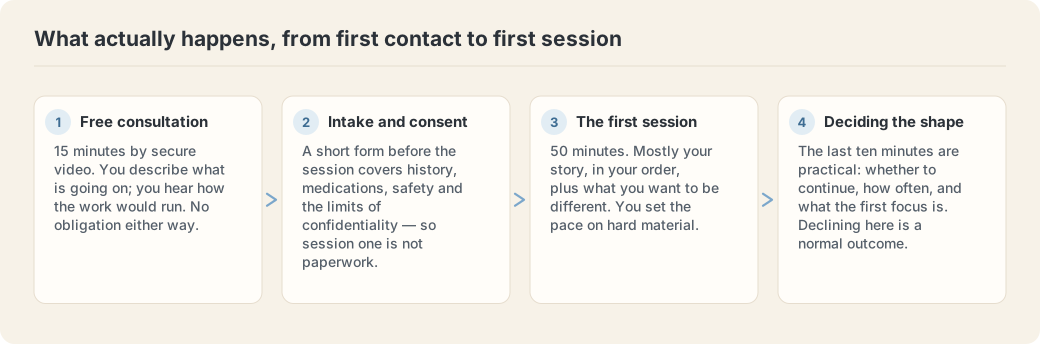
What sessions are like, and what they are not
Counselling here is not advice and it is not settlement services; it does not find you a job or fix a permit. It is a place to put down the weight of managing everything, to grieve what was left without being told to be grateful, and to work practically on sleep, anxiety, the marriage, the flatness, whatever has become the daily problem. It runs on your schedule, by video, from home, in English, Punjabi or Tagalog.
The counsellors are Registered Clinical Counsellors, members of the BC Association of Clinical Counsellors, and you can check any of them on the public register. That page exists because "counsellor" is not a protected title in BC, and people new to the country are the ones most often caught by that.
Where to start
Services that tend to fit
Common questions
Does MSP cover counselling for new residents?
No. MSP does not pay for private counselling for anyone, new or long-standing. Extended health from an employer usually does; refugee claimants may have federal interim coverage; and free routes exist through settlement agencies and community services for the first months.
Can sessions be in Punjabi or Tagalog?
Yes. One counsellor works in English and Punjabi and one in English and Tagalog, and the counsellors page says which. A session can switch between languages as the conversation does.
Is anything about my immigration status recorded?
No. It is not asked, not recorded and not reported to anyone. Counselling is confidential within the ordinary legal limits, which are explained before you share anything.
Can I be seen if I am here on a work or study permit?
Yes. The only requirement is that you are physically in British Columbia at the time of the session, because the counsellors are registered in BC.
Sources and further support
- WelcomeBC, Government of British Columbia
- MOSAIC, settlement and counselling services
- HealthLink BC, mental health and substance use
General information, not clinical advice, and not a diagnosis. If you are in crisis, call or text 9-8-8 (Canada, 24/7) or BC Mental Health Support at 310-6789. In immediate danger, call 911.
Where you are
Online counselling across British Columbia
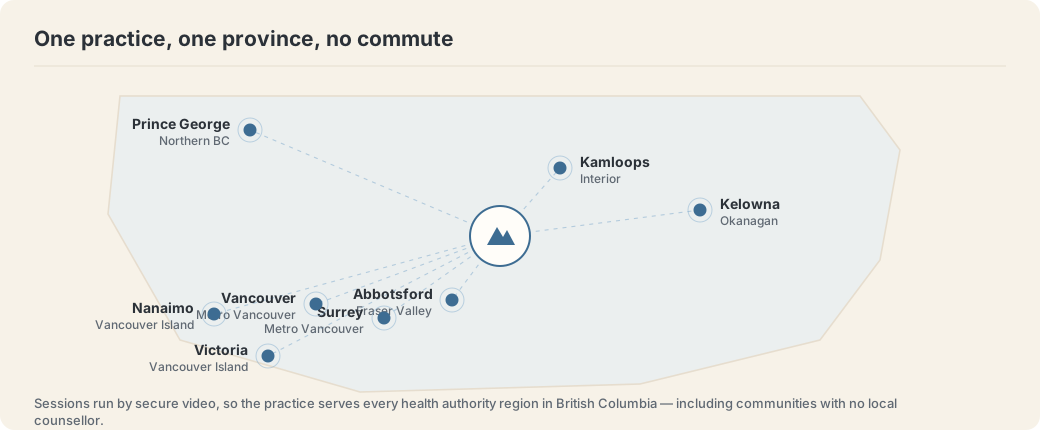
Every session is by secure video, so the counsellor you see does not depend on where you live. Each city page covers coverage, local public services and who is taking new clients there.
One conversation, no commitment.
A free 30-minute consultation over secure video, including an honest answer if something other than counselling would serve you better.
Book Free ConsultationNot ready to book? Send a line about what is going on. A reply comes within one business day, or read the guides first and come back when you want to.
Looking on behalf of someone else? What to send them, and what not to, including the funded routes most people do not know they qualify for.