For employers and HR
Counselling support for BC employers and HR
An employer in BC cannot book counselling for an employee, but it can make it reachable: a working EFAP, a plan that lists Registered Clinical Counsellors, a wellness or lifestyle spending account, paid sick leave that is actually usable, and a manager who knows what not to ask. Westpeak Wellness is a small virtual practice, not an EAP provider; employees book directly, pay at booking, and receive receipts their plan can process. What the practice can offer an employer is clarity about how that works and, within scope, attendance confirmation when an employee asks for it.
Somebody on your team is not alright, and you are trying to help without overstepping. This is what that looks like in practice.
7 min read · Updated
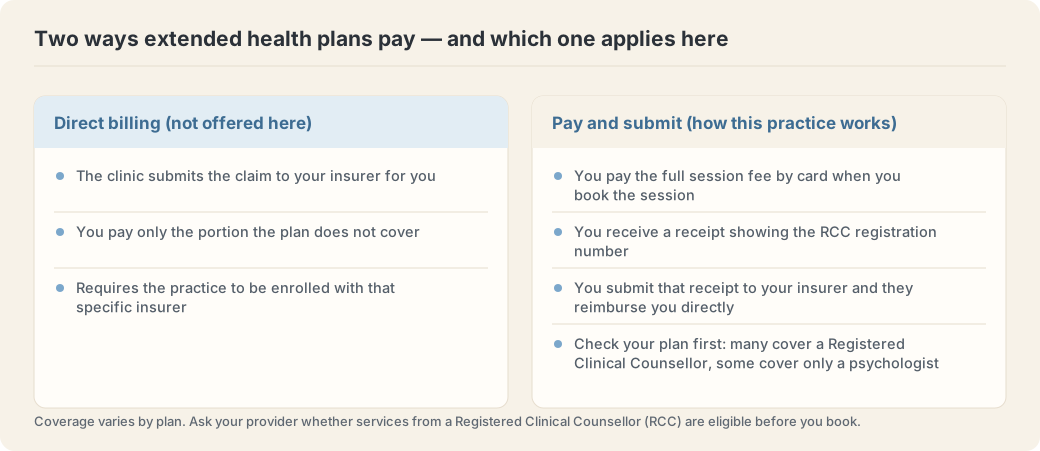
Many extended health plans reimburse a Registered Clinical Counsellor, depending on the plan, so check yours; MSP does not. Receipts are issued for every session, and the fees are published in full. On a calendar-year plan, sessions held by 31 December count against this year: using benefits before the plan year ends.
Individual sessions are $140 for 50 minutes, after a free 15-minute consultation.
Most managers meet this at the worst moment: a good employee has gone quiet, or asked for time off without saying why, or said something in a one-to-one that you were not trained to hear. The instinct is to fix it. The job is narrower than that, and knowing where the edge is protects both of you.
What follows is the practical version: how counselling gets paid for in a BC workplace, what you are entitled to ask, what a small private practice like this one can and cannot do for an employer, and the two or three things that make the difference between a benefit that exists on paper and one that gets used.
What comes up
The things people actually say
"We have an EFAP and nobody uses it"
Usually because nobody knows what it covers, it is described as a crisis line, or people assume HR sees the usage. Saying plainly that it is confidential, free, and for ordinary problems changes uptake more than any poster.
"They asked for stress leave and I do not know what I can ask"
You can ask for confirmation of inability to work and an expected duration. You cannot ask for the diagnosis, the treatment, or what is discussed in sessions.
"I want to pay for their counselling"
Generous, and it needs a structure: a wellness or lifestyle account, or a plan change that lists RCCs. A health spending account may not do it, because it pays only CRA-eligible expenses and the CRA does not yet list counsellors in BC. Paying a counsellor directly for a named employee creates a relationship the counsellor cannot be part of.
"Can you tell us if they are fit to return?"
A counsellor cannot. Fitness-to-work is a physician's or an occupational-health assessment. A counsellor can confirm attendance, with the employee's written consent, and nothing else.
"The team is burnt out, not one person"
Then the question is workload and design, which counselling for individuals does not fix. It can still help the individuals while the structural part is being addressed.
If you would rather settle the practical questions first, a short exchange by email about how this would work for your team costs nothing. Email the practice.
At a glance for HR
The facts a benefits page or a manager’s toolkit needs, in one place. The fees and the consultation are read from the booking system, and where sessions are possible from the counsellors’ registration and insurance, so this list changes when they do. There is a printable one-page version, and for a staff room or reception desk, four cut-out cards with the free consultation and the crisis lines.
- Who
- Registered Clinical Counsellors, by secure video. Sessions are possible in British Columbia.
- Languages
- English, Tagalog or Punjabi.
- First step
- A free 15-minute consultation, booked by the employee.
- Fees
- Individual sessions $140 for 50 minutes; couples sessions $175. Every fee is on the pricing page.
- Payment
- The card is taken at booking. Cancelling or moving a paid session with at least 24 hours’ notice gets a full refund. With less than 24 hours’ notice, or for a no-show, 50% of the fee is kept.
- The receipt
- The counsellor’s name, designation and registration number, the date and the fee: what a plan needs to reimburse. The employee claims it; the practice does not bill an employer or a plan.
- Plan wording to look for
- “Registered Clinical Counsellor” (RCC) or “Canadian Certified Counsellor” (CCC) on the practitioner list. Coverage depends on the plan; one that names only psychologists will not reimburse these sessions.
- What the employer receives
- Nothing, unless the employee gives written consent. With it, confirmation of attendance on given dates, and nothing about content.
- What it is not
- Not an EAP, not a fitness-to-work assessor, and not a party to the employment relationship. No employer contract and no invoice for an individual’s sessions.
- In a crisis
- Not a crisis service. Call or text 9-8-8, any hour, or 310-6789 for BC Mental Health Support. In immediate danger, 9-1-1.
How counselling gets paid for in a BC workplace
- Employee and family assistance program (EFAP), A contracted provider, a set number of short-term sessions, free to the employee, confidential from the employer. The most under-used benefit in most workplaces. This practice is not an EFAP provider; the comparison of EFAP and private counselling is on its own page.
- Extended health plan, Reimburses eligible practitioners up to an annual maximum. Whether a Registered Clinical Counsellor is eligible is a plan-design choice you or your broker made. If it is not, the single most useful change an employer can make is to add RCC and CCC to the practitioner list at renewal.
- Health spending account, Pays only expenses the CRA accepts as medical expenses, and the CRA’s list of authorized practitioners does not yet include counsellors in BC, so many administrators decline an RCC receipt. Ask the administrator before relying on it. A wellness or lifestyle spending account is broader and can fund RCC sessions, as a taxable benefit to the employee.
- Paid sick leave, The Employment Standards Act entitles most employees to paid sick days, and mental-health conditions count. Making it clear that a counselling appointment is a legitimate use is worth saying out loud.
- Direct payment, Possible only through a structure that keeps the employer out of the clinical relationship, such as a wellness account. The practice does not invoice employers for an individual's sessions.
What you may ask, and what you may not
An employer is entitled to functional information: that an employee cannot perform their duties or needs an accommodation, what the limitations are, and when this will be reviewed. That comes from a physician or nurse practitioner, not from a counsellor.
An employer is not entitled to a diagnosis, to treatment details, or to anything said in a session. Asking is a human-rights problem as well as a trust problem. If a leave is in play, the stress leave guide sets out the routes and the workplace mental-health resource covers accommodation and return to work in more depth.
The duty to accommodate under the BC Human Rights Code applies to mental-health disabilities. In practice it means adjusting hours, duties or location where that is reasonable, and documenting the conversation. It does not mean diagnosing or managing the condition.
Stay-at-work services in BC: who provides them
A stay-at-work service keeps an employee with a health condition working, with adjustments, instead of off on a full leave: reduced hours for a period, changed duties or schedule, and treatment arranged alongside the work. A return-to-work service is the same thing from the other end, after a leave. In BC they come from four places, and which one applies depends on why the employee is struggling and what the employer has bought.
- WorkSafeBC, for an accepted claim, Where the injury is work-caused and the claim is accepted, WorkSafeBC coordinates return-to-work support and contracts Return to Work Support Services providers around the province. That is inside the claim; an employer does not buy it. WCB psychological injury claims sets out when a mental-health injury is one.
- Your group benefits insurer, Many group disability carriers sell stay-at-work or early-intervention services to plan sponsors, usually tied to the short-term disability plan. Your broker can say whether your contract includes it and what it costs to add.
- An occupational health or disability-management provider, Larger employers contract one directly, or run it in-house, to design graduated returns and modified duties with the employee’s physician.
- Your EFAP, Some EFAP contracts include manager consultation and short-term counselling aimed at keeping someone at work. Check the contract before assuming it does.
Where counselling sits beside a stay-at-work plan
A stay-at-work plan is a workplace arrangement, not care. One that changes the hours and leaves the cause untouched tends to become a leave a few months later, which is why a good plan names who is providing the treatment. This practice is not a stay-at-work or disability-management provider and does not design plans or report to employers. What it is: a place an employee on such a plan can see a Registered Clinical Counsellor privately, by video, booked and paid by them and claimed on their own plan where it covers counselling. The employee’s side of the arrangement, including what to ask before agreeing to one, is in mental health and work in BC.
What this practice can offer an employer
- Clarity, in advance, A short exchange by email about how employees would reach the practice, what a receipt contains, and what the plan needs to list. No contract and no cost. Choose “An employer or HR enquiry” on the contact form.
- Attendance confirmation, With the employee's written consent, confirmation that they attended on given dates. Nothing about content, and never without consent.
- Sessions that fit shifts, Video sessions, times that depend on the counsellor and show on the booking page, and no travel time, which is the practical difference for shift, rotational and remote workers.
- Three languages, English, Punjabi and Tagalog, which matters in workforces where the person who most needs to talk is least likely to do it in a second language. For Fraser Valley and Surrey employers it may be the most useful line on this page: a meaningful share of the region’s workforce carries its hardest conversations in Punjabi, and English-only support quietly leaves them out.
- A straight answer about fit, If an employee needs something this practice does not provide, a psychiatric assessment, an occupational-health opinion, a crisis service, they will be told so and pointed there.
What a manager says, and what comes after
- Train the sentence, not the diagnosis, “You seem like you are carrying a lot. What would help?” Noticing, asking and not prescribing is the whole skill. Everything after that sentence belongs to the employee and to professionals.
- Point, do not fix, Know the concrete options before the day you need them: the EFAP if there is one, the plan for ongoing counselling, sick days without interrogation, and a booking page the person can use without telling anyone.
- Leave it with them, Once you have pointed, the decision is theirs. A manager who checks back on whether someone booked has turned an offer into a task.
If you are a manager: a note you can send one person
If someone has told you they are struggling, or you have noticed, this is about fifty words they can read in private. It names no condition and asks for nothing back. Send it from your own email, to one person, and then leave it with them.
- Do not ask what it is about.
- Do not follow up on whether they booked.
- Do not book for them.
I wanted to pass this on in case it is ever useful. Westpeak Wellness offers counselling by secure video with Registered Clinical Counsellors, and the first 15-minute consultation is free. You book it yourself, privately. Nobody at work is told, and I will not ask. The booking page: https://www.westpeakwellness.com/book?utm_source=hr
If you have no EAP and no benefits plan
- Paid sick days already exist, Under the Employment Standards Act, after 90 days of employment, five paid and three unpaid illness or injury days each calendar year, and mental health counts. The leave templates set out the rest, with sources.
- Time off for appointments, Letting someone move a shift or take an hour for a health appointment, without asking what it is, is the cheapest support there is. Video sessions add no travel time to it.
- A health or wellness spending account, The smallest structure that lets an employer pay toward counselling without seeing who used it: a fixed amount a year per employee, claimed privately against receipts. Ask the provider whether a Registered Clinical Counsellor’s receipt qualifies under the account you choose.
- What to ask for in a first plan, Registered Clinical Counsellors and Canadian Certified Counsellors on the practitioner list, a mental-health maximum that is not shared with massage and physiotherapy, and the price of adding an EFAP alongside.
- The free routes, in the meantime, 9-8-8 by call or text, 310-6789 for BC Mental Health Support, and the community and sliding-scale options on low-cost counselling in BC.
What it cannot offer
It is not an EAP and does not run one. It does not provide fitness-to-work assessments, independent medical examinations, or reports to employers or insurers about an employee's condition. It does not accept employer referrals that bypass the employee: the person books, or nobody does.
Those limits are the scope of a Registered Clinical Counsellor, and the practice would rather state them than be found out later to have implied otherwise.
Three things that change whether the benefit gets used
- Say what the EFAP actually covers, In a sentence, from a manager, in a team meeting: it is free, it is confidential, HR does not see who uses it, and it is for ordinary problems. Uptake moves.
- Fix the practitioner list at renewal, If the plan lists psychologists only, most counselling in BC is unreimbursable under it. Adding RCC and CCC is a small change with a large effect.
- Make time off for appointments normal, A counselling appointment is a health appointment. Managers who treat it as one, without asking what it is for, are doing the most useful thing on this page.
An email to your broker before renewal
The practitioner list is set at renewal, so this goes before it. Three questions, and nothing about any employee.
Hello [name], ahead of our renewal, could you confirm three things about our extended health plan? First, whether Registered Clinical Counsellors (RCC) and Canadian Certified Counsellors (CCC) are listed as eligible practitioners. Second, what the yearly maximum for mental-health practitioners is, and whether it is shared with psychologists, social workers or other paramedical services. Third, what it would cost to add RCC and CCC, or to raise that maximum. Thank you, [your name]
Paste this into your benefits page
If you keep a benefits page, an intranet or a manager’s toolkit, this paragraph can go in as it stands. The link is tagged so the practice can see that a visit came from an HR page, and nothing about who.
Westpeak Wellness offers counselling by secure video with Registered Clinical Counsellors, in English, Punjabi or Tagalog, in BC, and in other provinces where a counsellor’s registration and insurance allow; the booking page shows who. The first 15-minute consultation is free. You book directly, pay at booking and claim on your own plan where it covers counselling, and your employer is not told. It is not a crisis service: in an emergency call 911 or 9-8-8. Book here: https://www.westpeakwellness.com/book?utm_source=hr
Who you would see
Taking new clients and seeing people across BC by secure video. Each is a Registered Clinical Counsellor; the registration is on the profile and can be checked on the BCACC register.

Camille Granda, RCC, CCC
English and Tagalog · Trauma, Anxiety and chronic stress, Grief, loss and life transitions
In her words: “I want sitting with me to feel like the biggest belly breath you have ever taken.”

Savneet Singh, RCC
English and Punjabi · Anxiety, Depression, Trauma and attachment
In her words: “Comforting, safe and supportive, is what I aim for.”
Where to start
Services that tend to fit
EFAP vs private counselling
The comparison to send an employee who has used up the EFAP sessions or wants continuity.
Mental health and work in BC
Leave, accommodation, disability insurance and WorkSafeBC, from the employee side.
Counselling for healthcare and shift workers
For workforces on rosters, where the appointment has to fit the shift.
Common questions
What are stay-at-work services?
Services that keep an employee with a health condition working, with adjustments, instead of off on a full leave: reduced hours for a period, changed duties or schedule, and treatment arranged alongside. In BC they come from WorkSafeBC on an accepted work-injury claim, from group benefits insurers as part of a disability plan, from occupational-health or disability-management providers an employer contracts, and sometimes from an EFAP. Westpeak Wellness is not a stay-at-work provider; an employee on such a plan can see a counsellor here privately alongside it.
Can an employer book counselling for an employee in BC?
No. The employee books, consents and holds the relationship. An employer can make counselling reachable through the EFAP, the plan’s practitioner list, a wellness or lifestyle spending account and usable sick leave.
Can we pay for an employee's counselling directly?
Only through a structure that keeps the employer out of the clinical relationship, such as a wellness or lifestyle spending account, which is a taxable benefit. A health spending account works only if its administrator accepts an RCC receipt, which in BC is not assured, so ask first. This practice does not invoice employers for an individual's sessions.
Will the counsellor tell us how the employee is doing?
No. With the employee's written consent, the counsellor can confirm attendance on given dates. Nothing about content, and nothing without consent.
Can a counsellor confirm someone is fit to return to work?
No. Fitness-to-work comes from a physician, nurse practitioner or occupational-health assessment. A counsellor works within their scope and says so.
Is Westpeak Wellness an EAP provider?
No. It is a small virtual practice. Employees book directly and pay at booking, and their plan reimburses them where it lists the designation. A health spending account pays only CRA-eligible expenses and the CRA does not yet list counsellors in BC, so its administrator decides.
What should we ask our benefits broker?
Whether the plan lists Registered Clinical Counsellors and Canadian Certified Counsellors as eligible practitioners, what the annual maximum is, and whether a wellness or lifestyle spending account can be added. Ask too whether the health spending account accepts RCC receipts; many do not, because the CRA does not yet list counsellors in BC. There is an email to copy for it on this page.
What should a manager do in the moment with a struggling employee?
Ask, listen and point: “what would help?”, real attention, and the concrete options, which are the EFAP if there is one, the plan for ongoing counselling, sick days without interrogation, and a booking page they can use privately. Managers go wrong by diagnosing or by fixing; the job is noticing and routing.
Do you run workplace workshops or lunch-and-learns?
No. The practice does one thing, which is counselling. For workplace education, CMHA BC runs established programs. What the practice offers a team is a concrete place to send someone, which is the piece most toolkits are missing.
How does an employer contact the practice?
By email, through the contact form with “An employer or HR enquiry” chosen. It goes to the practice inbox rather than to a counsellor’s consultation calendar, and the reply comes by email.
Sources and further support
- BC Employment Standards, leaves and job protection
- BC Human Rights Tribunal
- WorkSafeBC, mental health claims
- BC Association of Clinical Counsellors
- Canadian Mental Health Association, BC Division, workplace programs
General information, not clinical advice, and not a diagnosis. If you are in crisis, call or text 9-8-8 (Canada, 24/7) or BC Mental Health Support at 310-6789. In immediate danger, call 911.
Where you are
Online counselling across British Columbia
Every session is by secure video, so the counsellor you see does not depend on where you live. Each city page covers coverage, local public services and who is taking new clients there.
One conversation, no commitment.
A free 15-minute consultation over secure video, including an honest answer if something other than counselling would serve you better.
Book Free ConsultationNot ready to book? Send a line about what is going on. A reply comes within one business day, or read the guides first and come back when you want to.
Looking on behalf of someone else? What to send them, and what not to, including the funded routes most people do not know they qualify for.