For · Men
Counselling for men in BC
Most men who come to counselling did not decide to. Something forced the question: a partner, a doctor, a night they do not want to repeat. This page is for the moment before that.
6 min read · Updated September 25, 2026
Counselling for men in BC, online by secure video in English or Punjabi, with a Registered Clinical Counsellor. The work is practical and direct: anger that arrives faster than it used to, stress that has become the default, drinking or gaming that has quietly taken over evenings, a relationship that is one argument from ending, and the flatness men rarely call depression. Sessions are 50 minutes, evenings available, and the first 30-minute consultation is free.
In Canada, about three in four people who die by suicide are men, and men are markedly less likely than women to have talked to anyone about their mental health in the year before. Those two facts are the same fact. The problem is rarely that men do not suffer; it is that the suffering has nowhere sanctioned to go, so it goes into work, into the gym, into a drink, into silence, or into the people closest to them.
Counselling for men is not a softer version of counselling. If anything it is more direct: what is actually happening, what it is costing, what you want instead, and what to do on Tuesday. Nobody here needs you to cry, to talk about your childhood before you are ready, or to use words you would not use.
It is also private in a way that matters to a lot of men. Sessions are by video from wherever you are, nobody sees you walk into an office, and nothing said reaches an employer, a partner, or a family doctor without your written consent.
What comes up
The things people actually say
Anger that is not really anger
The short fuse at home, the road, the kids. For many men anger is the one emotion with a licence, so everything else arrives dressed as it. Work here is on what is underneath, not on counting to ten.
Stress as a permanent setting
The jaw, the sleep, the chest, the sense of being one email from the edge. Usually years old by the time anyone calls it a problem.
Drinking, weed or gaming that has crept
Not a crisis, not nothing. An evening that used to be optional and is not any more. Counselling looks at what it is doing for you before what it is doing to you.
A relationship one argument from over
Often the reason a man finally books: the partner has said something that sounded final. Individual work first, couples work if both want it.
The flatness
Not sad, exactly. Nothing much. Less interest, less patience, less of you. Men describe depression this way far more often than the textbook does.
Fathers, and the father you had
Wanting to do it differently and catching yourself doing it the same. One of the most common threads in this work, and one of the most productive.
Thirty minutes, free, by video, no forms first. That is the whole barrier. Book a free consultation.
What the sessions are actually like
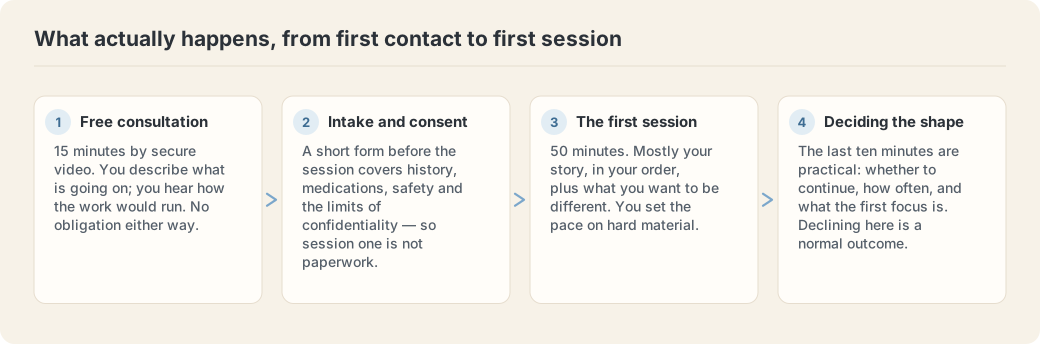
The first 30 minutes are free and are a conversation, not an assessment. You say what is going on in whatever words you have; the counsellor says how they would work with it and what a first stretch of sessions would look like. If it does not fit, that is a fine outcome and nobody chases you.
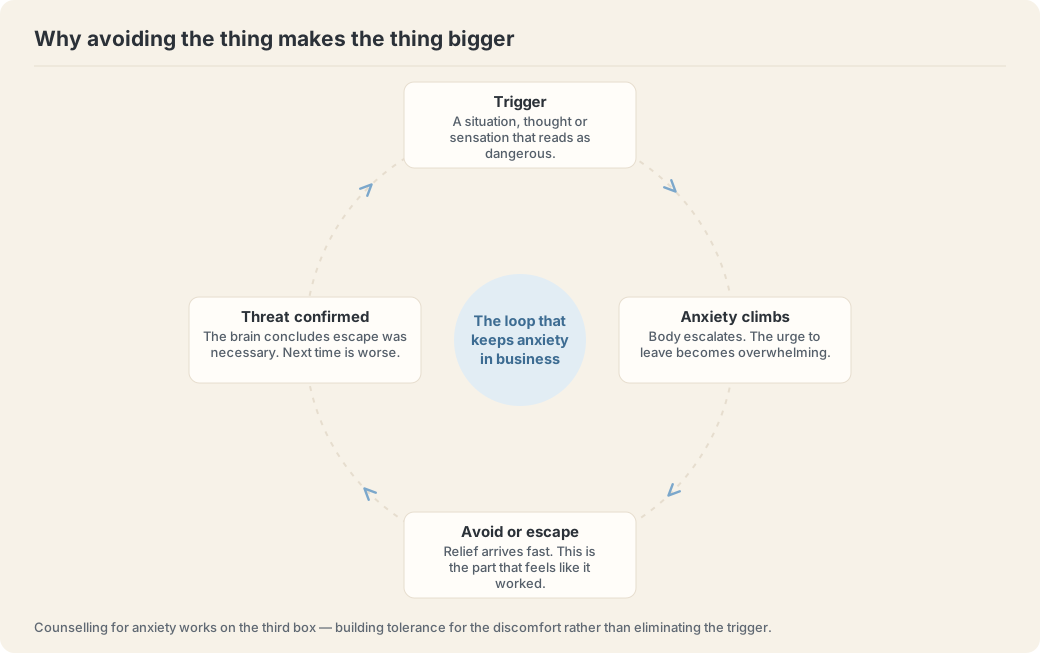
After that, sessions are 50 minutes, weekly or every two weeks, and they have a shape. There is something you are working toward and a way of knowing whether you are getting there. Approaches used most with men at this practice are CBT, which is structured and skills-based, and ACT, which suits people who understand their patterns fine and are still stuck in them. Where there is a history that keeps intruding, EMDR is available.
None of it requires you to be a talker. Plenty of men do their best work in this format precisely because there is a task in front of them rather than an open silence.
Paying for it, and keeping it to yourself
Most BC extended health plans reimburse a Registered Clinical Counsellor under counselling or mental health; the coverage page has the two questions to ask. Receipts are issued to you, in your name, and go nowhere else. If you are paying out of pocket, fees are published in full.
If you are in a trade, on a camp rotation, driving, or in emergency services, there are pages written for that: trades and construction, rotational and camp workers, truck drivers and first responders. The material overlaps with this page; the schedules do not.
Where to start
Services that tend to fit
Common questions
Do I have to talk about feelings?
You have to talk about what is happening and what it is costing. What you call it is up to you. Most men find the work more practical than they expected: a target, a way of measuring it, and things to do between sessions.
Can I see a male counsellor?
The counsellors currently accepting new clients are listed on the counsellors page with their photos and what they work with. Fit matters more than gender for most people, and the free consultation exists so you can judge fit before committing to anything.
Will this go on any record?
No. Attending counselling is not reported to anyone. Sessions are confidential within the ordinary legal limits, which are explained before you share anything, and nothing reaches an employer, insurer or doctor without your written consent.
Is it covered by my plan?
Most BC extended health plans reimburse a Registered Clinical Counsellor to an annual maximum. Check for "counselling" or "clinical counsellor" in your plan booklet. MSP does not cover private counselling.
Sources and further support
- HeadsUpGuys, University of British Columbia
- Canadian Mental Health Association, BC Division
- HealthLink BC, mental health and substance use
General information, not clinical advice, and not a diagnosis. If you are in crisis, call or text 9-8-8 (Canada, 24/7) or BC Mental Health Support at 310-6789. In immediate danger, call 911.
Where you are
Online counselling across British Columbia
Every session is by secure video, so the counsellor you see does not depend on where you live. Each city page covers coverage, local public services and who is taking new clients there.
One conversation, no commitment.
A free 30-minute consultation over secure video, including an honest answer if something other than counselling would serve you better.
Book Free ConsultationNot ready to book? Send a line about what is going on. A reply comes within one business day, or read the guides first and come back when you want to.
Looking on behalf of someone else? What to send them, and what not to, including the funded routes most people do not know they qualify for.