For · First responders
Counselling for first responders in BC
The job gives you a hundred things a year that a civilian gets once in a life, and a culture that says none of them should count. Both of those are true at once, and the second one is the problem.
7 min read · Updated September 25, 2026
Counselling for first responders in BC, online by secure video, scheduled around shift rotations, with a Registered Clinical Counsellor trained in EMDR. Covers cumulative exposure and the call that will not file itself away, sleep after nights, the home that gets the leftovers, and the decision about whether to make a WorkSafeBC claim under the mental-disorder presumption for first responders. Nothing said in a session reaches an employer or a file without written consent.
Police, firefighters, paramedics, dispatchers, sheriffs and corrections officers in BC are exposed to more potentially traumatic events in a year than most people meet in a lifetime, and the exposure is cumulative rather than singular. The call that finally lands is rarely the worst one; it is the one that arrived on top of everything the others left.
British Columbia recognised this in law. Since 2018 the Workers Compensation Act has carried a presumption that a mental disorder in a first responder is work-related unless shown otherwise, and the presumption was later extended to further occupations. That matters for a claim. It does not, by itself, get anyone help, and a claim is a separate decision from treatment.
Counselling here is private, by video, and scheduled around a rotation rather than a Monday-to-Friday clinic. The counsellor knows the difference between a critical-incident debrief, a peer-support conversation and clinical treatment, and this is the third one.
What comes up
The things people actually say
The call that will not file
Intrusive images, a smell, a stretch of road you avoid. Usually one call standing in for many. EMDR was built for exactly this and is offered here.
Cumulative load
Nothing dramatic, everything heavier. Less patience, more startle, a shorter fuse at home. Operational stress injury is a load problem before it is an event problem.
Sleep after nights
Rotations that never let the body settle, and the drink or the pill that makes it settle faster. Sleep is treated as clinical material, not a lifestyle note.
Home gets the leftovers
A partner who says you are not there even when you are. The family sees the version of you the job leaves behind.
Whether to claim
The presumption exists; the decision to use it is yours, and it has consequences either way. Counselling can help you think it through without steering it.
Trust
Who knows, what is written down, and whether any of this can reach the service. Answered plainly, before you say anything.
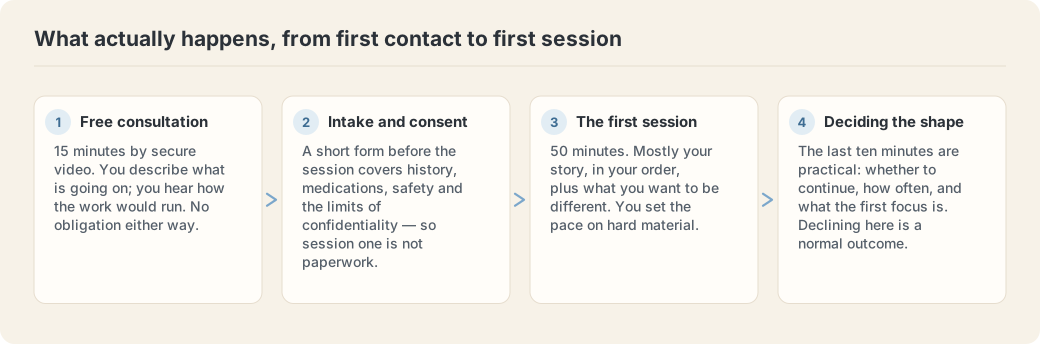
A free 30-minute consultation, by video, at an hour that fits the rotation. Book a free consultation.
What treatment looks like, and how it differs from peer support
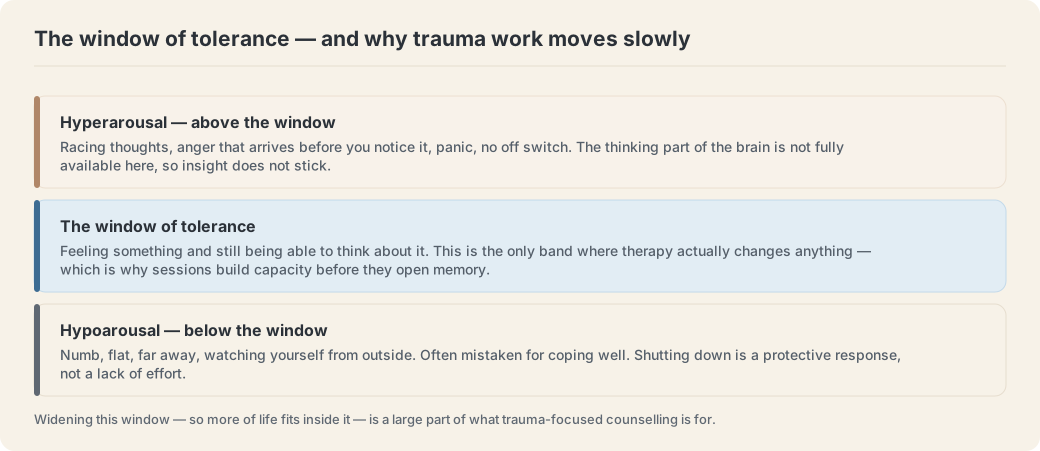
Peer support and critical-incident stress management are valuable and they are not treatment. Treatment is a clinician working, over a defined stretch of sessions, on the specific way the exposure has lodged: the memories that intrude, the alarm system stuck on, the avoidance that has quietly reorganised a life around not being reminded.
For a single event or a cluster of them, EMDR is a first-line, evidence-supported approach that does not require narrating the event in detail. For the cumulative picture, the work is usually a combination: stabilisation first, so that the nervous system has somewhere to return to; then the exposures, in order of weight; then the home front, which has usually been carrying more than anyone said. The guide to what trauma actually means is the plain-language version of this.
Sessions are by video and are scheduled around the rotation. Days, evenings and the odd hour after a night shift are all workable, which is the practical reason a virtual practice fits this work better than a 9-to-5 clinic.
Claims, coverage and who gets told
Three routes pay for this, and they are separate. A WorkSafeBC claim under the presumption covers treatment for an accepted work-related mental disorder; the claims page sets out how that route runs. Your extended health plan reimburses a Registered Clinical Counsellor whether or not there is a claim; the coverage page has the questions to ask. And paying privately keeps the whole thing entirely outside any file, which some people choose for that reason alone.
Whichever route, nothing said in a session reaches the service, a supervisor, a union or an insurer without your written consent. If you make a claim, you decide what is released to it. The limits of confidentiality are the ordinary legal ones and are explained before you share anything.
Where to start
Services that tend to fit
Common questions
Do I need a diagnosis or a claim to start?
No. Counselling does not require either. If you want to make a WorkSafeBC claim, the presumption for first responders means a diagnosed mental disorder is presumed work-related; the diagnosis comes from a physician or psychologist, and counselling can run alongside from the start.
Will my service find out?
Not from this practice. Attending is not reported to anyone, and no information leaves without your written consent. If a claim is involved, you control what is released to it.
Can you work around a four-on, four-off rotation?
Yes. Sessions are by video and the calendar shows real open times, including evenings. A block after a set of days off is a common shape; a session after a night shift is possible if that is when you can think.
Is EMDR appropriate for cumulative exposure, not one event?
Yes, with sequencing. The work usually stabilises first and then takes the exposures in order of weight rather than trying to process everything at once. The counsellor will say what order makes sense and why.
Sources and further support
- WorkSafeBC
- Canadian Mental Health Association, BC Division
- HealthLink BC, mental health and substance use
General information, not clinical advice, and not a diagnosis. If you are in crisis, call or text 9-8-8 (Canada, 24/7) or BC Mental Health Support at 310-6789. In immediate danger, call 911.
Where you are
Online counselling across British Columbia
Every session is by secure video, so the counsellor you see does not depend on where you live. Each city page covers coverage, local public services and who is taking new clients there.
One conversation, no commitment.
A free 30-minute consultation over secure video, including an honest answer if something other than counselling would serve you better.
Book Free ConsultationNot ready to book? Send a line about what is going on. A reply comes within one business day, or read the guides first and come back when you want to.
Looking on behalf of someone else? What to send them, and what not to, including the funded routes most people do not know they qualify for.