Comparison · EMDR
EMDR intensives vs weekly EMDR: which format fits?
Weekly EMDR spreads the eight phases across regular 50-minute sessions, with the reprocessing itself often occupying a fraction of each one. An intensive books a longer block: here, 90 minutes, so that preparation, processing and closing happen inside a single arc instead of being cut to fit the hour. Intensives suit people with a specific target memory, stable day-to-day footing, and a schedule that makes weekly attendance hard. Weekly pacing remains the better choice when stabilisation is still the main work, which is common with complex or long-standing trauma.
The therapy is identical. The calendar is not, and for EMDR specifically, the calendar changes more than convenience.
6 min read · Updated
| Weekly EMDR (50 min) | EMDR intensive (90 min) | |
|---|---|---|
| Session shape | Check-in, brief processing window, closing, inside one hour | One extended arc: settle, process, close, without the clock cutting the middle out |
| Best suited to | Complex or long-standing trauma, ongoing support, building stability | A specific target memory or incident, with stability already in place |
| Pace of the work | Gradual; the nervous system gets a week between sessions | Concentrated; more ground in one sitting, more tired afterwards |
| Scheduling | Same time weekly or biweekly | Easier to fit around shift work, camp rotations, or travel |
| Cost per sitting | Lower per session | Higher per sitting; see the fees page for current rates |
| Insurance | Reimbursed like any RCC session, plan permitting | Also reimbursed as counselling, but a longer session may exhaust a per-session cap; check the wording |
Why does session length matter more in EMDR than in talk therapy?
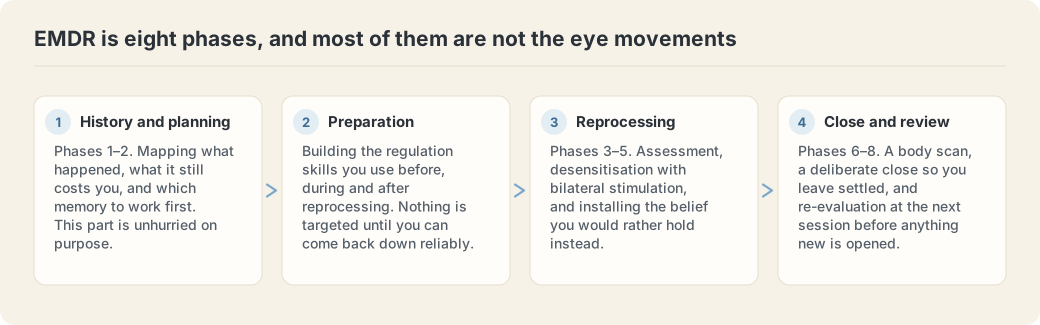
Most talk therapy tolerates the 50-minute container well: a conversation can pause and resume a week later without much cost. EMDR reprocessing is different. The work has a shape: accessing the memory, processing it in sets, and closing down properly so you leave regulated, and that shape does not compress well.
In a standard session, the processing window in the middle can be short. Ten of the fifty minutes go to arriving and checking in; the last ten are reserved for closing down, because ending a session mid-activation is not an acceptable outcome. What remains is real but brief, and a memory network that takes twenty minutes just to access may barely be touched before it is time to seal it back up.
The intensive format exists to fix exactly that arithmetic. A 90-minute block does not just add forty minutes. It more than doubles the usable processing window, because the fixed costs of settling in and closing down are paid once rather than proportionally.
When weekly pacing is genuinely the better choice
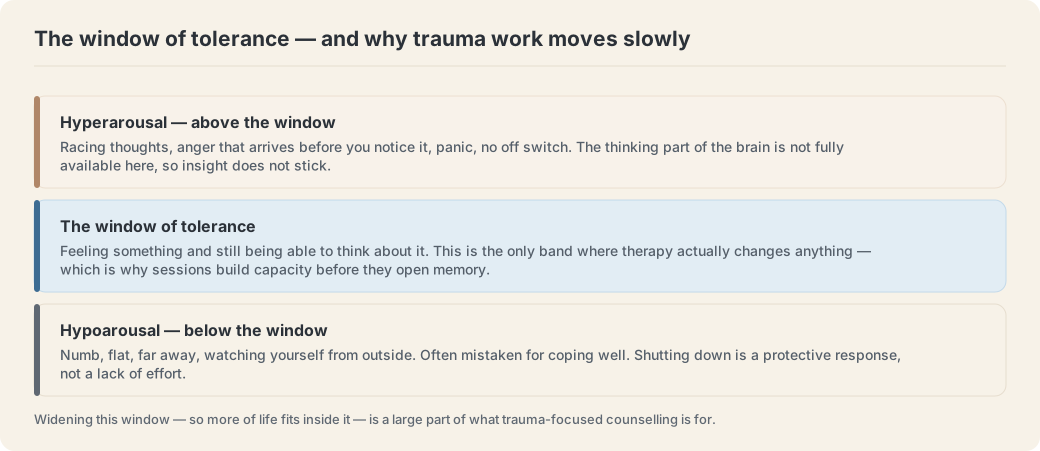
- Stabilisation is still the main work, With complex trauma, the early phases: resourcing, grounding, building tolerance for the material: are the treatment, not a preliminary. Those phases benefit from time between sessions, not from concentration.
- Life is currently unstable, A crisis at home, an unsafe situation, heavy substance use, or a nervous system already running at its ceiling are all reasons to go slower, whatever the calendar preference.
- You do not yet know what the target is, Some people arrive with one clear incident. Others arrive with a fog that takes weeks of ordinary sessions to resolve into targets. Booking an intensive before the target is clear buys concentrated time with nothing to aim it at.
- The week between sessions is doing work, Processing continues between sessions: dreams, memories surfacing, small shifts. Weekly pacing gives that consolidation room, and for some people it is where most of the change actually shows up.
Unsure whether your situation suits concentrated work? That is a clinical question with a quick answer, ask it on a free 15-minute call. Book a free consultation.
What an intensive is not
It is not faster therapy in the sense the phrase suggests. A single extended session can cover ground that would take several weekly ones, but the total course of treatment is set by what your history requires, not by the format. Nobody can promise that concentrating the schedule concentrates the result, and a practitioner who does promise that is worth being wary of.
It is also not a way to skip preparation. The assessment and history-taking phases happen regardless of format, usually in an ordinary session beforehand. An intensive booked as a first-ever appointment would spend most of its length on the groundwork an intensive exists to move past, which is why the free consultation and an initial session come first here.
Where Westpeak Wellness fits
Westpeak Wellness offers both formats: standard 50-minute sessions in which EMDR is one of the approaches used, and a dedicated 90-minute EMDR intensive. Current pricing for each is on the fees page, kept in sync with the booking system.
Which format fits is a clinical question before it is a scheduling one, and it is exactly the kind of question a free 15-minute consultation settles quickly, including honestly, when the answer is that weekly pacing or stabilisation-first work is the right starting point.
Common questions
Is an EMDR intensive safe?
Run properly, yes. The format keeps the same safeguards as weekly EMDR, including preparation beforehand and full closing-down time inside the session. Suitability is assessed first, and people still building stability are steered to weekly pacing rather than booked into a longer block.
How tired will I be afterwards?
Often noticeably. Processing is effortful, and a longer session means more of it. It is sensible not to schedule anything demanding immediately after an intensive, and to expect the days following to carry some continued settling, dreams and surfacing memories are common and expected.
Does insurance cover a 90-minute session?
Extended health plans that reimburse RCC counselling generally reimburse it regardless of session length, but some plans cap the amount per session. A longer session with a higher fee can exceed a per-session cap even with annual room left, so check that specific wording before booking.
Can I start with an intensive as my first appointment?
Not here. History-taking, preparation and a suitability check come first, in an ordinary session. An intensive works because the groundwork is already done, done inside the intensive, it stops being one.
Does EMDR over video work in the longer format?
Yes. The same adaptations used in weekly virtual EMDR. An on-screen target, alternating audio, or self-administered tapping, carry over, and the longer arc is if anything easier to hold without a commute on either side of it.
Sources
- EMDR International Association, about EMDR therapy
- NICE, Post-traumatic stress disorder guideline (NG116)
General information, not clinical or legal advice. Fee ranges are typical BC private-practice ranges and vary by practitioner. Confirm any practitioner’s registration directly with the relevant college or association.
EMDR is offered as a 90-minute intensive at $190, or within 50-minute sessions at $140, after a free 15-minute consultation; card at booking.
Many extended health plans reimburse a Registered Clinical Counsellor, depending on the plan, so check yours; MSP does not cover private counselling. All fees.
Talk it through before you commit.
A free 15-minute consultation, including an honest answer if what you need is someone other than an RCC.
Book Free ConsultationNot ready to book? Send a line about what is going on. A reply comes within one business day.
Or a smaller step: Which kind of counselling fits? · What sessions cost · What the free 15 minutes is like
Looking on behalf of someone else? What to send them, and what not to, including the funded routes most people do not know they qualify for.
Keep going
Other comparisons
Where this leads
Online EMDR therapy across BC
The practice is virtual, so the same counsellors see people in every one of these cities. Each page says what the service involves there and who is taking new clients.
Where you are
Online counselling across British Columbia
Every session is by secure video, so the counsellor you see does not depend on where you live. Each city page covers coverage, local public services and who is taking new clients there.