Comparison · Getting started
Psychiatrist or counsellor: which door first, in BC?
A psychiatrist is a medical doctor: reached by physician referral, covered by MSP, able to diagnose and prescribe, and, in much of BC’s system, focused on assessment and medication for more complex conditions rather than ongoing weekly talk therapy. A counsellor is booked directly, paid privately or through extended health, cannot prescribe or diagnose, and provides the ongoing therapy itself. For many people the honest answer is not either but both, on different timelines: counselling can start this week, while a psychiatric assessment, where needed, works through the referral system.
People use the words almost interchangeably, then discover the two are reached by entirely different roads, one through your doctor and a wait, one directly.
6 min read · Updated
| Psychiatrist | Registered Clinical Counsellor | |
|---|---|---|
| What they are | A physician (MD) with specialty training in psychiatry | A master’s-level therapist registered with BCACC |
| How you reach one in BC | Referral from a family doctor or nurse practitioner | Directly, book a consultation this week |
| Cost | MSP-covered | Private fee; commonly reimbursable under extended health plans |
| Waiting | Often long, and varies widely by region and urgency | Days to weeks in private practice |
| Can diagnose | Yes | No |
| Can prescribe | Yes | No |
| Typical role | Assessment, diagnosis, medication decisions, complex or higher-risk conditions | Ongoing talk therapy, the weekly work itself |
| Ongoing psychotherapy | Some provide it; many consult and hand ongoing care back to the GP | The core of the job |
The mistake this page exists to prevent
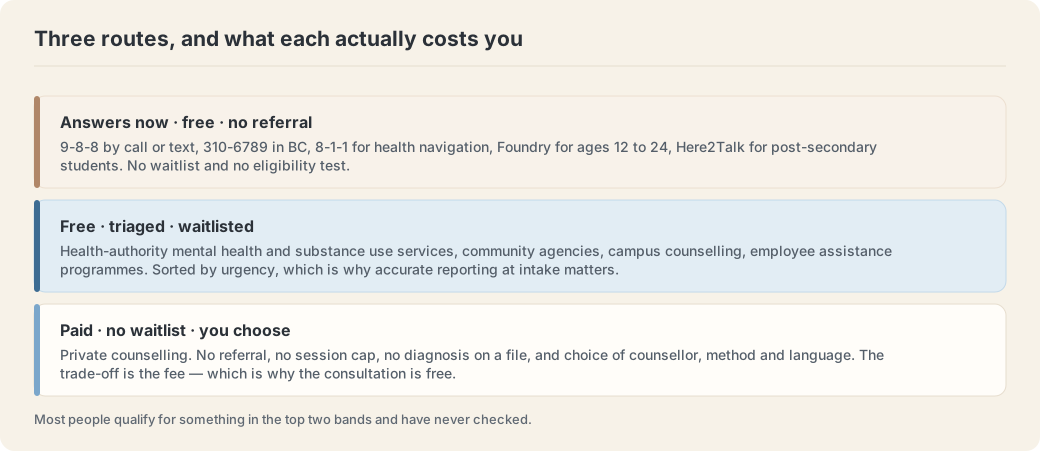
It is common to decide "what I have is serious, so I should see a psychiatrist," ask for the referral, and then wait, with nothing else in place, for an appointment that may be months away and may turn out to be a single assessment rather than the beginning of ongoing care. The wait is survivable; the nothing else in place is the problem.
The two roles are not senior and junior versions of the same job. A psychiatrist’s scarce time in BC’s public system is concentrated where medical training is essential: diagnostic questions, medication, and complex or higher-risk presentations. Ongoing weekly psychotherapy is, for the most part, simply not what the public psychiatric system is resourced to provide. Expecting the referral to produce a weekly therapist is the single most common misunderstanding in the whole landscape.
Which means the sequencing usually runs the other way round: therapy. The thing you can start now, begins while any referral makes its way through the system, and the two inform each other when the assessment arrives.
Signs the psychiatric road matters for you
- The diagnostic question is load-bearing, Benefits claims, workplace or academic accommodations, and treatment decisions that depend on what this actually is, bipolar disorder vs recurrent depression being the classic example, need someone who can formally diagnose.
- Medication is on the table, Starting, changing, or stopping psychiatric medication is physician work. For many common situations a family doctor handles it; a psychiatrist takes the harder cases. A counsellor can and should coordinate, with your consent, but never prescribes.
- What is happening includes psychosis, mania, or serious risk, These are medical presentations first. If safety is immediate, that is not a referral queue, call or text 9-8-8, or BC’s crisis line at 310-6789.
- Treatment so far has not held, Several fair trials of therapy and first-line medication without traction is exactly what psychiatric consultation is for, a deeper look at the diagnosis and the plan.
Unsure which door your situation needs? That is a fair question for a free 15-minute call, including when the honest answer is a doctor first. Book a free consultation.
How do the two roads combine in practice?
The combination is the normal case, not the exception: a family doctor or psychiatrist holds the medical side, a counsellor holds the weekly work, and, with your written consent, the two communicate rather than running parallel accounts of your care. The existing page on therapy, medication or both covers that treatment question in detail; this page is about the people rather than the treatments.
One honest caveat from the counselling side: a counsellor who notices that your situation needs medical assessment should say so plainly and help the referral happen, not absorb months of sessions into a problem that needed a physician. That is what "scope of practice" means when it is working, and how a practice responds to the question "when would you send someone to a doctor?" is a good consultation-call test of any counsellor, this one included.
Where Westpeak Wellness fits
Westpeak Wellness sits entirely on the counselling side of this table: a Registered Clinical Counsellor practice providing the ongoing therapy, bookable directly, with no referral needed. Nothing here replaces a psychiatrist where one is needed, and the psychiatry and assessment resource explains the referral road in detail. It was written for exactly the person this page describes.
Where both roads are in play, the practical offer is this: therapy can begin now rather than after the wait, and with your consent the work coordinates with your doctor rather than around them.
Common questions
Do I need a referral to see a counsellor in BC?
No. Counselling in private practice is booked directly. Some extended health plans, however, require a doctor’s note before they will reimburse sessions. That is a plan rule rather than a legal one, so check your wording.
Is a psychiatrist free in BC?
Psychiatrist visits are covered by MSP when reached through referral. What MSP does not cover is private counselling, which is why the two roads are paid for so differently, and why extended health benefits matter on the counselling side.
How long is the wait to see a psychiatrist in BC?
It varies too much by region, urgency and pathway for a single honest number, urgent presentations move much faster than routine referrals, and rural waits differ from urban ones. Your referring doctor will have a realistic estimate for your situation; ask them directly.
Can a counsellor tell me whether I have depression?
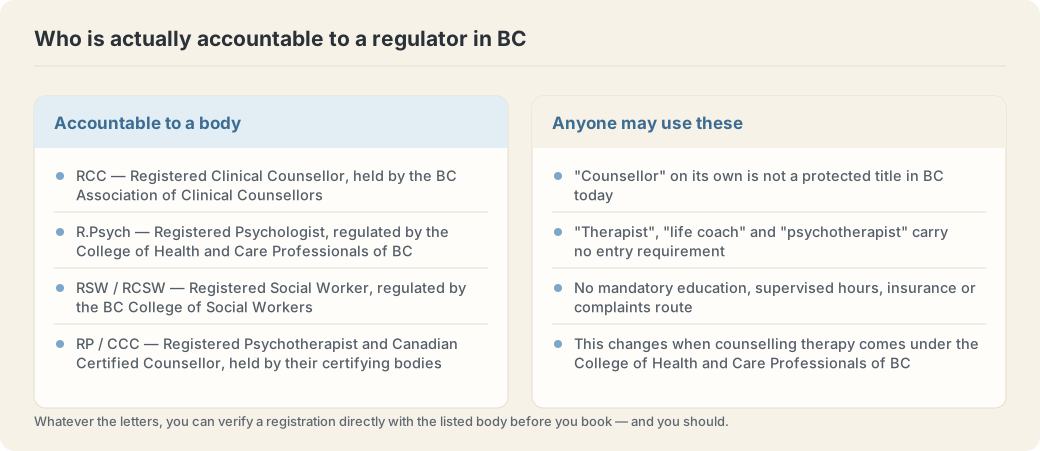
A counsellor can assess, describe and work with what you are experiencing, but cannot issue a formal diagnosis: in BC that sits with physicians, psychiatrists, psychologists, and clinical social workers with the relevant registration. If a formal diagnosis matters for your situation, that is a signal about which road to include.
What about a psychologist, where do they fit?
A third road: doctoral-level, able to diagnose and to run formal assessments (ADHD and psychoeducational testing being the common ones), privately paid, no prescribing. The three-way comparison with counsellors and social workers has its own page.
Sources
General information, not clinical or legal advice. Fee ranges are typical BC private-practice ranges and vary by practitioner. Confirm any practitioner’s registration directly with the relevant college or association.
Individual sessions are $140 for 50 minutes, after a free 15-minute consultation; card at booking.
Many extended health plans reimburse a Registered Clinical Counsellor, depending on the plan, so check yours; MSP does not cover private counselling. All fees.
Talk it through before you commit.
A free 15-minute consultation, including an honest answer if what you need is someone other than an RCC.
Book Free ConsultationNot ready to book? Send a line about what is going on. A reply comes within one business day.
Or a smaller step: What sessions cost · What the free 15 minutes is like
Looking on behalf of someone else? What to send them, and what not to, including the funded routes most people do not know they qualify for.
Keep going
Other comparisons
Where you are
Online counselling across British Columbia
Every session is by secure video, so the counsellor you see does not depend on where you live. Each city page covers coverage, local public services and who is taking new clients there.