Comparison · Couples
Gottman Method vs EFT: two roads into couples therapy
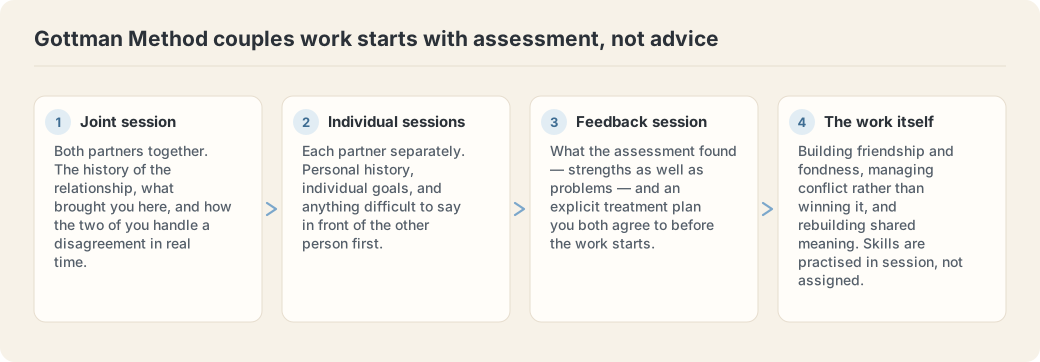
The Gottman Method starts from the outside in: a structured assessment of how the two of you actually interact, then specific interventions aimed at the patterns: criticism, defensiveness, contempt, stonewalling. That its research links to relationships failing. Emotionally Focused Therapy (EFT) starts from the inside out: it treats the argument as the surface of an attachment question ("are you there for me?") and works on the emotional cycle underneath before the behaviour. Many couples would be helped by either; the honest differentiators are what you want to work on first and which style of session you can imagine yourselves in.
Both are serious, structured, well-researched approaches to the same problem. They just walk into it through different doors.
6 min read · Updated
| Gottman Method | Emotionally Focused Therapy (EFT) | |
|---|---|---|
| Root of the approach | Decades of observational research on what distinguishes couples that last | Attachment theory, adult relationships as bonds, distress as protest at disconnection |
| Starting move | Structured assessment: joint and individual sessions, questionnaires, history | Mapping the negative cycle the couple is caught in, pursue/withdraw is the classic |
| Session feel | Concrete and skills-forward: exercises, frameworks, things to practise between sessions | Emotion-forward: slowing conversations down to reach what is underneath the anger |
| Works on | Conflict management, friendship and fondness, shared meaning | The bond itself: safety, reaching for each other, responding |
| Typical structure | Assessment phase, then targeted interventions against agreed goals | Three stages: de-escalation, restructuring the bond, consolidation |
| Practitioner signal | Gottman training levels; the method is manualised and specific | ICEEFT training and supervision; also manualised and specific |
The same fight, read two ways
Take the most ordinary couples-therapy scene there is: one partner raises something, the other goes quiet, the first pushes harder, the second shuts down completely. Both approaches take this seriously. They read it differently.
A Gottman-informed reading names the observable moves. The raise arrived as criticism. A complaint about character rather than behaviour. The silence is stonewalling, which the research treats as physiological flooding rather than indifference: a heart rate too high to stay in the conversation. The work is concrete: soften how the issue is raised, learn to notice flooding and take structured breaks, repair earlier and more often.
An EFT reading asks what the moves are protecting. The pursuit is not nagging, it is protest, I cannot reach you and it frightens me. The withdrawal is not indifference, it is self-protection, nothing I say helps, so I stop making it worse. The work is to slow the cycle down until both people can say the frightened thing directly, because the cycle loses its grip when the protest underneath it is finally heard.
Neither reading is wrong. The practical question is which door you two can actually walk through, some couples find the skills-first route disarming and the emotion-first route exposing; others find exercises hollow until the underlying disconnection is addressed.
How to choose, honestly
- You want structure and tools you can use this week, The Gottman Method is unusually generous with concrete practice: frameworks for raising issues, repair phrases, rituals of connection. If one of you is sceptical of therapy, visible structure often helps.
- The problem feels like distance rather than conflict, Couples who rarely fight but have quietly stopped reaching for each other often describe EFT’s attachment frame as naming something they could not. Conflict-heavy couples may need de-escalation first, which both approaches provide differently.
- One of you shuts down under emotional intensity, This cuts both ways. EFT works directly with that shutdown, but gently and at depth; Gottman work manages it behaviourally with flooding protocols. Raise it in a consultation and listen to how the practitioner would handle it.
- The practitioner matters more than the banner, Across couples therapy generally, the alliance both partners feel with the therapist is a better predictor than modality. A well-trained practitioner of either approach beats a poor fit in your preferred one.
Deciding between approaches is easier with a concrete case, yours. A free 15-minute call with both of you is how that conversation starts. Book a free consultation.
What do they share?
More than the comparison format suggests. Both reject the referee model of couples therapy. Nobody is adjudicating who was right about the dishwasher. Both treat the pattern as the client rather than either partner. Both are structured enough that you should be able to ask "where are we in the process?" at any point and get a real answer. And both have published research traditions behind them, which in couples therapy is not something to take for granted.
Both also share a limit worth stating: where there is ongoing violence, active addiction, or an undisclosed affair, couples work of any modality is usually the wrong first step, and a practitioner of either school should say so rather than proceed.
Where Westpeak Wellness fits
Couples work at Westpeak Wellness is Gottman-informed, and the page on Gottman-informed couples counselling in BC describes what that looks like session by session. The assessment-first structure and the concrete between-session work are genuine features of how couples work runs here.
If you have read this far and it is specifically EFT you want, the right move is an ICEEFT-trained therapist, and their directory is the place to find one. That is not this practice, and pretending otherwise would be a poor way to start a therapeutic relationship. If you are undecided, a free consultation with both partners on the call is a reasonable way to hear how the Gottman-informed version would approach your situation.
Common questions
Which has better evidence?
Both have real research traditions, EFT has strong outcome-study support, and the Gottman Method rests on an unusually large observational base about which patterns predict relationship breakdown, with intervention research alongside. For choosing between them, the honest answer is that both clear the bar, and fit with the practitioner is the better differentiator.
Can the two be combined?
Elements travel, many couples therapists use Gottman-style assessment or psychoeducation alongside attachment-informed work. Purists on both sides prefer fidelity to one model, and there is a fair argument that a coherent single frame beats an eclectic mix. Ask any practitioner what their base is.
Does either work over video?
Yes. Couples sessions here run by secure video with both partners on screen, and the structured formats of both approaches adapt well to it. The main practical requirement is a private space where you can both speak freely, the same requirement as in-person, honestly.
What if my partner refuses to come?
Individual work on a relationship is legitimate and common. You work on your own side of the pattern, which is the only side you control anyway. The individual vs couples comparison covers when each makes sense.
How long does couples therapy take?
Both approaches typically describe a course in months rather than weeks, commonly somewhere between eight and twenty-something sessions depending on where you start and what you are working toward. Anyone quoting a fixed number before meeting you is guessing.
Sources
- The Gottman Institute, the Gottman Method
- ICEEFT, International Centre for Excellence in Emotionally Focused Therapy
General information, not clinical or legal advice. Fee ranges are typical BC private-practice ranges and vary by practitioner. Confirm any practitioner’s registration directly with the relevant college or association.
Couples sessions are $175 for 50 minutes; a 110-minute extended session is $340, after a free 15-minute consultation; card at booking.
Many extended health plans reimburse a Registered Clinical Counsellor, depending on the plan, so check yours; MSP does not cover private counselling. All fees.
Talk it through before you commit.
A free 15-minute consultation, including an honest answer if what you need is someone other than an RCC.
Book Free ConsultationNot ready to book? Send a line about what is going on. A reply comes within one business day.
Or a smaller step: Which kind of counselling fits? · What sessions cost · What the free 15 minutes is like
Looking on behalf of someone else? What to send them, and what not to, including the funded routes most people do not know they qualify for.
Keep going
Other comparisons
Where this leads
Online couples and marriage counselling across BC
The practice is virtual, so the same counsellors see people in every one of these cities. Each page says what the service involves there and who is taking new clients.
Where you are
Online counselling across British Columbia
Every session is by secure video, so the counsellor you see does not depend on where you live. Each city page covers coverage, local public services and who is taking new clients there.