Victoria · Vancouver Island · Online
EMDR Therapy in Victoria, BC
EMDR Therapy for people in Victoria is with Camille Granda, RCC, CCC, by secure video, with a free 15-minute consultation, no referral, and receipts your extended health plan can process.
EMDR from Victoria on the same terms as from Vancouver. The Island’s EMDR clinicians are a bounded pool, and when the one you want is full, the next option on the mainland involves a sailing.
Updated
The Island EMDR pool is finite in a way a mainland pool is not. When the trained clinicians here are full, there is no adjacent city to try, the next option involves a sailing, and an intensive scheduled around ferry availability is a different piece of work from a weekly session.
Remote delivery makes the entire provincial pool reachable from Victoria on the same terms as from Vancouver. For a modality this specific, being able to choose the clinician rather than take the one with the opening is most of the value.
Sessions are $140 for 50 minutes and start with a free 15-minute video call, no charge, no card, and no obligation to book anything afterwards. Many BC extended health plans reimburse a Registered Clinical Counsellor; whether yours does is plan-dependent, so check it for the RCC designation before the first paid session. Fees and extended-health cover are set out in full.
EMDR from Victoria can also run as the EMDR Intensive once preparation is done: $190 for 90 minutes with Camille Granda. How the intensive differs from weekly EMDR.
EMDR therapist in Victoria: who you would see
Taking new clients for EMDR therapy and seeing people in Victoria by secure video. Each is a Registered Clinical Counsellor; the registration is on the profile and can be checked on the BCACC register.

Camille Granda, RCC, CCC
English and Tagalog · EMDR, Trauma, Anxiety and chronic stress
Getting counselling in Victoria
Victoria is a ferry or a flight from the mainland, which means the specialist pool is genuinely bounded rather than merely inconvenient. If the practitioner you need is in Vancouver, "going to see them" is a day.
Island Health runs public intake, and the private sector in Greater Victoria is active. When the specific approach you want has no opening on the Island, the next option on the mainland involves a sailing.
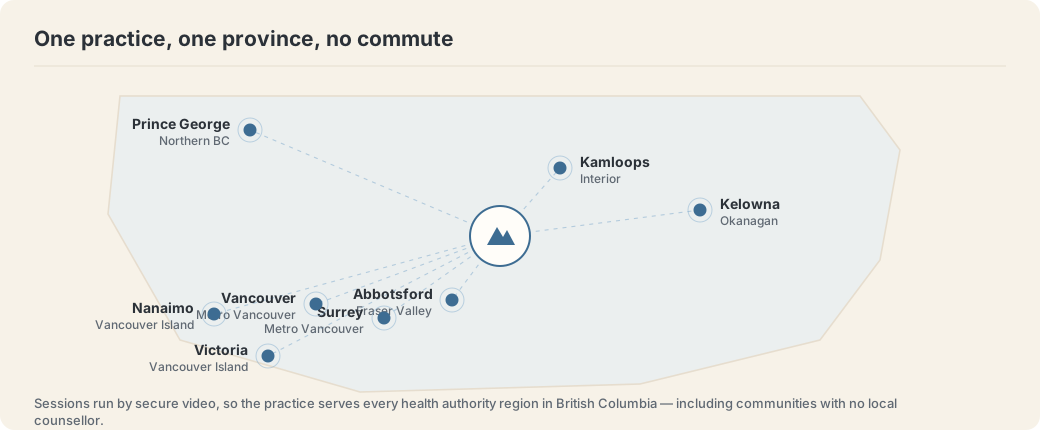
Public mental-health intake for Victoria runs through Island Health. That route matters if you are seeking publicly funded care. It has no bearing on seeing a Registered Clinical Counsellor privately, which needs no referral and no diagnosis. See how RCCs, psychologists and social workers differ.
The strait stops being a factor. Virtual care is the one arrangement where being on the Island costs nothing at all in access.
More on this city, including who else it serves and what the local picture looks like: online counselling in Victoria.
What EMDR therapy involves
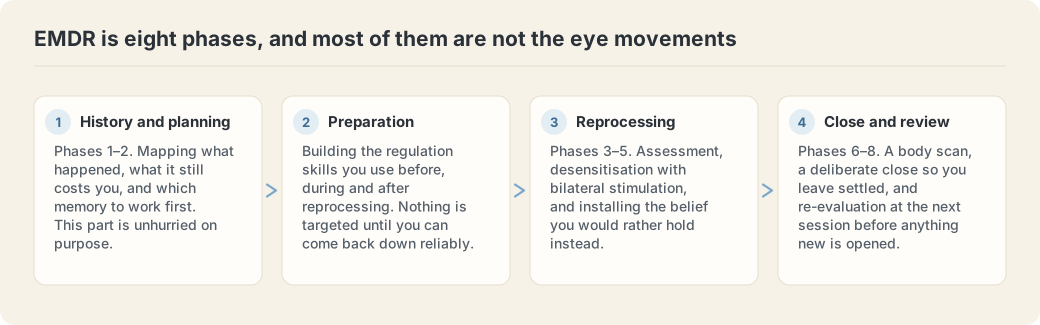
The full picture: how sessions are structured, what the first one is like, and what it does not do, is on the EMDR therapy page. If you are still working out what you need, the short questionnaire is a quicker route than reading all of them, and what to expect in a first session covers the part most people are actually nervous about.
Questions from Victoria
Is EMDR therapy available in Victoria without a ferry?
Yes. EMDR runs by secure video from anywhere on the Island, so there is no sailing at either end. Camille Granda offers EMDR to people in Victoria: weekly at $140 for 50 minutes, or the 90-minute intensive at $190, after a free 15-minute consultation. The booking calendar shows real open times in Pacific time, which is Victoria's own clock.
Can EMDR help with things that happened a long time ago?
That is a common use of it. The relevant question is whether the memory still carries a charge now, not how long ago it occurred.
Is EMDR therapy available in Esquimalt or Oak Bay?
Yes. EMDR Therapy by secure video reaches Esquimalt and Oak Bay exactly as it reaches Victoria: there is no office to get to and the same fee applies however far out you are. Island Health is the public route for Victoria and the rest of its region; this is the private one, and it needs no referral.
More frequently asked questions, or book the free consultation and ask directly.
Other counselling in Victoria
- Couples and Marriage Counselling in Victoria
- Anxiety Counselling and Therapy in Victoria
- Trauma Therapy and Counselling in Victoria
- Depression Counselling and Therapy in Victoria
EMDR Therapy nearby
The practice is virtual and covers all of British Columbia. See every city page, or the full list of services. Questions specific to Victoria are answered on the city page.
Sources
EMDR Therapy in Victoria, without the travel
A free 15-minute video call, in English or Tagalog. No charge, no card, and no obligation to book anything afterwards.
Book Free ConsultationNot ready to book? Send a line about what is going on. A reply comes within one business day, or read the guides first and come back when you want to.
Looking on behalf of someone else? What to send them, and what not to, including the funded routes most people do not know they qualify for.