Compare · Treatment routes
Therapy, medication, or both?
They do different things. Medication acts on symptoms; therapy works on patterns, meaning and skills. For many common difficulties, clinical guidelines treat both as reasonable first options depending on severity and preference, and combining them is common. Only a physician, nurse practitioner or psychiatrist can prescribe or advise on medication. A counsellor cannot, and this page does not.
It is one of the most common questions people arrive with, and one a counsellor cannot answer for you, but the shape of the decision can be explained.
7 min read · Updated
| Therapy | Medication | |
|---|---|---|
| What it acts on | Patterns, beliefs, skills, relationships, meaning | Symptoms, via neurochemistry |
| Who provides it | Counsellor, psychologist, clinical social worker | Physician, nurse practitioner, psychiatrist |
| Referral needed in BC | No, for private counselling | Yes, you need a prescriber |
| Public coverage | Not covered by MSP in private practice | Prescriber visit covered; the drug itself often is not |
| Typical time to effect | Weeks, building over a course of sessions | Often several weeks for antidepressants |
| Effect after stopping | Skills and understanding generally persist | Symptoms may return when discontinued |
| Main trade-offs | Time, cost, effort between sessions | Side effects, adjustment period, follow-up |
What this page is and is not
A Registered Clinical Counsellor does not prescribe, does not adjust medication, and does not advise on whether you should take it. That is outside scope, and any counsellor telling you to start or stop a medication is doing something they are not qualified to do. Those conversations belong with your physician, nurse practitioner or psychiatrist.
What a counsellor can usefully do is help you work out what you want to ask, notice what changes when something changes, and support you through an adjustment period. Plenty of people arrive already on medication, or start it partway through counselling, and both are entirely ordinary.
What follows is general information about how the decision is usually framed, not a recommendation, and not a substitute for a conversation with a prescriber.
They are not competing answers to the same question
The framing as a choice is slightly misleading, because the two act on different parts of the problem. Medication can reduce the intensity of symptoms, the physiological floor of anxiety, the weight of depression, the sleeplessness. Therapy works on what maintains the pattern: avoidance, beliefs formed in the aftermath of something, relationships that keep reproducing the difficulty, and the absence of skills nobody ever taught you.
That is why the combination is common rather than redundant. It is also why either alone can be sufficient: a person whose depression lifts enough on medication to resume the things that were sustaining them may not need therapy, and a person whose anxiety is entirely maintained by avoidance may resolve it without medication at all.
Major clinical guidelines for common presentations generally describe both psychological therapy and medication as reasonable first-line options, with severity, prior response and patient preference all shaping the choice. Preference is a legitimate clinical input, not a tiebreaker of last resort.
Considerations that usually shape the decision
- Severity, Where symptoms are severe enough that engaging with therapy is not currently possible. No concentration, no energy, no capacity to practise anything, medication is more likely to be part of the initial plan.
- Speed, Neither is instant. Antidepressants commonly take several weeks to show effect, and therapy builds over a course of sessions. Anyone promising rapid resolution from either is overselling.
- What has been tried before, Prior response is one of the more useful pieces of information a prescriber has, and it is worth bringing accurately rather than approximately.
- Access, A practical constraint that is rarely discussed honestly. Without a family doctor, the medication route can be slower than the counselling route, and walk-in access varies by region.
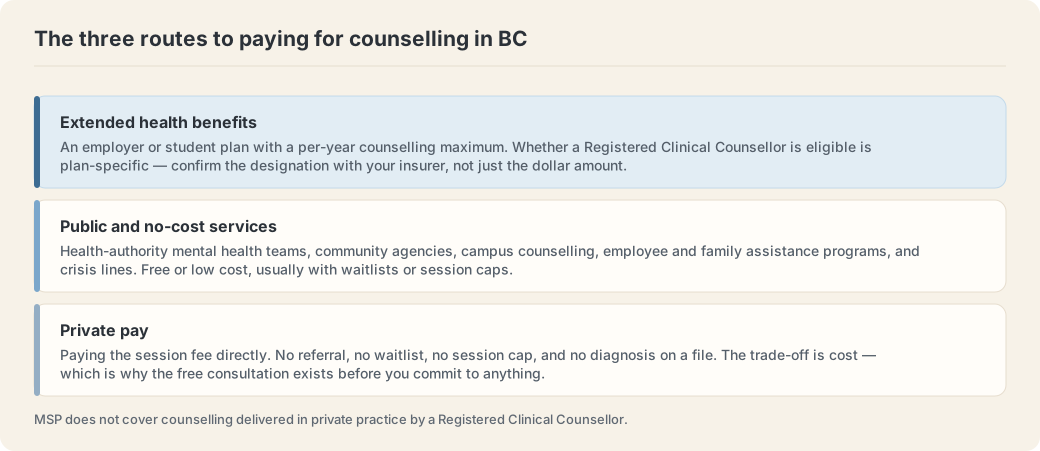
- Cost, MSP covers the prescriber visit but generally not the medication itself unless you have coverage; private counselling is not covered by MSP at all. See MSP vs extended health.
- Your own preference, Genuinely legitimate. Someone strongly opposed to medication is unlikely to take it consistently, and someone who wants relief before they can face talking about anything is describing something real.
If you want help working out what to ask a prescriber before you see one, that is a reasonable use of a free consultation.
When does medication need to be on the table?
There are situations where counselling alone is not the right plan, and it is important to say so rather than to keep an appointment. Severe depression with significant risk, symptoms of psychosis, bipolar presentations, and substance dependence requiring withdrawal management all need medical involvement, and in some cases urgently.
It also matters that several physical conditions present convincingly as depression or anxiety. Thyroid problems, anaemia, sleep apnoea, and medication side effects among them. Anyone whose low mood or anxiety arrived without an obvious trigger, or alongside profound fatigue or unexplained physical change, should see a physician regardless of what else they do.
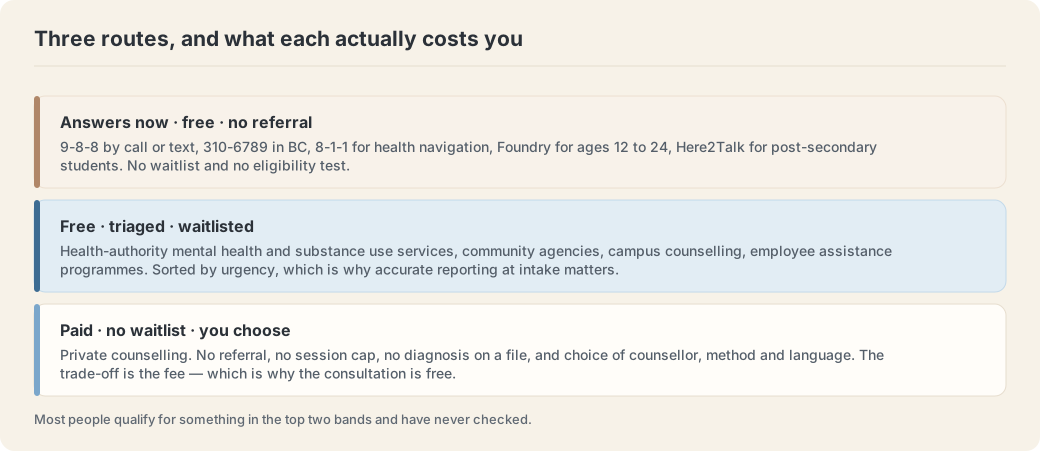
If you are having thoughts of ending your life, this is not a question to research: call or text 9-8-8 anywhere in Canada, twenty-four hours a day, or 310-6789 for BC Mental Health Support. In immediate danger, 9-1-1.
Making the conversation with a prescriber more useful
- Bring a timeline, not a summary, When it started, what has changed, what makes it worse. Two weeks of brief daily notes is worth more than an hour of recollection under pressure.
- Name your actual question, "I want to understand my options" is a better opening than waiting to be offered something, and it changes the shape of the appointment.
- Ask what to expect and when, How long before any effect, what side effects are common early, what would count as it not working, and when the review is.
- Ask about stopping before you start, How long people typically stay on it, and how it is discontinued. Knowing the exit in advance makes the decision easier to make.
- Mention that you are in counselling, Coordination helps, and with your written consent a counsellor and a prescriber can communicate directly.
What a counsellor can usefully do around medication
A counsellor cannot prescribe, adjust or advise on medication. That leaves a useful set of things they can do, and it is worth knowing what they are rather than treating the boundary as a dead end.
Preparing for the appointment. Working out what to ask, assembling an accurate timeline, and getting clear on what you actually want from the conversation. Prescriber appointments are short, and arriving organised changes what comes out of them.
Tracking what changes. Two weeks of brief daily notes is far better evidence than recollection, and it is exactly what a prescriber needs to judge whether something is working. A counsellor seeing you weekly is well placed to notice changes you have normalised.
Working through ambivalence. A great many people are genuinely torn about medication, for reasons that range from side effects to family attitudes to what it would mean about them. That is legitimate session material, and it is not the same as being talked into or out of anything.
Supporting the adjustment period. The first weeks on a new medication can be uncomfortable, and the point at which people stop is frequently before it has had a chance to work. Having somewhere to bring that matters.
Coordinating, with your written consent. A counsellor and a prescriber can communicate directly, and where both are involved that usually produces better care than two parallel accounts.
What a counsellor should never do is suggest you start, stop or change a dose. If one does, that is a scope violation rather than an opinion.
Common worries, addressed plainly
- "It will change my personality", A reasonable question and one for your prescriber. What people more often report is feeling more like themselves rather than less, but flattening is a recognised side effect for some, it is worth raising early, and it is a reason to review rather than to endure.
- "I should be able to manage without it", A moral framing applied to a medical decision. Nobody applies it to insulin. It is worth noticing where the belief came from, and it is not a clinical consideration.
- "I will not be able to stop", Discontinuation is a real process requiring a plan and a prescriber, and it is a normal part of treatment rather than a trap. Ask how it is done before you start.
- "It is masking the real problem", Sometimes reducing symptoms is what makes the real problem workable. Someone with no concentration and no energy cannot engage with therapy, which is precisely why the two are frequently combined.
- "My family will disapprove", Common, and a legitimate thing to work on in counselling rather than a reason to decide alone. It is also information you do not owe anyone.
Where Westpeak Wellness fits
This practice provides counselling only. Medication questions go to your physician, nurse practitioner or psychiatrist, and a consultation here will say so plainly rather than working around it.
Counselling alongside medication is common and works well. With your written consent, coordination with a prescriber is straightforward.
Where the presentation suggests medical assessment should come first, that is what the consultation will recommend. It is part of the scope this practice states openly.
Common questions
Can a counsellor prescribe medication?
No. Prescribing in British Columbia requires a physician, nurse practitioner or psychiatrist. A Registered Clinical Counsellor cannot prescribe, adjust or advise on medication.
Will I have to stay on medication forever?
That is a question for your prescriber, and the answer varies considerably by person and by condition. It is a good thing to ask before starting rather than after.
Does therapy work while I am on medication?
Yes. Combining them is common, and for some presentations the combination has better evidence than either alone.
Do I need a diagnosis to get counselling?
No. Private counselling in BC requires no diagnosis and no referral, and a counsellor does not provide a diagnosis.
Sources
- HealthLink BC, mental health and substance use
- Canadian Mental Health Association, BC Division
- BC government, mental health and substance use support
General information, not clinical or legal advice. Fee ranges are typical BC private-practice ranges and vary by practitioner. Confirm any practitioner’s registration directly with the relevant college or association.
Individual sessions are $140 for 50 minutes, after a free 15-minute consultation; card at booking.
Many extended health plans reimburse a Registered Clinical Counsellor, depending on the plan, so check yours; MSP does not cover private counselling. All fees.
Talk it through before you commit.
A free 15-minute consultation, including an honest answer if what you need is someone other than an RCC.
Book Free ConsultationNot ready to book? Send a line about what is going on. A reply comes within one business day.
Or a smaller step: What sessions cost · What the free 15 minutes is like
Looking on behalf of someone else? What to send them, and what not to, including the funded routes most people do not know they qualify for.
Where this leads
Online depression counselling and therapy across BC
The practice is virtual, so the same counsellors see people in every one of these cities. Each page says what the service involves there and who is taking new clients.
Where you are
Online counselling across British Columbia
Every session is by secure video, so the counsellor you see does not depend on where you live. Each city page covers coverage, local public services and who is taking new clients there.