Resource · After a crash
ICBC and counselling after a crash in BC
Most people find out about the counselling entitlement weeks after the crash, if at all. It starts the day of the crash and it does not need a referral.
7 min read · Updated September 6, 2026
If you were injured in a crash in British Columbia on or after 1 May 2021, ICBC Enhanced Care pre-approves counselling with a qualifying counsellor in the first twelve weeks after the crash, without a doctor's referral or ICBC's advance approval. The counsellor has to meet the definition in the Insurance (Vehicle) Regulation, which a Registered Clinical Counsellor does. This practice is not currently in ICBC's Recovery Network, so it cannot bill ICBC directly; the entitlement is yours to use wherever you choose, and this page explains how.
What Enhanced Care pre-approves in the first twelve weeks
Enhanced Care replaced the old litigation model in May 2021. For injuries, it means care is paid for by ICBC regardless of who caused the crash, and a set of treatments is pre-approved for an early access period of twelve weeks from the date of the crash. Counselling is on that list, alongside physiotherapy, chiropractic, massage, kinesiology, acupuncture and psychology.
Pre-approved means exactly that: you do not need to ask ICBC before booking, and you do not need a physician to refer you. You open a claim, and the sessions inside the pre-authorised number are funded within that window.
The number of pre-authorised sessions is set by regulation and by ICBC's program guide rather than by any counsellor, and it can change. At the time of writing the practice's own one-pager states twelve counselling sessions in the first twelve weeks; confirm the current number with ICBC when you open the claim, because that conversation is the authoritative one.
Who counts as a counsellor for ICBC
The regulation defines a counsellor by registration, not by title. A Registered Clinical Counsellor (BC Association of Clinical Counsellors) qualifies, as do registered psychologists and registered social workers. Both counsellors at this practice hold the RCC designation; one also holds the Canadian Certified Counsellor certification.
What matters for direct billing is a second thing entirely: whether the provider has joined ICBC's Recovery Network. A network provider bills ICBC and you pay nothing yourself. A qualified provider outside the network may treat you, but the money moves differently, which the next section covers.
What this practice can and cannot do
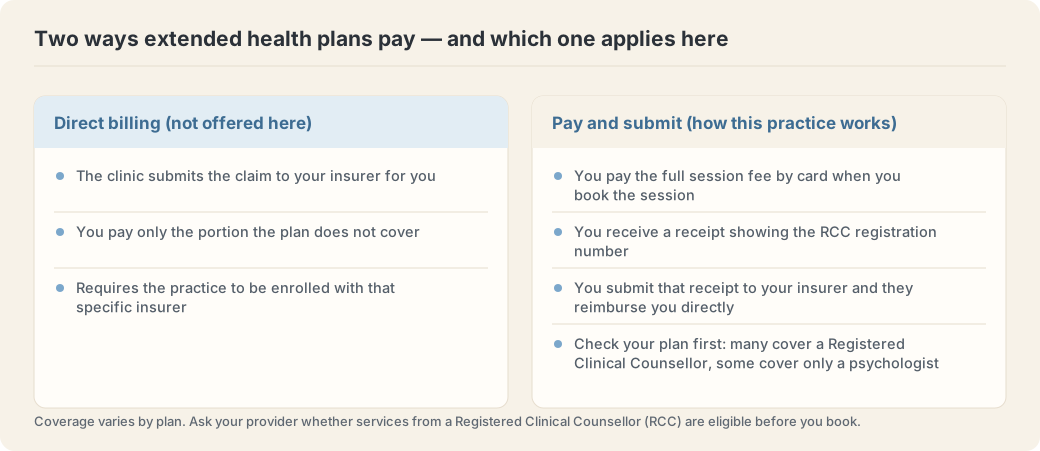
- Cannot bill ICBC directly, Westpeak Wellness is not currently a Recovery Network provider. Sessions here are paid at booking like any other session, with a receipt carrying the counsellor's registration number.
- Can be your counsellor anyway, If you would rather see someone here, ask ICBC, when you open the claim, whether receipts from a qualified non-network counsellor can be submitted for reimbursement and at what rate. The answer comes from ICBC, not from this page, and it is worth having in writing before you start.
- Can write within scope, A counsellor can provide a treatment summary and attendance confirmation. A counsellor cannot certify a leave from work or provide a medical-legal opinion; those come from a physician.
- Will say so if someone else fits better, The free consultation exists partly for this. If the pre-approved sessions with a network provider are the better route for you financially, you will be told that.
If you want to talk it through before deciding which route to take, the 30-minute consultation is free and carries no obligation.
How to actually use the entitlement
- 1. Report the crash and open a claim, Online or by phone, as soon as you can. The twelve-week clock runs from the date of the crash, not from the date you open the claim, so a late claim shortens the window.
- 2. Ask for the claim number and the counselling entitlement, Write down the claim number. Ask the adjuster how many counselling sessions are pre-authorised and whether they must be with a network provider.
- 3. Choose a counsellor, ICBC can point you to network providers, and the BCACC register lists every RCC in the province. If you already see someone, ask them whether they are in the network.
- 4. Give the counsellor the claim number, A network provider bills ICBC with it. A non-network provider gives you receipts to submit, if ICBC has confirmed that route.
- 5. Keep every receipt and every date, Whichever route you use. If the claim later needs a treatment plan or extends past twelve weeks, the record is what the request is built on.
After twelve weeks
The pre-approval ends at twelve weeks; the coverage does not necessarily end. Beyond that point further counselling can be funded where a treatment plan supports it, and ICBC decides that on the provider's plan and the claim history. This is the stage where the record from step five matters.
It is also the stage where people commonly stop, because the friction rises. If counselling was helping, that is worth raising with the adjuster before the window closes rather than after.
The two routes, side by side
| Recovery Network counsellor | Counsellor outside the network | |
|---|---|---|
| Who pays, and when | ICBC, billed directly by the provider | You, at booking |
| Referral needed | No | No |
| ICBC approval needed in first 12 weeks | No, within the pre-authorised number | Ask ICBC whether receipts are reimbursable |
| Receipt | Not usually needed by you | Essential; carries the registration number |
| Your extended health plan | Not touched | May apply, if the plan lists the designation |
| This practice | Not available here | Available |
If the crash is still with you
Being fine physically and not fine at all is common after a collision, and it is one of the reasons counselling is on the pre-approved list. Sleep that has not returned, driving that now takes effort, irritability that arrived with the crash, replaying it. Those are ordinary responses to a frightening event, and they respond to counselling, including EMDR, which is worth asking about specifically for a single-incident trauma.
None of that requires a diagnosis to start, and none of it needs to have reached a crisis. The entitlement exists so that it does not.
Common questions
Does ICBC cover counselling after a car accident in BC?
Yes. Under Enhanced Care, counselling with a qualifying counsellor is pre-approved for the first twelve weeks after a crash, without a referral or advance approval, for a set number of sessions. Further counselling after that can be funded on a treatment plan.
Do I need a doctor's note to see a counsellor through ICBC?
No. The early access period is designed so that treatment can start without a referral. A doctor's note is not required for the pre-approved sessions.
Can I see any counsellor, or does it have to be an ICBC one?
The counsellor has to meet the regulation's definition, which a Registered Clinical Counsellor does. Whether ICBC pays them directly depends on whether they are in the Recovery Network. Ask ICBC about reimbursement for a qualified counsellor outside it before you start.
Is Westpeak Wellness an ICBC provider?
Not currently. The practice is not in the Recovery Network and cannot bill ICBC directly. You can still choose to see a counsellor here and pay at booking; whether ICBC reimburses those receipts is ICBC's decision, and worth confirming in writing.
What happens after the twelve weeks?
The pre-approval ends. Coverage can continue where a treatment plan supports it and ICBC agrees, which is why keeping receipts and dates from the start matters.
What if I was not physically injured?
Psychological injury from a crash is an injury. If you are not sleeping, avoiding driving, or replaying the crash, that is a legitimate reason to use the entitlement, and it is one of the reasons counselling is on the pre-approved list.
Sources
- ICBC, accessing treatment during your first 12 weeks of recovery
- ICBC, Enhanced Care: care and recovery benefits
- ICBC, if your recovery takes longer than 12 weeks
- BC Association of Clinical Counsellors, find a counsellor
General information, not clinical, financial, or legal advice. Coverage and service details change, verify anything decision-critical directly with the provider or insurer. If you are in crisis, call or text 9-8-8 (Canada, 24/7) or 310-6789 for BC Mental Health Support.
Questions about cost or coverage?
A free 30-minute consultation is a good place to ask them, before committing to anything.
Book Free ConsultationNot ready to book? Send a line about what is going on. A reply comes within one business day, or read the guides first and come back when you want to.
Looking on behalf of someone else? What to send them, and what not to, including the funded routes most people do not know they qualify for.