Guide · Assessment and support
Adult ADHD: assessment, and what counselling can and cannot do
A counsellor cannot diagnose ADHD, assessment requires a registered psychologist, or a physician or psychiatrist depending on the route and the purpose. What counselling can do is work on what has accumulated around it: the self-criticism, the systems that keep collapsing, the shame, and the relationships strained by years of being misread as careless.
A great many adults arrive at this question late, after a decade of assuming the problem was effort.
7 min read · Updated
The boundary, stated first
This page does not assess anyone and cannot tell you whether you have ADHD. A Registered Clinical Counsellor does not diagnose, and any counsellor who tells you that you have it, or that you do not, is working outside their scope.
Formal assessment in British Columbia is conducted by a registered psychologist, and for medication a physician, nurse practitioner or psychiatrist is involved. Which route you need depends on what the assessment is for: documentation for academic or workplace accommodation generally requires a psychologist's report, while a medication conversation runs through a prescriber.
That boundary is not bureaucratic caution. Several other things present similarly: sleep disorders, thyroid problems, anxiety, depression, and the effects of chronic stress all produce difficulty with attention and organisation, and distinguishing between them requires assessment rather than pattern-matching against a checklist.
Psychiatry and assessment in BC covers how the routes work, including the lower-cost options, since private assessment runs into the thousands.
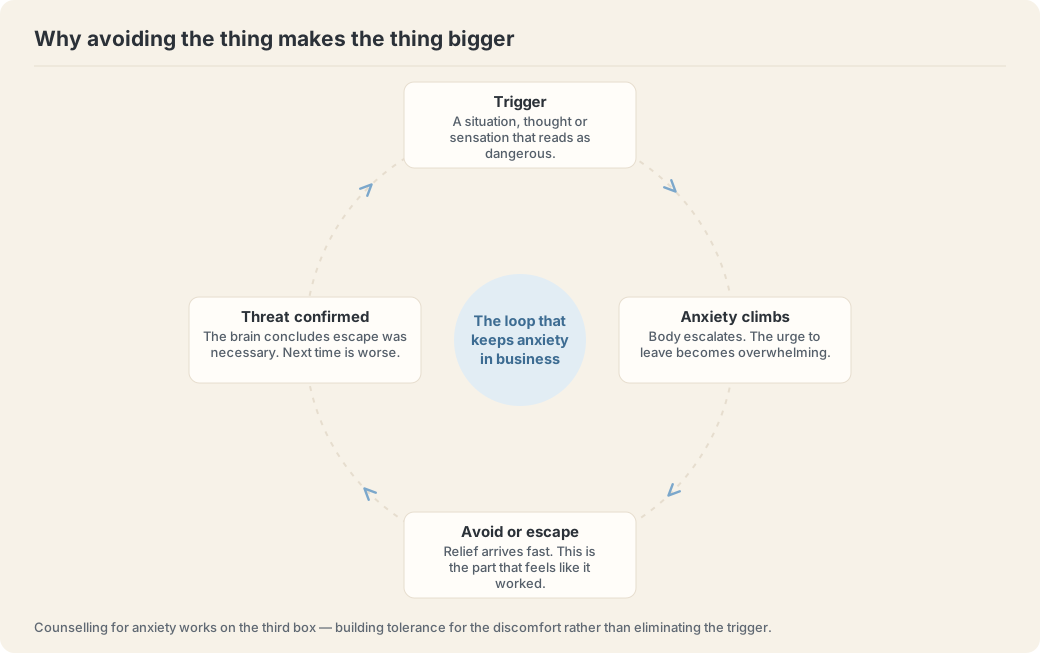
Why so many adults arrive at this late
The presentations that get identified in childhood are the visibly disruptive ones. The quieter version: inattentive, disorganised, internally chaotic but externally compliant, is far more likely to be missed, and it is missed disproportionately in girls and in anyone who was academically capable enough to compensate.
Compensation is the key mechanism. A bright child who works twice as hard produces acceptable results, and acceptable results mean nobody looks further. The cost is invisible and internal, and it is usually attributed to character: lazy, careless, not applying yourself, so much potential.
That attribution is the part that tends to bring people to counselling decades later. By adulthood there is frequently a long record of self-blame for something that may not have been a matter of effort at all, and the record does not dissolve on receiving an answer.
The other common trigger is a change in load. A promotion, a child, a role with less external structure. Compensation strategies that worked for twenty years stop working when the demands exceed them, and the collapse is often what prompts the question.
If the question is what to do next rather than what to call it, a free 15-minute consultation is a place to start.
What counselling can genuinely help with
- The self-criticism, Frequently the heaviest part and the most workable. Decades of internalised judgement about being careless or unreliable does not lift on its own, and it is the piece counselling addresses most directly.
- Systems that keep failing, Not generic productivity advice. Working out why a particular system collapsed for you specifically, and building one designed around how your attention actually behaves rather than how it is supposed to.
- Emotional intensity and rejection sensitivity, Widely reported and under-discussed. Reactions that arrive fast and large, particularly around perceived criticism, are a common part of the picture and respond to work.
- Relationships strained by the pattern, Partners who feel unheard, missed commitments, an accumulated ledger on both sides. This is frequently the reason someone finally books.
- The grief of a late answer, Genuine, and rarely named. Recognising that decades of struggle had an explanation produces relief and also anger about what could have been different.
- Deciding whether to pursue assessment, It costs money, takes time, and is not always necessary. Thinking that through with someone is legitimate work in itself.
What counselling cannot do
It cannot diagnose, and it cannot substitute for assessment where documentation is required. Academic accommodation, workplace accommodation and disability processes almost always require a diagnosis from someone qualified to give one, and counselling notes will not serve.
It cannot prescribe or advise on medication. Where medication is part of the picture, counselling runs alongside a prescriber rather than instead of one: see therapy, medication, or both.
And it should not be sold as a treatment for ADHD itself. Structured psychological approaches have evidence for helping with the difficulties that accompany it: organisation, emotional regulation, the secondary anxiety and low mood, which is a narrower and more honest claim than treating the condition.
Where a counsellor suspects assessment would be useful, saying so is part of the job. That is the scope this practice states openly, and being referred onward is a normal outcome rather than a rejection.
Common questions
How do I get an adult ADHD assessment in BC?
Three routes. Your family doctor or nurse practitioner can assess and treat ADHD directly, and increasingly do; they can refer to a psychiatrist, which is covered by MSP and has a wait of months; or you can pay privately for a psychologist's assessment, which is faster and is not covered by MSP, though some extended health plans reimburse part of it. Without a family doctor, an urgent and primary care centre or a virtual physician service can start the first route.
Can a counsellor diagnose ADHD?
No. Formal assessment requires a registered psychologist, and diagnosis may also come from a physician or psychiatrist depending on the route. A Registered Clinical Counsellor does not diagnose anything.
Do I need a diagnosis to get help?
Not for counselling, which requires neither a diagnosis nor a referral. You do need one for academic or workplace accommodation and for medication.
Is assessment covered in BC?
Psychological assessment in private practice is largely not covered by MSP and can cost thousands. Lower-cost routes exist, university training clinics, school district assessments and some health-authority programmes, with longer waits.
Is it worth getting assessed as an adult?
It depends what you want from it. If documentation or medication is the goal, yes. If the goal is self-understanding alone, a great deal of that is available through counselling at a fraction of the cost.
Sources
- College of Health and Care Professionals of BC
- HealthLink BC, mental health and substance use
- Canadian Mental Health Association, BC Division
This guide is general information, not clinical advice, and it cannot diagnose anything or replace an assessment. If you are in crisis, call or text 9-8-8 (Canada, 24/7) or BC Mental Health Support at 310-6789.
Who you would talk to
Taking new clients and seeing people across BC by secure video. Each is a Registered Clinical Counsellor; the registration is on the profile and can be checked on the BCACC register.

Camille Granda, RCC, CCC
English and Tagalog · Trauma, Anxiety and chronic stress, Grief, loss and life transitions
In her words: “I want sitting with me to feel like the biggest belly breath you have ever taken.”

Savneet Singh, RCC
English and Punjabi · Anxiety, Depression, Trauma and attachment
In her words: “Comforting, safe and supportive, is what I aim for.”
Individual sessions are $140 for 50 minutes, after a free 15-minute consultation; card at booking.
Many extended health plans reimburse a Registered Clinical Counsellor, depending on the plan, so check yours; MSP does not cover private counselling. All fees.
Still deciding?
A free 15-minute consultation is the least committal way to find out whether this is a fit. No pressure, and no obligation to book a session afterward.
Book Free ConsultationNot ready to book? Send a line about what is going on. A reply comes within one business day.
Or a smaller step: What sessions cost · What the free 15 minutes is like
Looking on behalf of someone else? What to send them, and what not to, including the funded routes most people do not know they qualify for.
Where this leads
If this is close to your own situation, there is a page written for it: Counselling for teens and young adults in BC.
Where you are
Online counselling across British Columbia
Every session is by secure video, so the counsellor you see does not depend on where you live. Each city page covers coverage, local public services and who is taking new clients there.