Approach · ACT
Acceptance and commitment therapy (ACT)
ACT works on your relationship to difficult thoughts and feelings rather than on their content or frequency. The aim is not to reduce anxiety but to stop the struggle against it consuming your life, while moving toward what you actually value. It tends to suit people who have done insight-oriented work, can explain their patterns fluently, and remain stuck.
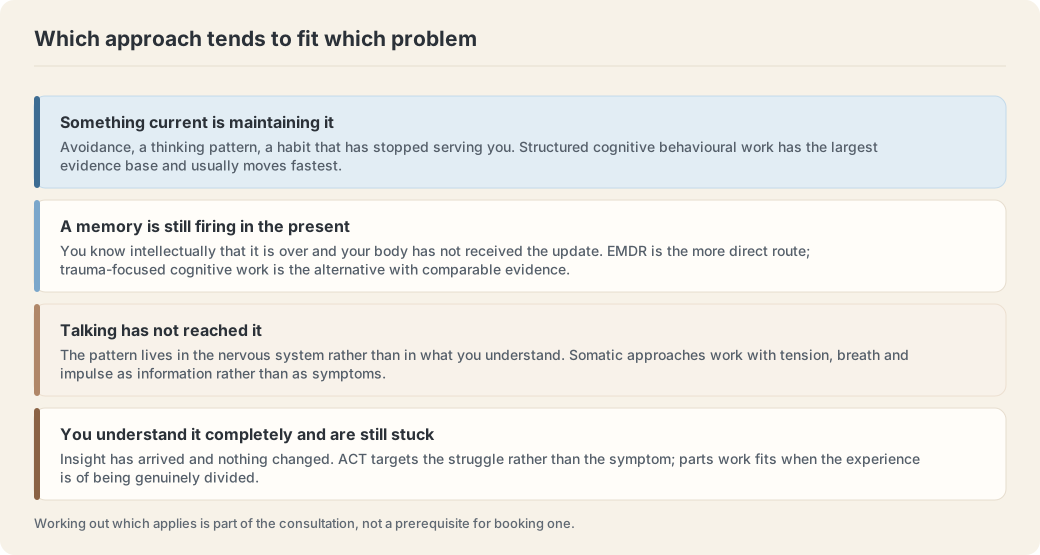
For people who have already understood their patterns in detail and are still exactly where they were.
7 min read · Updated
The shift ACT makes
Most therapies implicitly accept the premise that the difficult internal experience is the problem and should be reduced. ACT questions that premise, on the observation that the effort to control internal experience is frequently what causes the damage.
The clearest example is anxiety. Someone anxious about a presentation may prepare more, rehearse more, avoid similar situations, and organise their week around managing the feeling. Each of those is a control strategy. Each works briefly. Collectively they can consume a life while the anxiety remains exactly where it was.
ACT calls this experiential avoidance, and it treats it as the target rather than the anxiety. The question shifts from "how do I stop feeling this" to "what has the fight against this cost me, and what would I be doing if I were not fighting it".
That is not resignation, and the distinction matters. Acceptance in ACT means making room for an experience rather than approving of it, and the point of making room is to free the capacity currently spent on suppression for something you care about.
What sessions involve
ACT is more experiential than CBT and less analytical. Sessions frequently involve exercises and metaphors rather than worksheets, which some people find powerful and others find frustrating. It is worth knowing which you are before starting.
Values work comes early and is central. Not goals: values. What kind of parent, partner, colleague or person you want to be, in terms specific enough to act on. This is difficult and it is where a lot of the therapy actually happens.
Defusion techniques create distance from thoughts: noticing "I am having the thought that I will fail" rather than "I will fail". It sounds like word games and it measurably changes how much authority a thought carries.
Contact with the present moment, mindfulness in the practical rather than spiritual sense, trained as a skill for stepping out of rumination.
Committed action, which is the behavioural half. Small, specific, values-consistent steps taken with the difficult feeling present rather than after it resolves.
A course typically runs comparably to CBT in length, and the two are not opposed. Many clinicians move between them, and ACT is itself part of the broader cognitive-behavioural family.
If you understand your patterns completely and nothing has moved, that is worth fifteen free minutes to talk through.
Who it tends to suit
- People who have already had insight-oriented therapy, The most reliable indication. Someone who can explain their patterns in detail and is still stuck is describing a control problem rather than an understanding problem.
- Chronic difficulties that will not fully resolve, Persistent pain, long-term health conditions, ongoing circumstances. ACT has a strong evidence base for chronic pain specifically, precisely because the goal is not elimination.
- Anyone whose life has narrowed around managing a feeling, Where the cost is visible in what has been given up rather than in the symptom itself.
- People who dislike thought-challenging, Some find examining thoughts for accuracy alienating or find that it becomes another performance. ACT does not require you to dispute anything.
- Less suited to acute crisis, Where someone is in immediate danger or acute distress, stabilisation comes first, and where a specific, well-evidenced protocol exists for a specific disorder, that protocol is usually the better opening move.
The common misunderstanding
The word acceptance does a lot of damage to how ACT is understood, and it is worth addressing directly because the objection is a reasonable one.
Acceptance in this context does not mean accepting your circumstances, tolerating mistreatment, or abandoning attempts to change things that can be changed. It refers specifically to internal experience: thoughts, feelings, sensations, which are not reliably controllable by effort, as anyone who has tried not to think about something can confirm.
External circumstances are a different matter entirely, and ACT is explicit about this: the committed action half of the model is about changing what you do and therefore what your life contains. A therapist using ACT to encourage someone to accept a harmful situation is misapplying it.
The other frequent misreading is that ACT is anti-CBT. It is not. It emerged from within the cognitive-behavioural tradition, shares its emphasis on behaviour change, and differs mainly in what it does with difficult thoughts. Plenty of clinicians use both, and choosing between them is a question of fit rather than allegiance.
Common questions
What is ACT therapy used for?
Anxiety, chronic worry, depression, chronic pain, and the kind of stuck-ness where a person understands their patterns thoroughly and is still living inside them. It has a particular fit with health anxiety, obsessive thinking and perfectionism, where fighting the thought is the problem, and with long-term conditions where the goal is a fuller life alongside symptoms rather than their removal.
Is ACT a type of CBT?
It comes from the same tradition and is often grouped with it. The main difference is that ACT works on the relationship to thoughts rather than examining their accuracy.
Do I have to meditate?
Mindfulness in ACT is a practical skill for noticing and stepping back, usually practised in brief exercises rather than as formal meditation. Nobody is required to sit for thirty minutes.
Does acceptance mean giving up?
No. It applies to internal experience, not to circumstances. The other half of the model is deliberate action to change what your life contains.
How long does it take?
Comparable to CBT for most presentations. A defined course rather than open-ended work, with length depending on what you are bringing.
Sources
- Canadian Mental Health Association, BC Division
- HealthLink BC, mental health and substance use
- Anxiety Canada
This guide is general information, not clinical advice, and it cannot diagnose anything or replace an assessment. If you are in crisis, call or text 9-8-8 (Canada, 24/7) or BC Mental Health Support at 310-6789.
Where you are
Online counselling across British Columbia
Every session is by secure video, so the counsellor you see does not depend on where you live. Each city page covers coverage, local public services and who is taking new clients there.
Still deciding?
A free 15-minute consultation is the least committal way to find out whether this is a fit. No pressure, and no obligation to book a session afterward.
Book Free ConsultationNot ready to book? Send a line about what is going on. A reply comes within one business day, or read the guides first and come back when you want to.
Looking on behalf of someone else? What to send them, and what not to, including the funded routes most people do not know they qualify for.