For · Trades and construction
Counselling for trades and construction workers in BC
The site runs on the idea that everyone is fine. The numbers for the industry say otherwise, and most of the people in them never told anyone.
6 min read · Updated September 25, 2026
Counselling for tradespeople and construction workers in BC, online by secure video after the shift or on the weekend, with a Registered Clinical Counsellor. The recurring material is specific: a body that is the paycheque and is wearing out, chronic pain and what gets taken for it, drinking that the crew treats as normal, the boom-and-bust of contract work, being away on camp jobs, and a culture where saying anything is a risk. Extended health through a union or employer commonly reimburses; sessions leave no trace on a site.
Construction in Canada has among the highest rates of suicide of any industry, and the sector knows it: the BC Construction Safety Alliance and industry programs across the province now run mental-health training on the same footing as fall protection. The reasons are not mysterious. A workforce that is mostly men, physically worn, often in pain, paid by the contract, away from home for stretches, and steeped in a culture where the correct answer to "how are you" is "good".
Counselling does not ask you to change the culture. It asks what the job is costing you specifically, and what you want to do about that part. Sessions are by video after the shift, from the truck if that is where the privacy is, and nothing about them reaches a foreman, a union, or a WorkSafeBC file without your written consent.
The counsellors here work in English and Punjabi, which in the Lower Mainland trades is not a small thing.
What comes up
The things people actually say
The body is the paycheque
Knees, back, shoulders. The arithmetic of how many more years, done privately, every morning. Fear about the future dressed as irritability now.
Pain and what gets taken for it
Chronic pain changes mood, sleep and temper on its own. What is used to manage it, prescribed or otherwise, changes them further. Counselling works on the pain’s footprint, not only the pain.
Drinking the crew calls normal
After-work beers that became after-work bottles. Not a crisis by the site’s standard, which is the problem with the site’s standard.
Boom, bust, and the gap between
Contract work, layoffs at the end of a job, weeks of nothing. Money stress that arrives on a schedule nobody controls.
Camp and away work
Two weeks in, one out, a family that runs without you and a homecoming that never quite lands. The camp workers page goes deeper.
An injury, and the claim
Physical injury with a mental-health aftermath is common and rarely named as such. The WorkSafeBC page explains what a psychological claim involves.
Thirty free minutes, by video, after the shift. No forms, no waiting room. Book a free consultation.
How this fits around a trade
Sessions are by video, 50 minutes, and the calendar shows real evening and weekend times. There is no office to get to after a ten-hour day and no waiting room to be seen in. The first 30 minutes are free and are a conversation about what is going on; if it does not fit, that is the end of it.
The work is practical. CBT suits people who want a task and a way of knowing it is working. Where there was an incident on a site, a serious injury, a death on a crew, EMDR is available and does not require talking through the event in detail. Sleep, pain and drinking are treated as the clinical material they are.
Paying, and who knows
Union and employer extended health plans in the BC trades commonly reimburse a Registered Clinical Counsellor; the coverage page has the two questions to ask, and a benefits office will answer them without asking why. Where an injury has an accepted WorkSafeBC claim, treatment for its psychological aftermath can be covered under the claim. Paying privately is also an option, and fees are published in full.
Nothing said in a session reaches an employer, a union, a foreman or an insurer without your written consent. Attending counselling is not reported anywhere. The limits of confidentiality are the ordinary legal ones and are explained before you say anything.
Where to start
Services that tend to fit
Common questions
Can I do this from the truck?
Yes, if it is private and the signal holds. Plenty of people do. A parked vehicle is often the only quiet place on a job.
Will my employer or union find out?
No. Attending is not reported to anyone, receipts go to you, and nothing leaves a session without your written consent.
Does my union plan cover it?
Most BC trades plans reimburse a Registered Clinical Counsellor to an annual limit. Ask your benefits office for the counselling maximum and whether an RCC is a covered provider; they will not ask why.
What if I am off on a WorkSafeBC claim?
Counselling for the psychological side of an accepted injury can be covered under the claim. The WorkSafeBC page on this site explains how that route runs, and a session can be booked in the meantime without waiting for a decision.
Sources and further support
General information, not clinical advice, and not a diagnosis. If you are in crisis, call or text 9-8-8 (Canada, 24/7) or BC Mental Health Support at 310-6789. In immediate danger, call 911.
Where you are
Online counselling across British Columbia
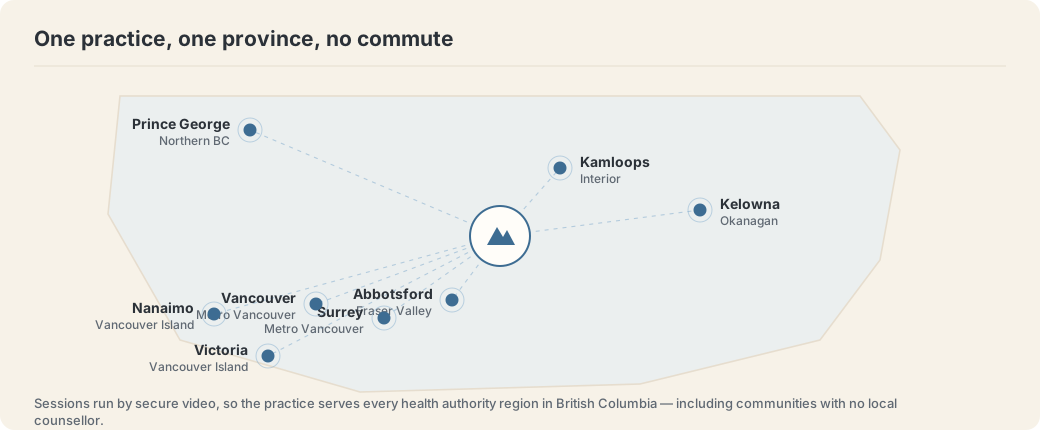
Every session is by secure video, so the counsellor you see does not depend on where you live. Each city page covers coverage, local public services and who is taking new clients there.
One conversation, no commitment.
A free 30-minute consultation over secure video, including an honest answer if something other than counselling would serve you better.
Book Free ConsultationNot ready to book? Send a line about what is going on. A reply comes within one business day, or read the guides first and come back when you want to.
Looking on behalf of someone else? What to send them, and what not to, including the funded routes most people do not know they qualify for.