For · Filipino-Canadian families
Counselling for Filipino-Canadian families and adult children in BC
Your parents gave up a country so that you would have this one. Saying that anything is wrong can feel like handing the gift back.
6 min read · Updated September 26, 2026
Counselling for Filipino-Canadian adults, couples and families in British Columbia, online in Tagalog, English or both, with a Registered Clinical Counsellor who works in Tagalog. The recurring material is specific: obligation to parents who sacrificed, hiya about bringing private trouble to a stranger, being the eldest daughter or the one who made it, marriages that hold two families, and the gap between a generation that calls it drama and a generation that calls it depression. The work does not treat the family as the diagnosis or distance as the cure.
Filipino-Canadian families tend to be close, obligated and quiet about anything that might be called a mental-health problem, and the three go together. Closeness means everyone’s business is shared; obligation means a struggling adult child feels they are failing people who gave up everything; and the quiet is hiya, the propriety that keeps private trouble private. None of that is a flaw. It is a culture that has held families together across oceans, and it also means the person who most needs to talk is often the one who cannot.
The generational gap is real. A parent who grew up where the only visible mental-health care was for the seriously ill hears "I think I am depressed" as either an exaggeration or a catastrophe. An adult child who grew up here has a vocabulary their parents do not, and no way to use it at home without it landing as blame.
Counselling here is by video, in Tagalog, English or the Taglish most families actually speak, with a counsellor who does not need utang na loob explained. Nothing said in a session reaches anyone in the family.
What comes up
The things people actually say
Utang na loob, and the right to struggle
The debt to parents who sacrificed is real and honourable, and it is also the reason many people feel that being unhappy is ungrateful. Both things can be true; the work is on holding them together.
The eldest daughter
The translator, the second parent, the one who sends money and manages the appointments. A role handed over at ten and never handed back. It comes up in almost every first conversation with a Filipina in her thirties.
Hiya and the stranger
Bringing private trouble to someone outside the family feels improper, and a counsellor is the outside. Naming that in the first session, in the language the feeling has, usually dissolves most of it.
A marriage that holds two families
In-laws, remittances, a parent living with you, and expectations about what a good son or daughter-in-law owes. Couples sessions are available in Tagalog and do not treat the extended family as the problem.
Talking to parents about therapy
How to say it, whether to say it, and what to do when it lands as "why, what did we do wrong". There is a Tagalog guide written for exactly this.
Faith, and where counselling sits beside it
For many families prayer and the parish are the first place trouble goes, and that is not something counselling replaces. It sits alongside, and it is fine to say so in the room.
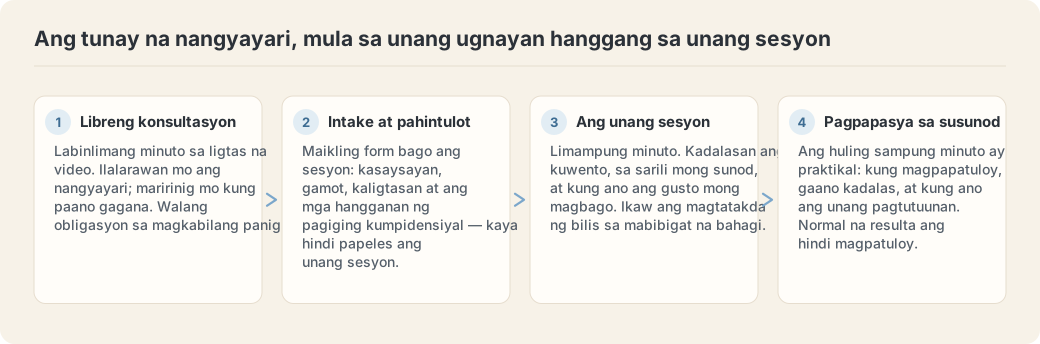
Thirty free minutes, in Tagalog or English, to see whether it fits. Nobody in the family is told. Book a free consultation.
What the work is, and what it is not
The standard Western frame for family difficulty, individuate, set boundaries, move out, describes a different life from the one most Filipino-Canadian families are trying to keep. Most people arriving here want something harder: to stay in relationship with parents and siblings and stop carrying the parts that are not theirs. That is a legitimate goal and it is workable, and any decision about distance stays yours.
The approaches used most are practical: CBT for the anxiety and the perfectionism that the eldest-daughter role selects for, ACT for people who understand their patterns fine and are still inside them, and couples or family sessions when the difficulty lives between people rather than in one of them.
Language, privacy and paying for it
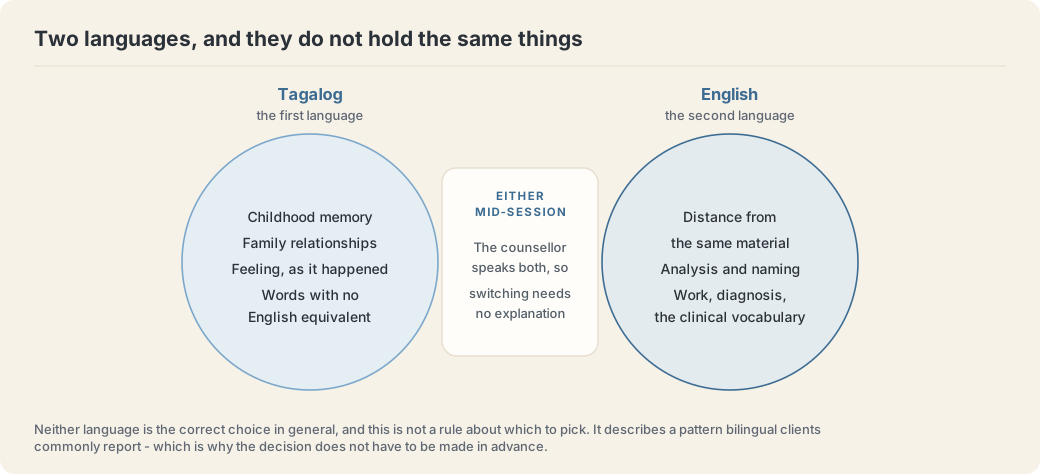
Sessions run in Tagalog, in English, or moving between them, and most bilingual sessions are mixed without anyone planning it. A parent who would never do therapy in English can do it in Tagalog, with an adult child helping set up the call and then leaving the room. The words page explains what counselling is called in Tagalog and why none of the words is quite right.
Privacy is the barrier more often than stigma: the concern is who might hear. Sessions are by video, there is no clinic to be seen entering, and nothing goes to family, church or community. Most BC extended health plans reimburse a Registered Clinical Counsellor; the coverage page explains how to check, and fees are published in full.
Where to start
Services that tend to fit
Common questions
Can my parent have sessions in Tagalog while I book for them?
Yes, with their consent. An adult child making the first contact is common, and the free consultation is where the practicalities get sorted. After that the sessions are theirs, and what is said in them is not shared with you.
Will I be told to cut off my family?
No. That framing misreads the situation for most people. The work is usually about staying connected while no longer carrying what is not yours.
Do sessions have to be entirely in Tagalog?
No. Most people move between Tagalog and English within a sentence, and that is normal here. You do not have to choose a language in advance or stick to it.
Is this a Filipino counsellor?
Camille Granda is a Registered Clinical Counsellor and Canadian Certified Counsellor who works in Tagalog and English. Fit matters more than background for most people, and the free consultation exists so you can judge it before committing to anything.
Sources and further support
- HereToHelp BC, mental health information
- HealthLink BC, mental health and substance use
- BC Association of Clinical Counsellors
General information, not clinical advice, and not a diagnosis. If you are in crisis, call or text 9-8-8 (Canada, 24/7) or BC Mental Health Support at 310-6789. In immediate danger, call 911.
Where you are
Online counselling across British Columbia
Every session is by secure video, so the counsellor you see does not depend on where you live. Each city page covers coverage, local public services and who is taking new clients there.
One conversation, no commitment.
A free 30-minute consultation over secure video, including an honest answer if something other than counselling would serve you better.
Book Free ConsultationNot ready to book? Send a line about what is going on. A reply comes within one business day, or read the guides first and come back when you want to.
Looking on behalf of someone else? What to send them, and what not to, including the funded routes most people do not know they qualify for.