For · Filipino healthcare workers and caregivers
Counselling for Filipino healthcare workers and caregivers in BC
You look after everyone: patients, residents, the family here, the family there. The question of who looks after you tends to get answered with a shrug and another shift.
6 min read · Updated September 26, 2026
Counselling for Filipino nurses, licensed practical nurses, care aides, personal support workers and caregivers in British Columbia, online by secure video in Tagalog, English or both, with a Registered Clinical Counsellor who works in Tagalog. Sessions fit around rotating shifts and nights. The recurring material is specific: burnout that is treated as normal, the weight of being the family’s provider on two continents, grief at a distance, a workplace that runs on Filipino staff and rarely says so, and a culture where asking for help feels like a failure of hiya. Extended health through a health employer or union commonly reimburses; nothing said reaches an employer or a licensing body.
Filipino workers are a large part of BC’s health and care workforce, in hospitals, long-term care, home support and private caregiving, and they are disproportionately on the shifts nobody else wants. The work is skilled, physical and emotional at once, and it comes with a second job that does not appear on any roster: being the person a family in the Philippines depends on, and the person a family in Canada depends on, at the same time.
Burnout in this group is easy to miss because it looks like competence. The person is still delivering, still picking up extra shifts, still sending money home. What has gone is the rest of them. Colleagues call it being tired; the guides on this site call it pagod that rest does not fix.
Sessions here are by video, in Tagalog, English or both, at hours that fit a rotation, and nothing said in them reaches an employer, a union, a college or a family member without your written consent.
What comes up
The things people actually say
Burnout that everyone treats as normal
Double shifts, short-staffed units, residents who die, and a workplace culture, Filipino and Canadian both, that admires endurance. Pagod na pagod, and no one to say it to who would not say "same".
Two families, one paycheque
Remittances, a parent’s medical bills in the province, a sibling’s tuition, and a household here. The arithmetic runs in the background of every decision, including whether to take a session.
Grief at a distance
A parent who dies in the Philippines while you are on shift in Surrey, and a funeral you watched on a phone. Grief with no ritual and no time off is a specific kind of grief.
Utang na loob
The debt of gratitude to the parents who sacrificed, the relative who sponsored you, the agency that placed you. It is real, it is honourable, and it is also the reason many people feel they have no right to be struggling.
The caregiver route
Years of live-in work under a program that tied status to an employer, a family that was raised while your own was elsewhere, and the identity question that arrives when the program ends.
Being the one who copes
The eldest, the nurse, the one with the good English. Being competent for everyone else is a role, and roles are tiring in a way that does not show.
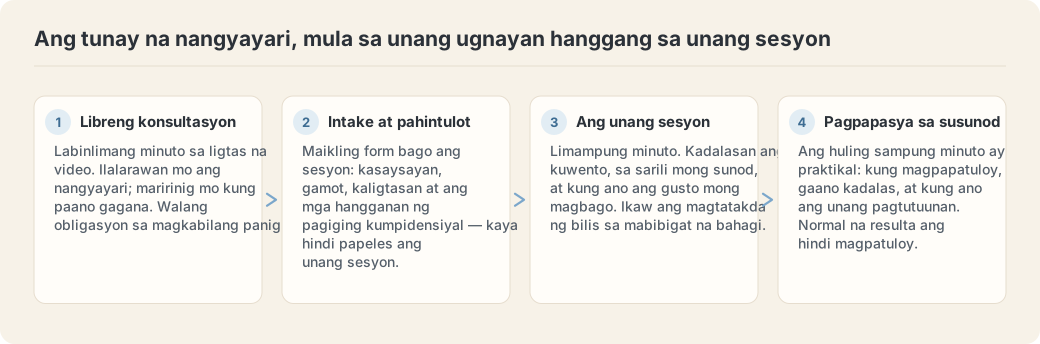
Thirty free minutes, in Tagalog or English, at an hour that fits the roster. Book a free consultation.
Why the language matters here specifically
Most Filipino healthcare workers in BC are fully fluent in English; it is the language of the work. It is not usually the language of the family, the guilt, or the grief. A session in Tagalog, or in the Taglish most people actually speak, means the hard part does not have to be translated before it can be said, and means that hiya and utang na loob are context rather than vocabulary to be taught to a stranger.
It also matters for the one thing this group almost never does, which is put itself first. Being asked, in your own language, by someone who is not a patient and not a relative, how you actually are, is a different experience from being asked in a performance review.
Fitting it around a roster, and paying for it
Sessions are 50 minutes by video and the calendar shows real evening times. Booking in blocks around a rotation, with gaps between blocks, is an ordinary pattern here and pausing costs nothing. A session after a night shift is possible if that is when you can think; a session on a day off is usually better.
Health-employer and union extended health plans in BC commonly reimburse a Registered Clinical Counsellor; the coverage page has the two questions to ask. Where an incident at work has become a claim, the WorkSafeBC page explains that route. Private fees are published in full, and the first 30 minutes are free.
The healthcare and shift workers page covers the occupational side in more depth; this page is the one about carrying it in two languages and for two families.
Where to start
Services that tend to fit
Common questions
Can sessions be in Tagalog?
Yes. In Tagalog, in English, or moving between the two as the conversation does. Camille Granda works in both, and most sessions with bilingual people are mixed without anyone deciding to mix them.
Will my employer or my college find out?
No. Attending counselling is not reported to anyone. Sessions are confidential within the ordinary legal limits, which are explained before you share anything, and nothing reaches an employer, a union, a licensing college or an insurer without your written consent.
I work nights and rotating shifts. Can this fit?
Yes, and it is worth planning at the start rather than discovering later. Booking block by block around a roster, with gaps, is normal here, and evening times are available.
Does my plan cover it?
Most health-employer and union plans in BC reimburse a Registered Clinical Counsellor to an annual maximum. Check the plan booklet for "counselling" or "clinical counsellor". MSP does not cover private counselling.
Sources and further support
- BC Nurses’ Union
- HealthLink BC, mental health and substance use
- Canadian Mental Health Association, BC Division
General information, not clinical advice, and not a diagnosis. If you are in crisis, call or text 9-8-8 (Canada, 24/7) or BC Mental Health Support at 310-6789. In immediate danger, call 911.
Keep going
Written for other situations
Where you are
Online counselling across British Columbia
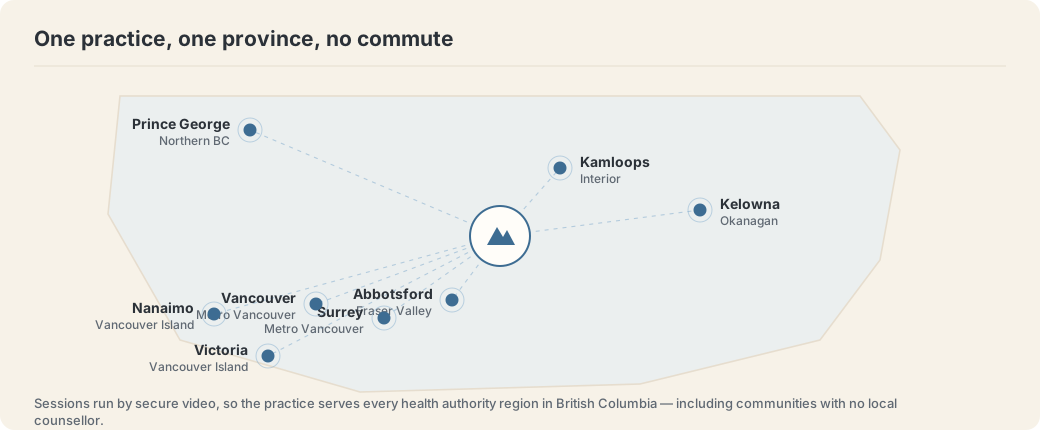
Every session is by secure video, so the counsellor you see does not depend on where you live. Each city page covers coverage, local public services and who is taking new clients there.
One conversation, no commitment.
A free 30-minute consultation over secure video, including an honest answer if something other than counselling would serve you better.
Book Free ConsultationNot ready to book? Send a line about what is going on. A reply comes within one business day, or read the guides first and come back when you want to.
Looking on behalf of someone else? What to send them, and what not to, including the funded routes most people do not know they qualify for.