Surrey · Fraser Health region · Online
Trauma Therapy and Counselling in Surrey, BC
Trauma Therapy for people in Surrey is with Camille Granda or Savneet Singh, both Registered Clinical Counsellors, by secure video, with a free 15-minute consultation, no referral, and receipts your extended health plan can process.
A great deal of what people carry here arrived with them, or with their parents.
Updated
Surrey holds one of the largest immigrant and second-generation populations in the country, and a significant share of what turns up in a counselling room here did not happen in Surrey. Migration itself can be traumatic: what was left, what was survived to get here, and what nobody spoke about afterwards because there was work to do. The second generation frequently arrives carrying a shape they cannot account for, because the events belong to somebody else.
There is also a vocabulary problem. In plenty of families here there is no word for this that is not an insult, so it gets described as being sensitive, or difficult, or ungrateful. Naming it accurately is often the first useful thing that happens, and it can be done in Punjabi or English, or moving between them.
Sessions are $140 for 50 minutes (BCACC’s 2026 fee guide recommends $140 to $175) and start with a free 15-minute video call, no charge, no card, and no obligation to book anything afterwards. Many BC extended health plans reimburse a Registered Clinical Counsellor; whether yours does is plan-dependent, so check it for the RCC designation before the first paid session. Fees and extended-health cover are set out in full.
For trauma work in Surrey, a memory that needs a longer run than a weekly session can move to the EMDR Intensive later, once stability is in place: $190 for 90 minutes with Camille Granda. How the intensive differs from weekly EMDR.
Trauma therapists in Surrey: who you would see
Taking new clients for trauma therapy and seeing people in Surrey by secure video. Each is a Registered Clinical Counsellor; the registration is on the profile and can be checked on the BCACC register.

Camille Granda, RCC, CCC
English and Tagalog · Trauma, Anxiety and chronic stress, Grief, loss and life transitions

Savneet Singh, RCC
English and Punjabi · Anxiety, Depression, Trauma and attachment
Getting counselling in Surrey
Surrey is large enough that "in Surrey" can mean a forty-minute drive across it. A clinic in Guildford is not local to someone in South Surrey, and the SkyTrain does not solve it once you are east of the city centre.
Public intake runs through Fraser Health, and private practices cluster around the city centre and Guildford rather than spreading evenly. For a lot of Surrey residents the nearest practice with the right specialism is in Langley or Burnaby.
Public mental-health intake for Surrey runs through Fraser Health. That route matters if you are seeking publicly funded care. It has no bearing on seeing a Registered Clinical Counsellor privately, which needs no referral and no diagnosis. See how RCCs, psychologists and social workers differ.
Sessions in Punjabi as well as English, without needing the counsellor who speaks your language to also happen to have an office you can reach.
More on this city, including who else it serves and what the local picture looks like: online counselling in Surrey.
What trauma therapy involves
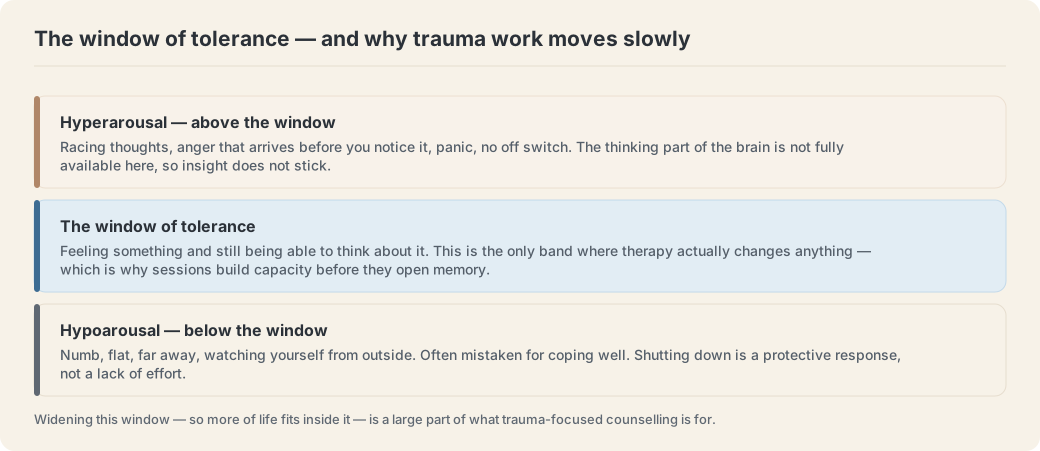
The full picture: how sessions are structured, what the first one is like, and what it does not do, is on the page for online trauma therapy across BC. If you are still working out what you need, the short questionnaire is a quicker route than reading all of them, and what to expect in a first session covers the part most people are actually nervous about.
Questions from Surrey
What if it happened to my parents rather than to me?
That is a recognised pattern rather than an unusual one, and it is workable. What gets transmitted is not the memory but the response to it, and the response is what the work addresses.
Do I have to describe what happened?
Not to begin, and not in detail unless you choose to. EMDR in particular does not require a full narrative account, which is one of the reasons it suits people who cannot yet put it into words.
Is trauma therapy available in Guildford, Newton, Fleetwood, Cloverdale or South Surrey?
Yes. Trauma Therapy by secure video reaches Guildford, Newton, Fleetwood, Cloverdale and South Surrey exactly as it reaches Surrey: there is no office to get to and the same fee applies however far out you are. Fraser Health is the public route for Surrey and the rest of its region; this is the private one, and it needs no referral.
More frequently asked questions, or book the free consultation and ask directly.
Other counselling in Surrey
- Couples and Marriage Counselling in Surrey
- EMDR Therapy in Surrey
- Anxiety Counselling and Therapy in Surrey
- Depression Counselling and Therapy in Surrey
Trauma Therapy nearby
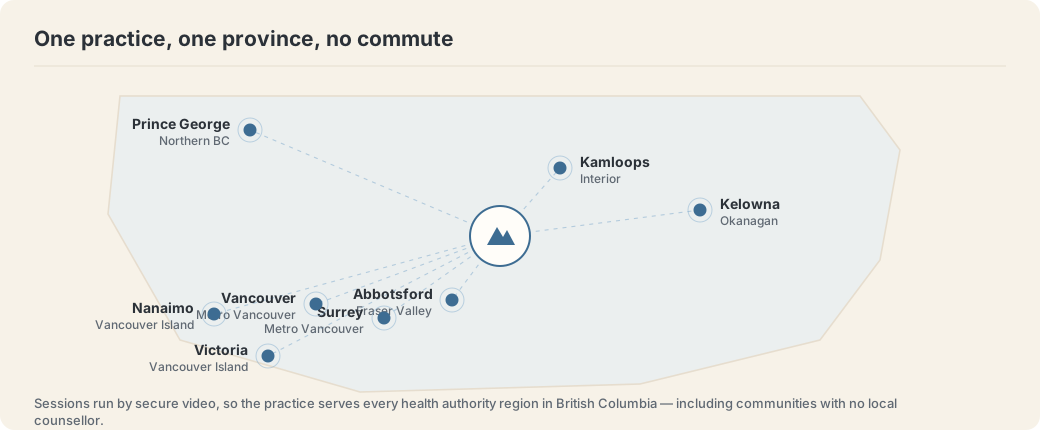
The practice is virtual and covers all of British Columbia. See every city page, or the full list of services. Questions specific to Surrey are answered on the city page.
Sources
Trauma Therapy and Counselling in Surrey, without the travel
A free 15-minute video call, in English, Punjabi or Tagalog. No charge, no card, and no obligation to book anything afterwards.
Book Free ConsultationNot ready to book? Send a line about what is going on. A reply comes within one business day, or read the guides first and come back when you want to.
Looking on behalf of someone else? What to send them, and what not to, including the funded routes most people do not know they qualify for.