Resource · Designations
What is a Registered Clinical Counsellor (RCC)?
Three letters after a counsellor’s name, doing more work than they look like — in a province where, for now, anyone at all may call themselves a counsellor.
6 min read · Reviewed August 28, 2026
A Registered Clinical Counsellor (RCC) is a therapist registered with the BC Association of Clinical Counsellors. The designation requires a master’s degree in counselling or a closely related field, supervised clinical hours, professional liability insurance, ongoing continuing education, and adherence to a code of ethics with a public complaints process. It is not yet a government licence — counselling is currently unregulated in BC, which is exactly why the designation matters: it is the voluntary accountability that fills the gap until provincial regulation of psychotherapy begins in late 2027. Every RCC can be verified, free, in the public BCACC register.
What the letters actually certify
RCC is a designation granted and policed by the BC Association of Clinical Counsellors (BCACC), a professional association founded in 1988. Holding it means the counsellor has cleared a specific bar: a master’s degree in counselling psychology or an equivalent discipline, a period of supervised clinical practice, current professional liability insurance, continuing education that does not stop at registration, and a code of ethics with teeth — there is a formal complaints process, and registrants can be, and are, removed.
Each RCC carries a registration number, and the register is public and free to search. That combination — a number plus a register anyone can check in two minutes — is the practical meaning of the designation. A claim you can verify is categorically different from a claim you have to take on trust, and the how-to-verify walkthrough shows exactly where to look.
What the designation is not: a government licence. That distinction is not a technicality in British Columbia, and it is the next section, because it is the thing most pages on this subject skate past.
The uncomfortable context: counselling is not yet regulated in BC
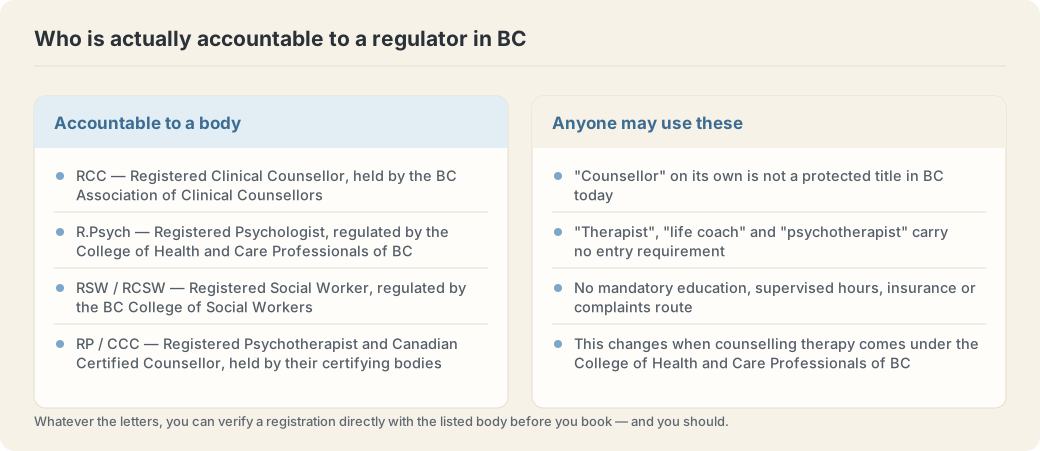
In British Columbia today, "counsellor" and "therapist" are not protected titles. Anyone may use them — no degree, no insurance, no oversight, no consequence. "Psychologist" and "social worker" are protected by statutory colleges; the words most people actually search for are not. This is the current state of the law, and it is why the letters after a practitioner’s name carry the weight they do here.
It is also why "licensed counsellor" is not a British Columbian term. The phrase is American; there is no BC licence corresponding to it. Somebody advertising as a licensed counsellor in BC may be perfectly qualified — but the word "licensed" is not carrying the meaning it appears to carry. What exists in BC is registration: RCC through BCACC, CCC through the Canadian association, R.Psych and RSW through their colleges.
This changes in 2027. Under the Health Professions and Occupations Act, psychotherapy is being brought under the College of Health and Care Professionals of BC, with regulation of the profession beginning 29 November 2027. Until then, the register is your protection — and a practitioner who displays a checkable registration number is telling you they want to be checked.
This practice is an RCC practice, and the registration number is on the about page next to the register it can be checked in — checking is encouraged. Book a free consultation.
What an RCC can and cannot do
- Provide psychotherapy — the core of the work — Individual, couples and family counselling for anxiety, depression, trauma, relationships and the rest of the territory, using recognised modalities. This is what the training is for.
- Cannot formally diagnose — Diagnosis in BC sits with physicians, psychiatrists, psychologists and clinical social workers with the relevant registration. An RCC works with what you are experiencing; the label on a file, where one is needed, comes from elsewhere — the three-way comparison covers when that matters.
- Cannot prescribe — Medication is physician work, always. An RCC coordinates with your doctor, with your written consent, rather than replacing them.
- Issues receipts most extended plans recognise — Most — not all — BC extended-health plans reimburse RCC counselling. Plans list professions, not services, so the wording check in the coverage guide comes before the first session, not after.
- Answers to a code of ethics — Including the advertising standards that prohibit testimonials and outcome claims — which is why a BCACC practice with no reviews page full of five-star quotes is following the rules, not hiding something.
RCC, CCC, RSW, R.Psych — a thirty-second orientation
The alphabet is genuinely confusing, so: RCC (BC association, master’s-level, therapy), CCC (Canadian Certified Counsellor — the national association’s equivalent, also master’s-level), RSW/RCSW (social workers, statutory college, clinical registration can include diagnosis), R.Psych (doctoral, statutory college, diagnosis and formal assessment). All four are real, checkable designations held by real therapists; the practical differences are scope, cost and what your insurance lists.
If you are choosing between them for your own care, that decision has its own page — RCC vs psychologist vs social worker — with fees, scope and coverage side by side. This page’s job is smaller: when you see "RCC" after a name, you now know precisely what it certifies and how to confirm it.
Common questions
Is an RCC a real therapist?
Yes — master’s-level training, supervised hours, insurance, continuing education and a code of ethics with a complaints process. The designation exists precisely to separate trained, accountable practitioners from the anyone-at-all who may legally use the word "counsellor" in BC today.
How do I check if someone is really an RCC?
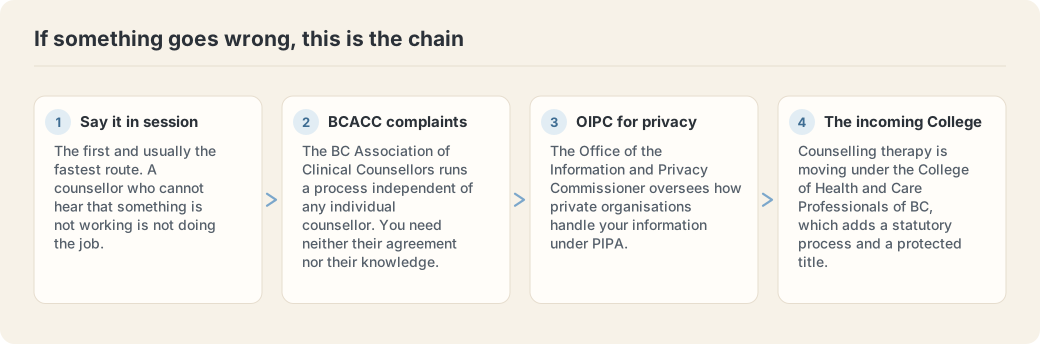
Search the BCACC public register — it is free, takes about two minutes, and confirms current, good-standing registration. Do this from the register itself rather than trusting a website badge, including this site’s. The step-by-step walkthrough is on the verification page.
Is RCC the same as a licensed counsellor?
There is no such thing as a "licensed counsellor" in BC — the phrase is American. RCC is a professional registration, which is the closest thing BC currently has, and it becomes a regulated-profession framework when psychotherapy comes under the College of Health and Care Professionals of BC in late 2027.
Does insurance cover an RCC?
Commonly, not universally. Most major BC extended-health plans reimburse RCC counselling; some list only psychologists and social workers. The plan wording — not the plan brand — decides, and the coverage guide lists the exact questions to ask.
What does it take to become an RCC?
A master’s degree in counselling psychology or a closely related field, supervised clinical practice, professional liability insurance, continuing education, and agreement to the BCACC code of ethics and complaints process. Current requirements live on the BCACC site, since they do change.
What happens to RCCs when regulation arrives in 2027?
Psychotherapy becomes a regulated profession under the College of Health and Care Professionals of BC on 29 November 2027, on a protected-title model. The practical effect for clients: the accountability that is currently voluntary through BCACC becomes statutory. Existing qualified practitioners transition into the new framework.
Sources
- BC Association of Clinical Counsellors
- College of Health and Care Professionals of BC
- Province of BC — health profession regulation
General information, not clinical, financial, or legal advice. Coverage and service details change — verify anything decision-critical directly with the provider or insurer. If you are in crisis, call or text 9-8-8 (Canada, 24/7) or 310-6789 for BC Mental Health Support.
Keep going
More BC resources
Questions about cost or coverage?
A free 15-minute consultation is a good place to ask them, before committing to anything.
Book Free ConsultationLooking on behalf of someone else? What to send them, and what not to — including the funded routes most people do not know they qualify for.